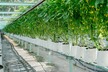


As marijuana becomes more mainstream, an increasing number of utilities are seeing growers set up shop in their service territories — at times creating distribution system issues, and in general bringing significant new demand.
With federal legalization now a topic du jour, there is a growing focus on energy efficiency in the cannabis space and how utilities and industry groups can help growers control their demand. Total electricity demand from legal marijuana cultivation in the United States is estimated to rise 162% from 2017 to 2022, according to Research from New Frontier Data, which focuses on analysis of the cannabis industry.
Compared with a typical office building, indoor marijuana growers are about 10 times as energy intensive on a square footage basis, according to Neil Kolwey, industrial program director for the Southwest Energy Efficiency Project (SWEEP).
SWEEP recently hosted a webinar to discuss energy efficiency in the cannabis industry, and Kolwey said it is important to keep the sector's energy use in perspective — it is not particularly large in aggregate, but can have significant impacts in specific areas.
Data centers use two to three times the energy of marijuana growers, again on a square-footage basis, he said, and account for about 1.8% of the United States' electricity consumption. Pot growers, including illegal operations, account for just 0.1% right now.
But cultivation centers are energy intensive: a single one could overload a utility transformer, while an industry can add substantially to a city's power demand.
Read more at utilitydive.com