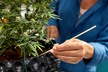


If you can say one thing about the Pioneer Valley, it’s that we love local. We champion and support small business, artists, makers, musicians, farmers, organic food, craft beer and pretty much artisanal anything. My recent expedition to INSA — the adult recreational use dispensary in Easthampton where I stuck my toes into the world of modern cannabis — sparked my curiosity and got me thinking about local in a different light.
Technically, all legal cannabis is local — cultivated, processed, and sold in Massachusetts — because importing product from one cannabis-friendly state to another is a big federal no-no. But with very few exceptions, the Commonwealth’s cannabis industry currently consists mainly of big players with very deep pockets and a hefty head start on small business owners (more on that in a minute). That includes multi-state operations like Surterra Wellness, which recently bought Northampton’s NETA, and GTI, owner of Amherst-based RISE.
So, if all legal cannabis is local, why not just support the big players? Corporate entities do create local jobs, but most of the money they make does not stay within the community. A thriving local economy requires successful small businesses that funnel their dollars back into the community. It gives us the option to choose well-crafted, quality products made, owned and controlled by the people in our towns and cities.
With such well-funded dispensaries already in place, can small cannabis entrepreneurs hope to compete? What challenges do they face in their effort to secure licensing and grow their business? And what, if any, role can the consuming public play in creating a cannabis industry that makes room for small-scale craft operators?
Read more at valleyadvocate.com