


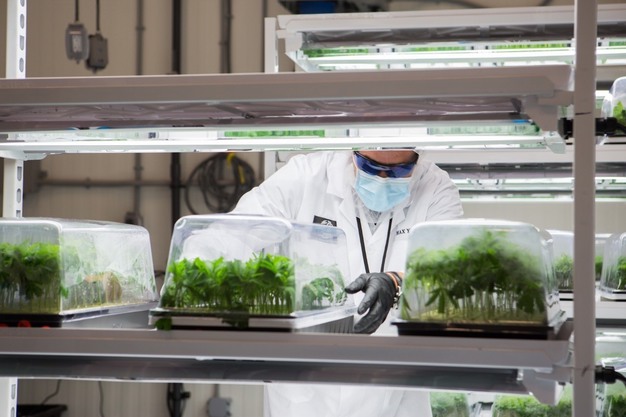
Canada was one of the first countries that show the world what a regulated cannabis industry looks like. As this sector was taking shape in Europe, some companies saw the opportunities to apply the lessons learned overseas to the old continent. This was the initial mission of CannaPro. The company stepped foot in Europe helping growers engineer greenhouses and set up production labs. "Now, we're much more involved in pharma labs than facilities," says Ruben Garcia from CannaPro. And that pharma world is a different beast entirely.
"We've moved from being a service provider to working directly within pharmaceutical divisions, not just in Spain but also Morocco, South Africa, Germany, and Switzerland," Ruben explains. "But the truth is, the pharma industry is still in its basement phase when it comes to cannabis. There's a basic understanding of cannabinoids and narcotics, but full legal transparency and integration? We're not there yet."
 © CannaPro
According to Ruben, many companies in Switzerland call themselves labs, but they're not GMP certified. Germany, on the other hand, is demanding EU GMP-certified production, yet that demand far exceeds current production capacity. "It's the same thing that happened in Canada," Ruben says. "In 2008, the illicit market was producing safer, higher-quality cannabis than the legal one. Dispensaries had high standards, but oversight was lacking. Europe wants to avoid that, which is why EU GMP is a must."
The supply crunch is real
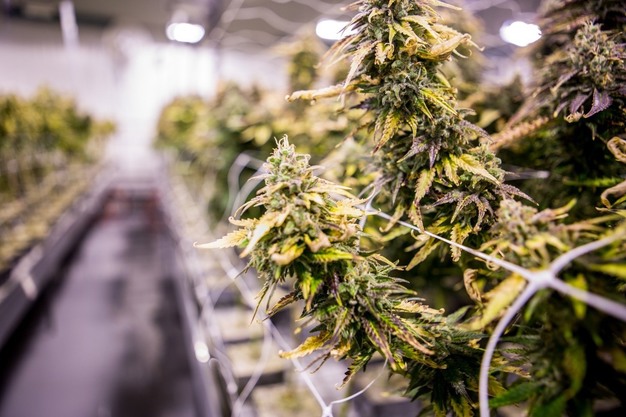
In Germany, Ruben notes, there are just six licenses for GMP-certified production, covering about 100 tons annually. "That's nowhere near enough," he says. "They're even importing from Macedonia, but when tested, those products often show triple the heavy metal content allowed. It's a mess."
This is where CannaPro steps in, bridging the gap between growers, processors, and distributors. "We've helped set up a Moroccan lab that deals primarily in kief. The quality is solid, but it's not EU GMP, yet. The production is agronomic, so you can't just slap a pharma label on it. You need proper protocols, audits, state involvement."
 © CannaPro
Building a pharma-grade supply chain
CannaPro is currently structuring the first phase of GMP certification in Morocco: the agronomic audit. "It's the base layer," Ruben explains. "You prepare the raw material with minimal manipulation and follow 10 core protocols. From there, it goes to pharma labs in Europe, where it's turned into actual medicine."
Given the lack of these EU-GMP certified businesses outside of Europe, and the lack of growers, the current solution is to have cannabis shipped to GMP facilities in Europe that process the product that will then be sold to customers.
At the same time, the industry is shaping up to undergo a massive change in the near-not-so-near future. The pharma industry has been prepping its entry into the medical cannabis market, with the perspective of changing the rules of the game completely. "Pharma doesn't want flowers in a bag," Ruben says. "They want pills: blistered, measured, packaged. That's the evolution of the cannabis industry in their eyes. You see the para-pharma industry moving there already, gummies for sleep, weight control, whatever. Real pharma wants those formulations, but backed by precise, certified production."
Ruben is blunt: "When you think of cannabis producers in Europe, there's still this weird picture of a hippie-meets-lab-coat operation. But when you talk medicine, you're talking pharma. That's who will take over." Still, there's a role for greenhouse growers, particularly those producing biomass for extraction. "There's demand for specific genetics used in pain treatment. These plants need specific nutrients, specific media, and the entire plant is used, not just the flower."
 © CannaPro
One Spanish company working with CannaPro produces very little flower. Why? Because their Swiss client only needs extracts from a particular genetic, grown a specific way, and EU GMP-certified. "That's the new normal."
"We have American clients buying any biomass they can get from outdoor growers," Ruben says. "We're talking about contracts for 100% of production over 48 months, complete with drying and humidity specs. Outdoor growers won't go anywhere, they're will just be integrated into more structured systems."
The challenge will then be to keep up with the demands of a pharmaceutical world that doesn't tolerate improvisation, but which will still need the fruits of a cannabis plant.
For more information:
CannaPro
cannaproeurope.com