

In the cannabis industry, the conversation around cultivation has long taken the spotlight, but post-harvest? It often gets reduced to a single verb: trimming. Daniel Aerne of Swiss-based Adec Solutions, manufacturer of the Cannabinno trimming system, is very much aware how crucial that final step of cultivation is. "Fundamentally, the producer must define the harvesting process," he says. "Once that's clear, you can select and calibrate every system component accordingly. But the biggest mistake I see? Producers focusing only on the upfront machine cost, ignoring what really matters: the process."
Trimming is a step, not a strategy
While manual trimming still has its place, especially when it comes to preserving flower volume and polishing top-shelf buds, Daniel is quick to point out the economics don't always add up. "Labor costs are skyrocketing, and machine solutions are increasingly attractive to large-scale producers. But even then, you need to ask the right questions."
Among the things to consider, a grower should look at how stable the process is, and what kind of maintenance the system needs. Other things to think about are more strain specific, says Daniel, such as the possibility to fine tune the system to suit a specific flower morphology, and how much the loss of plant material would be. On the topic of maintenance, it's always wise to stock up some spare parts, so it's crucial to be aware of how accessible those are. "There's also always the question about energy consumption," Daniel remarks.
Daniel says that the Cannabinno systems are built around those criteria Cannabinno builds, and he emphasizes that customization is often key. "We help define the harvesting process with the customer, tailored to their setup. If a standard solution won't cut it, we build a custom one."
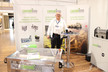
 © Andrea Di Pastena | MMJDaily.comDaniel Aerne at the ICBC 2025, Berlin
Trimming done right
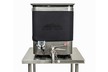
When it comes to mechanical trimming, there are a few nuances to take into consideration. Drum diameter, rotation speed, suction power. "These aren't footnotes," he says. "They're the determining factors of yield and quality. A 150 mm drum isn't going to process more than 16–18 kg of wet flowers. That's physics. Test the system before you commit."
Machines with adjustable parameters such as gap width, suction power, RPMs, are crucial, and teams must be trained not just to operate them but to document and replicate results. "You need repeatability. If you can't deliver consistent product quality, the machine isn't doing its job."
And if there's one thing producers underestimate, it's cleaning. "Systems should be operable with basic tools and without injury risk. Not every staff member is technically trained, many pieces of equipment need intuitive workflows. Keeping key spare parts in stock is essential to avoid downtime. Or better: have a second machine ready to swap in during cleaning cycles."
Wet vs dry
According to Daniel, dry trimming offers clear advantages. "It's gentler, reduces the risk of mold, and requires less cleaning. But it also demands patience and precision. You're no longer rushing against rot, but you still need to be careful. A gentle rubbing action is often enough to remove the leaves—but the setup must be optimized for it."
Wet trimming is faster and requires less drying space, but comes with its own checklist. "Cool rooms for debudding, low drop heights for flower integrity, and airtight scheduling to prevent post-harvest bottlenecks. In both cases, define the process first. Then choose your tools."
From machines to systems
Cannabinno doesn't just make trimmers, it designs entire post-harvest systems. "We have the world's largest product range in cannabis harvesting systems, and we're the only manufacturer operating a complete in-house trimming center," Daniel points out. "Our R&D is hands-on, every day."
With around 15 staff members and a footprint in the heart of Europe, Cannabinno is small by design. The company prides itself on flexibility, direct collaboration with producers, and a willingness to innovate on the fly. "We've built custom solutions for operations big and small. And with our background in automation, we can link individual process steps together to eliminate handling costs," he explains. "Less human interference means fewer chances for errors, and better ROI."
The future of cannabis trimming, according to Daniel, lies in flexibility and AI. "Every flower is different. It's still a natural product. So, machines need to adapt, not just process. Growers should expect this space to see more robotics in material handling, smarter quality control, and increasing automation at every post-harvest step. As the saying goes, it's not a matter of working harder, but smarter."
For more information:
Cannabinno
+4171530311
[email protected]
cannabinno.swiss