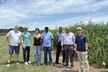

On August 7–8, INTA, the Asociación Ciencia Sativa, and Pasedatti SAS presented a study at the XXVIII National Water Congress (CONAGUA 2025) in Mar del Plata on water consumption in Cannabis sativa L. crops grown under greenhouse conditions in Northern Patagonia.
The presentation, led by Gabriela Calzolari of INTA Alto Valle, marked the first quantitative assessment of water use in cannabis cultivation in this region. The research focused on the Cannawine INTA–ACCS cultivar, developed for medicinal use with a CBD:THC ratio of 10:1. This cultivar, registered with INASE, supports the development of legal cannabis projects in Argentina.
Fieldwork during the 2023/2024 season showed that about 60% of water use occurs during the vegetative phase. Plants grown in 60-liter pots consumed more water but also produced greater flower biomass than those in 30-liter pots. Water use efficiency, however, remained comparable, averaging about 2.2 liters per gram of dried flower.
The irrigation system was developed by INTA's Soil and Water Laboratory for Productive and Environmental Sustainability, which monitored key parameters such as pH and salinity. While cannabis is a water-intensive crop, local data remain scarce, and this study provides valuable insights for improving irrigation strategies in arid regions.
Further research will explore the relationship between water consumption, salinity, and product quality. "In the current context, accurate information is essential for efficient production," Calzolari noted. The trial forms part of a broader collaborative project on therapeutic cannabis production in Northern Patagonia.
Antonio Barahona of Pasedatti S.A.S. and Roxana Aguirre of the Asociación Ciencia Sativa highlighted the importance of public–private collaboration in advancing medical cannabis research and production.
Source: rionegro.com.ar