

In cannabis production, leaves are usually treated as little more than a nuisance. They get pruned, discarded, and overall treated as waste. But new research from Stellenbosch University in South Africa suggests growers might want to take a second look.
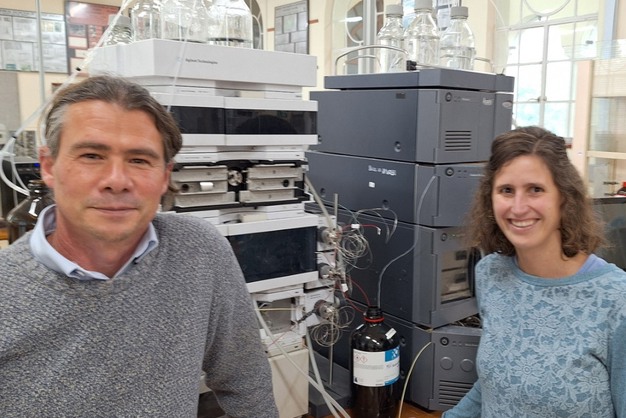
A team of analytical chemists led by Prof. André de Villiers has published the first study identifying flavoalkaloids in cannabis leaves, a rare class of plant metabolites previously found in only a handful of species. "As chemists, we develop methods to characterize samples," he explains. "Cannabis was an application, but the molecules we focused on, phenolics, flavonoids, and now flavoalkaloids, are well-known for their antioxidant and bioactive properties. They're one of the reasons why it's good to eat fruit, for example."
 © Stellenbosch University
While flavonoids in cannabis are not a surprise, the discovery of flavoalkaloids was unexpected. These compounds combine flavonoid and alkaloid groups. In other plants, they've been studied for roles in Alzheimer's, inflammation, and even cancer. However, that doesn't necessarily mean that cannabis leaves will represent the next frontier in cannabis medications. The Stellenbosch team detected the molecules but could not yet isolate them in sufficient quantities to run biological tests. "If you wanted to make a drug from cannabis flavoalkaloids, you'd need large amounts of plant material," prof. de Villiers says. "But that's not the only avenue. Think of grape seed extract supplements, which are sold for their flavonoid content. Cannabis leaves could follow a similar route."
That possibility could transform what is now a byproduct into a resource. Cannabis leaves contain far lower levels of cannabinoids, which means they fall under a different, and less restrictive, legal framework. "The dream," prof. De Villiers adds, "would be to take a waste product and make something valuable from it."
The cross-breeding issue
The researchers also found striking variability among strains. In the first published study, flavoalkaloids appeared in one of three commercial cultivars tested. A follow-up with 16 strains purchased from both local and international suppliers revealed the compounds in about two-thirds of them. "It seems relatively common, but not universal," says de Villiers. Preliminary results suggest genetic control plays a role, and his group is collaborating with geneticists to understand the link.
However, the team of researchers is currently dealing with a landscape of cannabis varieties that knows little to no consistency in terms of what they truly are. Prof. de Villiers shares that he was surprised to see that different seed suppliers would call a certain variety in the same way, and yet once grown, not only did they show a different chemical profile, but also looked different. "Take a name like Blue Dream," he notes. "We bought it from two different suppliers. Chemically, they were completely different. Even the plants looked different." Chemical profiling of leaves could be one way to cut through that maze.
Looking at landraces
Since finding these flavoalkaloids in cannabis leaves is not a given and research seems to suggest their presence is strain-specific, tracing back the original variety from which a certain cross bred strain derives could answer that question. Prof. de Villiers sees particular promise in studying South Africa's own landrace varieties. Informal cultivation is widespread in provinces such as the Eastern Cape, and local strains may contain unique metabolite profiles. "It would be fascinating to see if these flavoalkaloids are part of the South African genetic heritage," he says.
For now, the study opens a new line of thought for the cannabis industry: maybe those piles of leaves are not waste at all, but an untapped source of value.
For more information:
Stellenbosch University
sun.ac.za