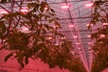


For commercial glasshouse operators, the approach to greenhouse screens isn't just about blocking out sun – it's about optimising your entire growing environment. "The evolution of screen technology means that a screen from even a decade ago might be actively hindering your current crop's potential, impacting yields, energy costs, and overall profitability," says Byron Meyer, director with BM Greenhouses.
The obsolete screen: Hampering performance, increasing costs
Byron Meyer notes that many operators across the UK still rely on older screen technologies, often because "if it ain't broke, don't fix it." While these screens may appear functional, he points out that this static approach introduces operational inefficiencies that can significantly impact a business. "Running on outdated screen technology is like trying to drive a modern F1 race with tires from 10 years ago. You might finish, but you're leaving a lot of performance on the track, and potentially damaging your engine."
Outdated screens often lead to suboptimal environmental conditions. According to Byron, "A screen designed for basic shading 10 years ago won't offer the precise light diffusion or thermal retention needed by today's high-performance crops. This means you're either over-shading, losing too much heat, or struggling with inconsistent light distribution." These inefficiencies result in higher operational costs, as growers may compensate with increased heating, cooling, or supplementary lighting. "What could have been a few percentage points of energy savings becomes a constant drain on your budget, especially with the fluctuating energy prices we've seen recently," he adds.
Crop quality and yield degradation are another common consequence. Screens that are left un-upgraded fail to provide the nuanced climate control required by modern cultivars. "We see cases where yields are consistently below potential, or crop quality is inconsistent, simply because the screen isn't delivering the optimal light spectrum or humidity control," says Byron. Environmental instability caused by inefficient screens can also impact crop health. "You might be seeing issues like stretching, poor colouration, or uneven ripening that are directly linked to your screen's inability to precisely manage light and temperature."
Modern screens: dynamic control, measurable benefits
A modern screen strategy introduces dynamic control over light, temperature, and humidity, leveraging advanced materials and automated systems. "Modern screens aren't just about 'on' or 'off'," Byron explains. "It's about knowing your crop's precise environmental needs and having the flexibility to deliver that environment, precisely when it's needed."
A planned approach to screen technology supports operational flexibility and higher yields. He notes that "with today's advanced screens, you can achieve optimal light levels throughout the day, even during variable British weather, ensuring every part of your canopy receives adequate light. This directly translates to increased photosynthesis and higher yields." Energy savings also become more predictable and significant, allowing growers to forecast utility budgets more reliably instead of reacting to energy spikes due to poor insulation or excessive cooling. Maintaining precise control over light, temperature, and humidity helps ensure consistent crop development. "You can't achieve peak performance if your environment isn't consistently optimised," says Byron. In addition to system performance, modern screens contribute to better overall crop health by reducing stress. "It's about creating the perfect atmosphere for your plants to thrive."
Crop-specific screening: not one-size-fits-all anymore
Byron stresses that the "one-size-fits-all" approach to glasshouse screens is entirely outdated. "We integrate screen planning into the full life cycle of glasshouse projects, from initial design to ongoing optimisation. Every crop has different light, temperature, and humidity requirements, and your screens need to be tailored accordingly."
His team advises on specific screen types for critical environmental parameters, such as yield enhancement. "Modern light-diffusing screens scatter incoming sunlight, ensuring even light distribution throughout the canopy, which leads to higher photosynthesis in lower leaves and significantly increased overall yields. Studies show these can boost fresh and dry weight by over 10-15% compared to conventional shading, a vital gain for any UK grower."
Another topic of course is energy savings. "Advanced thermal screens with multi-layer constructions and improved reflective properties can reduce heat loss by up to 50% on cold nights, dramatically cutting heating costs. Conversely, highly reflective screens minimise heat gain in summer, reducing cooling energy consumption, which is increasingly important with warmer UK summers."
Then there's dynamic shade production. "Today's screens offer far more than just static shade. Automated systems allow for flexible shade production, adjusting the level of shading throughout the day based on real-time light levels and crop needs, preventing photoinhibition while maximising beneficial light. Unlike old fixed screens, these can retract completely on those typically cloudy British days."
Of course, flexibility and customisation remain key. "The market now offers screens with varying light transmission, diffusion, and thermal properties, including photoselective screens that filter specific light wavelengths to influence plant morphology (e.g., controlling stretching). This level of customisation allows for truly crop-specific environmental control, impossible with older technologies."
Performance data and environmental reports are part of modern screen consultation. "We want operators to understand not just what their screens are doing, but how it's impacting their yield and energy bill," Byron adds.
Adapting screen strategy
For growers across the UK looking to upgrade their screen technology, Byron recommends beginning with a thorough assessment of current crop needs and existing screen capabilities. "Measure your light levels, analyse your energy bills, and compare your crop performance against modern benchmarks. Chances are, your 10-year-old screen isn't delivering what you need."
Documentation of current screen performance and desired environmental parameters plays a key role. "It's easy to assume your old screen is 'good enough,' but data often shows otherwise. Keeping a log of your current screen's performance against your actual climate control goals makes it easier to see the tangible benefits of an upgrade," says Byron.
Exploring your options
Understanding the potential for modern screen technology is the first step toward optimising your glasshouse. If you're considering how new screens might benefit your operation, or simply want to explore what's possible for your specific crops and energy goals, we're here to help.
The team at BM Greenhouses is always ready to discuss the options available and help you navigate the choices. Feel free to get in touch to talk through your needs and see how an updated screen strategy could contribute to your success.
For more information:
Byron Meyer
BM Greenhouses
+44 (0) 333 188 9899
[email protected]
www.bmgreenhouses.co.uk