

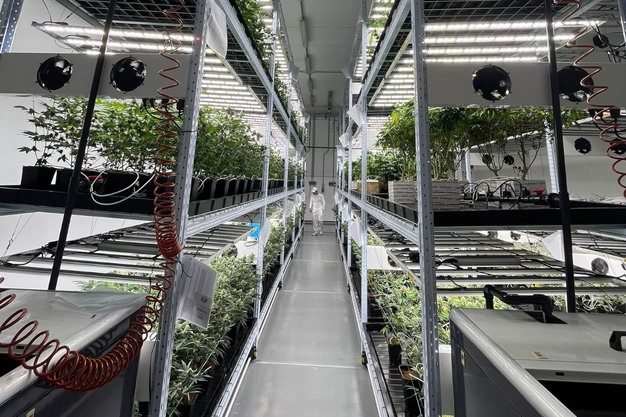
The cannabis cultivation space in Europe is renowned for its very strict regulations. Coupled with a growing market with countries like Germany and the UK driving the increasing demand, growers face one recurring challenge: how to set up a system that is both scalable and compliant, while remaining efficient. The Italian company Aerolight has been working on this problem from the ground up, beginning with container-based facilities and now shifting toward modular solutions designed for controlled environments.
 © Aerolight
Flexible, and modular approach
"The original idea was based on flexibility," says founder Marco Brunati. "Our first cultivation system was designed in such a way that a grower would be able to move it from one warehouse to another without dismantling everything." The first step was a 40-foot container, financed through a government-backed loan. As technology advanced, the company developed modular systems to go beyond the limitations of containers. "A container is only 2.4 meters high and 2.5 wide. That makes true vertical cultivation difficult. We needed something more adaptable."
The modular approach has since been applied to both cannabis and other horticultural crops. Marco points to the case of a Milan-based herb grower importing chives by air, half of which arrived spoiled. By producing locally in Aerolight modules, losses were eliminated and the operation became "zero-kilometer" sustainable. This crossover highlights the system's broader potential: a controlled environment that can be installed wherever production is needed.
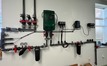
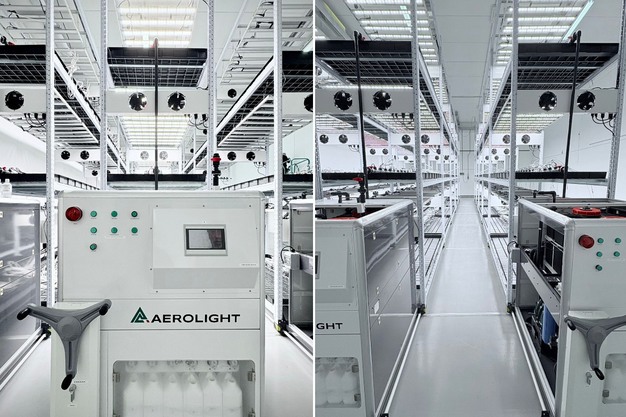
The current modules integrate fertigation and environmental management into a single closed system. Central to this is the Hydromix L 2.1, a patented fertigation unit with an internal 650-liter tank, four independent fertilizer slots, and automated pH control. The system includes UV sterilization to reduce pathogen risks, automated water intake, and integrated ventilation. Each module also connects to chillers for water cooling and monitors environmental parameters in real time. "The goal is precision," Marco explains. "We time irrigation events down to the second, so the plant absorbs from the substrate rather than being oversaturated."
 © Aerolight
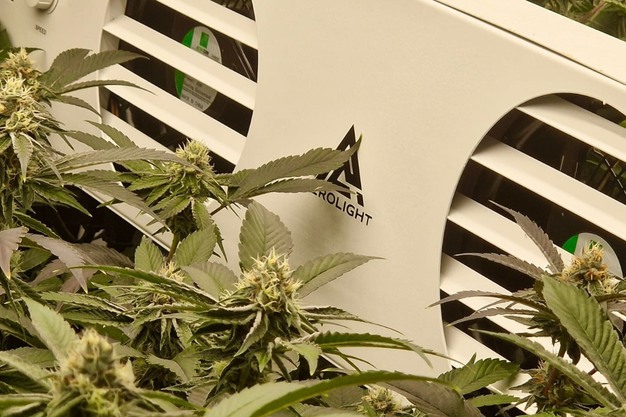
Lighting is another area where Aerolight has gone in-house, running photometric studies for spectrum optimization. Marco is an advocate of full-spectrum lighting from clone to harvest. "I don't agree with splitting veg and flower by spectrum. The plant needs full-spectrum light from the start; it just absorbs certain parts differently at different stages."
Modules can be equipped for hydroponics or aeroponics, depending on the grower's expertise. In hydroponics, plants root in rockwool, with nutrient solution delivered through drippers. Aeroponics raises the bar technically: roots are suspended in air and misted with nutrient solution. "The advantage is oxygenation and zero risk of root rot," Marco notes. "But it also requires a high degree of cultivation knowledge. If a nozzle clogs and the misting stops, the plant can die within a few hours. For growers without a skilled staff, hydroponics is usually the safer path."
For Aerolight, keeping all design and production in-house is a deliberate strategy. "It's the only way to go if you want reliability and material guarantees. If you want to be competitive, you can't just outsource and hope."
More than just cultivation
Beyond the hardware, Aerolight also supports operators in achieving GACP and GMP-2 certification. The company offers audits, document preparation, and system adjustments to align with pharmaceutical standards. "If you can show GACP compliance, you can position your crop differently in the market," Marco says. "GMP-2 is a step further, covering the whole supply chain from clone to drying. It makes an operation more credible and competitive."
 © Aerolight
The wider European context has made such solutions increasingly relevant. In Portugal, for instance, many operators invested heavily in cultivation but faced bottlenecks when their product needed GMP certification for export. With electricity, water, and labor costs averaging around €600 per square meter annually, many growers struggled to stay profitable once prices dropped. "You end up with warehouses full of product and no way to move it," Marco says. "That's why compliance and efficiency are no longer optional."
As cannabis markets across Europe continue to grow, Marco believes that systems like Aerolight's modular facilities highlight the sector's technological evolution. "We combine flexibility with pharmaceutical-level compliance to give growers the tools to survive in a market defined by high standards."
For more information:
Aerolight
+393396771389
[email protected]
aerolight.it