
Despite the turmoil going on in the Thai's cannabis industry at the moment, it's clear how the country has a lot to offer to the global cannabis sector. It's no wonder that the Thailand's policy-driven approach to developing high-quality cannabis is based on locally sourced cannabis varieties.
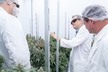
To better understand and standardize this aspect, a recent study has looked at Thailand's Foi Thong Phu Pha Yon strain. In a controlled cultivation setting, the study was designed to uncover how environment, harvest timing, and extraction methods affect both yield and cannabinoid purity. The researchers germinated 170 seeds, selecting the most vigorous females for cultivation, and tested different growth media made from elephant manure, peat moss, coconut coir, bat guano, and vermiculite. Cultivation occurred in two phases: seedlings were first developed in pots, under 90% humidity, 25 °C, and 18h of LED light. Then, they propagated in peat moss pots under 90% humidity and 24 h lighting for 10–15 days, followed by an 8h light cycle for 15–30 days to encourage sex differentiation. Indoor cultivation took place in a 40 m² fully controlled environment, complete with climate-regulated air, CO₂ enrichment, drip irrigation, and structural support for branch expansion, while outdoor plants were grown with minimal environmental control for comparison. Throughout vegetative and flowering phases, light, temperature, humidity, and CO₂ were adjusted to determine the optimal conditions for plant health and cannabinoid production.
With the setup in place, the results made the value of precision immediately clear. Vegetative growth thrived at 27 °C with 70% humidity and 1200 ppm CO₂, producing strong stems and healthy leaves. Flowering required cooler, drier conditions and elevated CO₂ - 22 °C, 50% humidity, 1900 ppm - to enhance cannabinoid biosynthesis while limiting the risk of mold and disease. Blue and red LED wavelengths proved most effective for stimulating photosynthesis and secondary metabolite production, confirming that lighting choices matter as much as temperature and CO₂. Indoor plants outperformed outdoor ones across the board. Forty-eight females in the controlled room yielded roughly 400 g of fresh buds per plant, compared with 100 g per plant outdoors. After drying, which reduced weight by about 65%, indoor yields totaled 7560 g of dried buds per cycle. Trichome analysis showed that CBD levels peaked when roughly 80% of trichomes were cloudy white, highlighting the importance of precise harvest timing in optimizing potency.
Extraction and purification were handled with the same attention to detail. Dried flowers were decarboxylated, then processed using ethanol maceration, winterization, and flash chromatography, producing CBD with an average purity of 86.6%. Distillation further refined the isolate to pharmaceutical-grade standards while minimizing THC contamination. Across two cultivation cycles, this approach yielded 2343.6 g of extract per cycle, which, when diluted, translated into nearly 11,700 mL of finished oil, enough to fill more than 2,300 five-milliliter bottles.
Media selection also proved critical. The balanced mix of organic and inorganic components delivered the highest indoor yields, demonstrating that substrate composition materially affects both flower weight and quality. Outdoor cultivation, by contrast, failed to produce dried flowers, underlining that controlled indoor conditions remain essential for consistent, scalable production.
Taken together, the study shows that precision during vegetative and flowering stages, combined with careful harvest timing and advanced extraction methods, allows growers to reliably produce high-yield, high-purity cannabis. Environmental variables such as temperature, humidity, CO₂ concentration, and lighting are not just nice-to-haves, they shape both biomass accumulation and cannabinoid profiles. Similarly, extraction workflows using ethanol maceration, winterization, and chromatography are scalable and capable of delivering pharmaceutical-grade isolates.
All in all, the study highlights the potential of local Thai genetics to meet global medicinal demand, showing that with the right combination of cultivation science and post-harvest technique, consistent, high-quality cannabis is repeatable.
Source: mdpi.com