

Thailand's cannabis industry is navigating a period of rapid regulatory shifts, and operators who anticipated compliance from the start are finding themselves better positioned than those who didn't. "When new rules around GACP came in, we weren't affected," says Natcha Klahan, COO at World Pharma Solutions. "But for many farms, it was a shock. Passing certification is one thing, but upholding those standards day after day is the real mission."
 © World Pharma Solutions
Adhering to high standards from the start
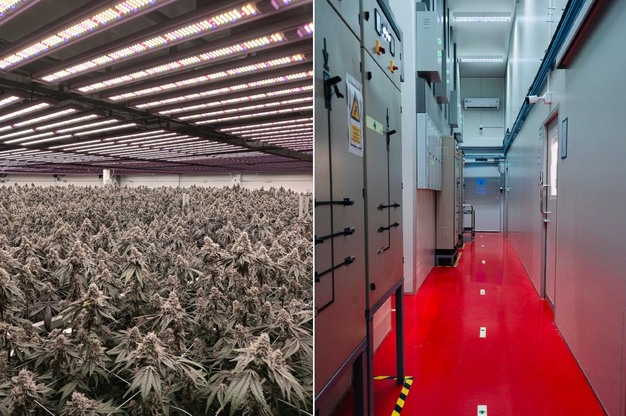
World Pharma operates two GACP-certified facilities near Bangkok: its high-output production site in Samut Prakan, and its genetics-focused House of Strains in Samut Sakhon.
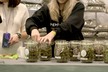
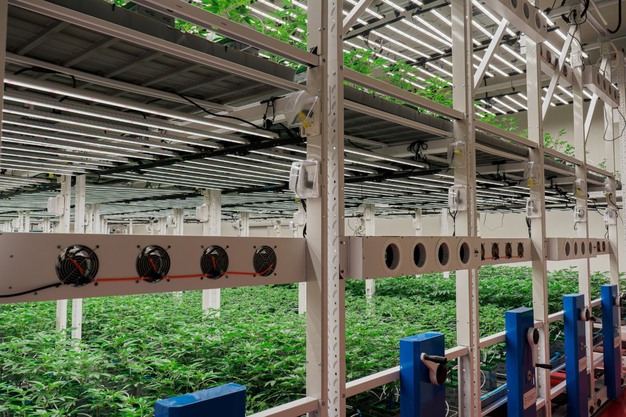
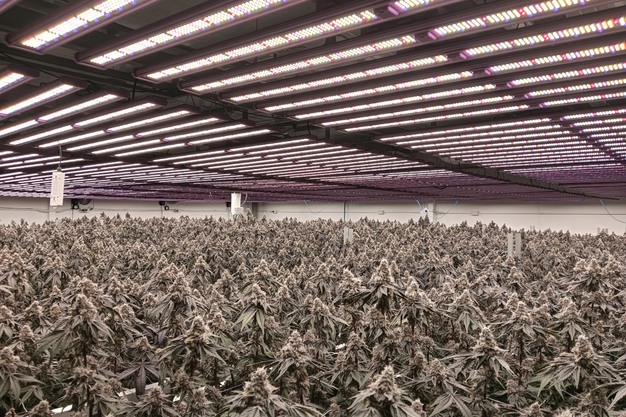
The Samut Prakan site delivers 160–180 kg of flower every three weeks. The farm uses double-tiered vertical racks, coco as a substrate, full climate automation with Priva, and fertigation via Dosatron. "This site is built for reliability and volume," Natcha explains. "We're able to produce consistently at scale and keep costs competitive while maintaining export-level standards."
Coco, she adds, is a practical choice for large-scale production in Thailand. "It's a more forgiving substrate." With Thailand's strong agricultural base, coco supply isn't an issue, despite the current global shortage of this medium. "We order around 200,000 baht of coco monthly of the highest quality, and there's no shortage for us. We're an agricultural country with abundant husk from coconut production."
 © World Pharma Solutions
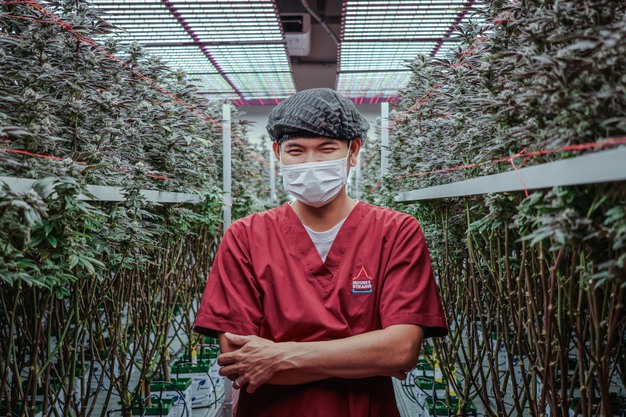
In Samut Sakhon, the House of Strains produces 40–50 kg every weeks, with a different cultivation philosophy. Here, plants are grown in rockwool across eight flowering rooms, managed by a small, specialized team of eight growers. "Rockwool fits more of the craft approach," she says. "Thai growers have more experience with it, especially those who learned from American cultivation practices. It allows us to run smaller rooms with precision."
The site also houses World Pharma's pheno-hunting, mother stock, and post-harvest processes. "We look for the strongest mother plants, resistant to pests, not brittle, adaptable, and high-yielding. That's the backbone of everything we do," she adds. In-house pathogen testing (HLV, Fusarium) supports this program, alongside full climate control and tightly managed drying and curing workflows.
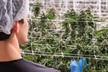
Both facilities operate fully indoor grows under LED lighting. For Natcha, the choice was clear: in a climate like Thailand's, indoor cultivation provides complete environmental control. To access European markets, strict microbial standards must be met, something far more challenging to achieve in outdoor or greenhouse setups due to unpredictable weather and insect pressures.
 © World Pharma Solutions
Thai market developments
On the business side, Thailand's cannabis sector is still in an early stage of development. While there is growing interest from dispensaries in products such as gummies and edibles, current regulations which require a prescription have influenced the pace of retail growth. 'Different owners and operators experience the market in different ways, so perspectives can vary depending on who you ask,' Natcha notes. Ultimately, the winners will be those who view regulation not as a barrier, but as the foundation for building sustainable business models
Her stance, however, is clear: build to international standards, even if domestic demand remains uncertain. "In the beginning, I looked to Europe and Canada as role models. The players who cut corners don't last long. For us, compliance had to be in place from day one."
"Thailand's competitive advantage lies in production costs, but quality remains a priority. Some non-compliance Thai flowers made it to Europe earlier this year, which does not represent the compliance farms standards," Natcha says. "We want to show that Thailand can compete with International producers at the same quality level."
 © World Pharma Solutions
Through her work with a local association, Natcha is pushing for Thailand to establish itself as a credible exporter. "We want to work with the government, not against it. They've given us a stage to provide input, which is rare compared to other countries. But the message is clear: if cannabis hurts Thailand's reputation, the government will act quickly. For this industry to thrive, we must embrace responsibility and accountability as our foundation."
That's of the utmost importance for a sector that rose from an illicit space and is now held to a standard where no missteps are allowed. "It takes years to build a reputation and minutes to destroy it," Natcha says. "We're in this for the long term. That means consistency, compliance, and proving that Thailand can compete globally."
For more information:
World Pharma Solutions
98/20, Village No. 1 Bang Sao Thong Subdistrict, Bang Sao Thong District, Samut Prakan Province 10570, Thailand
+6662-718-6756
[email protected]
worldpharmasolutions.com