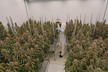


It's been a busy summer for the Cannabis Research Coalition. With 13 research chambers now fully operational, the team has doubled down on studies that range from propagation and flowering to post-harvest science, and airflow in particular has been getting a lot of attention.
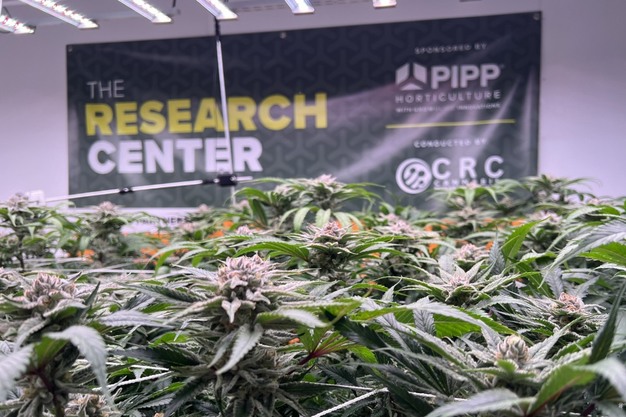
On the Pipp Horticulture side of the warehouse, airflow trials are now in their second round. "The first study went fantastic. We're crunching that data right now and will be releasing results at MJBizCon," explains Dr. Allison Justice, who leads the research efforts. "We're in week three of the second round and we are noticing very similar trends from the initial experiment. The results have surprised me and we believe what we are discovering will change the way cultivators think about airflow management."
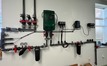
Locking in the environment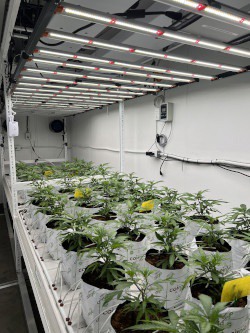 © Cannabis Research Coalition
The other half of the facility is dedicated to Coalition and contract research. With precision environmental controls, the team is moving beyond "mini splits and dehumidifiers" to hold variables like VPD completely static, something that most cultivation facilities struggle to achieve.
One of the first-of-its-kind trials now underway compares how static VPD control versus conventional swings influence plant health, stress, and secondary metabolite production. This study is conducted with Vaportrol technology found in Cannatrol Systems. "Right now, most growers target a certain VPD number, but the plants aren't actually experiencing that because of the on/off cycling of equipment," Allison says. "The average might look right, but those fluctuations can make a big difference. If we can truly hold VPD steady, what does that mean for yield, consistency, nutrient uptake, and overall plant quality? That's what we're testing."
The post-harvest frontier
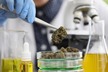
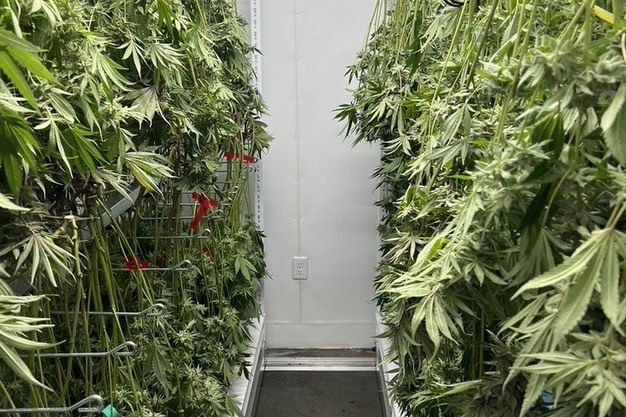
While environmental control is a major focus, Allison admits her personal passion lies in post-harvest science. "Post-harvest is the unknown. Cut flowers, fruit, tobacco, there's literature for those crops, but cannabis is unique. We dry it, we cure it, and we care about terpenes. There's nothing to build on, so we're starting from scratch."
So far, the team has looked at chlorophyll degradation, sugar changes, and other measurable markers. But as Allison points out, there's often a gap between lab results and what people experience when consuming the product. "We see differences in smokability that we're not yet measuring. The next step is understanding what's happening during drying and curing, the CO₂ levels, the terpene shifts, and what role those play in final quality."
 © Cannabis Research Coalition
Tools for growers
The Coalition is also rolling out practical tools to help cultivators apply research findings. "It started with spreadsheets," Allison says. "Over time, we've been turning those into apps that growers can actually use."
So far, that toolkit includes a timer app, planting maps, and a fertilizer calculator, with a crop steering calculator in development. All of that is readily available and free to use. "They're simple tools, but they save growers time and make it easier to test strategies in their own facilities."
 © Cannabis Research Coalition
Building the roadmap
From airflow optimization with Pipp to dialing in VPD and pushing deeper into post-harvest science, the Coalition's work is steadily mapping out areas where the cannabis industry still lacks hard data. "The point is to keep asking: what's really happening inside the plant, and how do we measure it?" Allison says. "That's the only way to turn experience into science, and science into better cannabis."
For more information:
Cannabis Research Coalition
www.cannabisrc.org