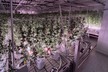


When Canada legalized cannabis, early movers like THC BioMed had one goal: make access simple for everyday Canadians. "We wanted people to be able to get cannabis without jumping through hoops," says John Miller, CEO of THC BioMed, a licensed producer based in Kelowna, BC, operating since 2012.
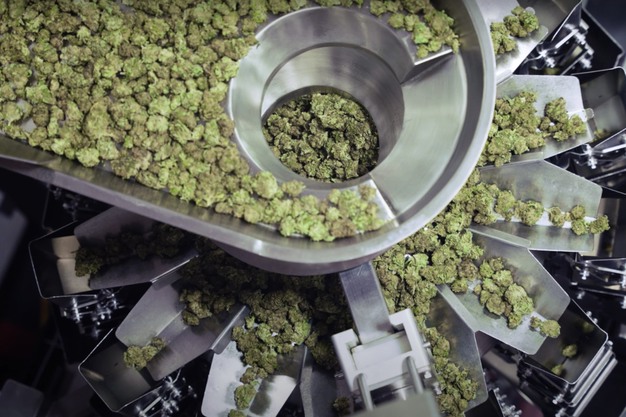
The company was one of the first to secure a license from Health Canada, even holding a rare Section 56 exemption that allowed them to grow before commercial sales were permitted. "Back then, we didn't have the knowledge, the equipment, or even the supply chain. We had to drag the industry out of the gray market into the legal one," John recalls. "It was complicated. But we were helping to shape the rules."
 © THC BioMed
A market built on sacrifice
That early work laid the groundwork for today's industry. But most of the early movers who poured money into it aren't around anymore. "They were pushed out," John says bluntly. "The government overtaxed them, while bigger producers compressed prices to the point where profit margins vanished. A lot of those same big players went bankrupt, too."
According to John, the structure of excise tax means that price compression hasn't just hurt companies, it has effectively broken the market. "When the price drops, you can't bring it back up. Now taxes are higher than the profits. Every $100 in cannabis sales gives us back $40. That's why the business is dying."
The original mandate, to legalize cannabis and displace the illicit market, has, in John's eyes, shifted to a simple cash grab. "Billions in revenue are flowing into government coffers, but licensed producers are laying off staff every week. I haven't taken a salary in three years. That's what it takes to keep this alive. Nobody talks about those sacrifices."
 © THC BioMed
Adapting
THC BioMed has invested around CA$14 million into its operations and isn't planning on walking away. "We're waiting for things to be fixed," John says. The company pivoted away from flower production for two years, betting on edibles to ease the burden of excise tax. That bet almost paid off, new legislation was expected in 2024 to rebalance the tax structure which would have allowed the company to go back to cultivating for flowers. But that legislation never materialized.
Instead, THC BioMed signed an export contract that allowed it to restart cultivation this year without spiraling into losses. "We'd been going on a downward spiral if we just kept growing for the local market. The export deal helps us sustain operations until the tax issue is addressed."
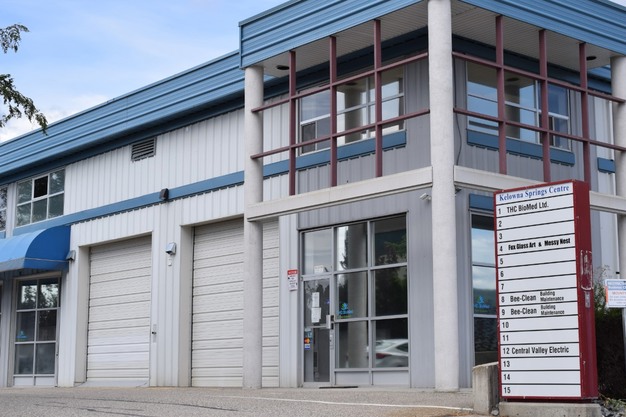
Currently, the company produces 150–200 kilograms but has the capacity for 300-400 kg per quarter in its Kelowna facility, which spans 22 strata units. Alongside flower, THC BioMed continues to manufacture its THC Kiss line of cannabis edibles.
 © THC BioMed
Growing with conviction
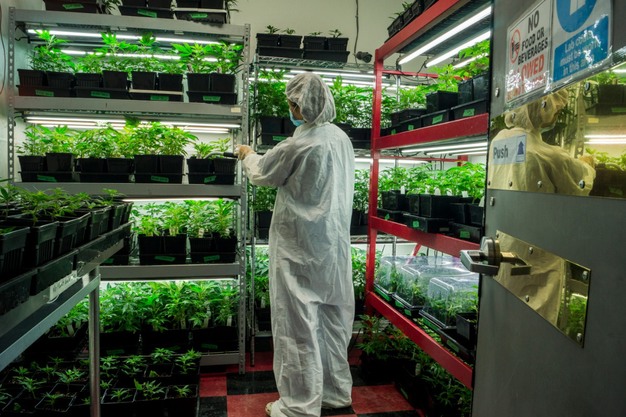
Unlike many producers chasing yields or chasing tech, THC BioMed has a straightforward cultivation philosophy: treat cannabis as an herb. "We grow in soil, everything organic, in pots, under HID lights. They work better for the strains we cultivate," John explains. "We're not into yield. We're into growing the herb the way it's supposed to be grown."
The company maintains mother plants and propagates genetics to ensure consistency, focusing on phenotypes adapted to their environment. "It can take years to stabilize a phenotype," John says. "That's how you get quality. Cannabis was never meant to be smoked, it's an herb. People get caught up on the delivery system, but the result is what matters. The feeling is what matters.
The Canadian case
Despite frustrations, John remains optimistic about cannabis in Canada. "The industry isn't going away. It's a commodity, it's needed, and consumers will keep shaping it. Sales are up every month. The government just needs to cooperate so we can keep the industry alive."
For THC BioMed, the mission that started in 2012 hasn't changed: supporting access to cannabis for ordinary Canadians. "We're farmers of a product that people need. We're bullish on the future. There's light at the end of the tunnel, and we want to be part of that journey."
For more information:
THC BioMed
Email: [email protected]
thcbiomed.com/