


You hardly ever hear stories of neighbors complaining about the smell from a nearby garlic farm. In fact, you probably don't hear about it at all, since consuming garlic is widely socially accepted, though maybe refrain from eating so much that you start oozing it. That may not be socially accepted, but you do you. Cannabis, on the other hand, is a very different crop, partly because growers need to put odor control systems in place to avoid a slew of complaints from the local community. As if growing cannabis at scale weren't expensive enough, growers also have to invest in costly technology to keep that highly recognizable smell away from unwanted nostrils.
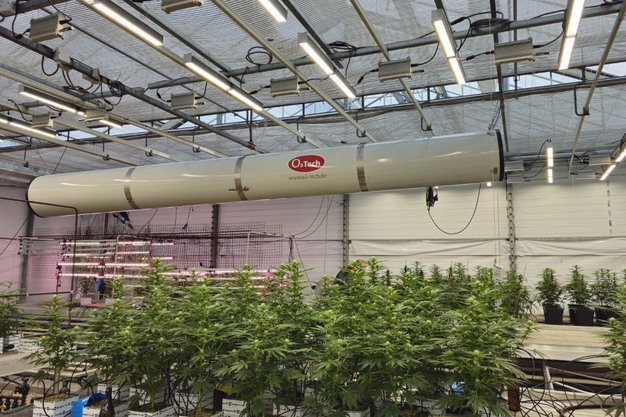
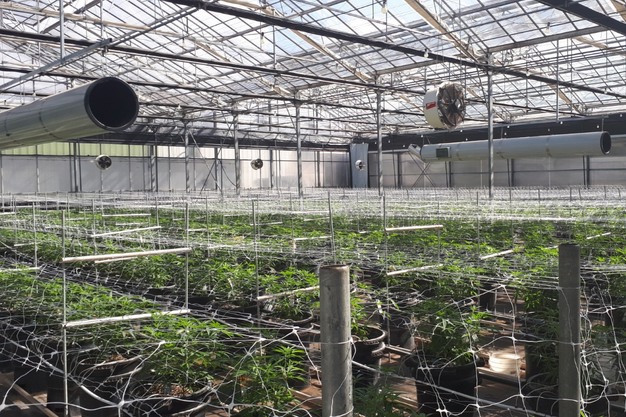
A recent assessment of the Airculess ACT system, carried out at Glasshouse Farms in California by SCS Engineers, sheds light on both the promise and the limitations of new odor-abatement technologies.
 © Tuprotect/O3
Cannabis odor and trials
A little smelly science first. Researchers have linked the smell of cannabis to volatile sulfur compounds (VSCs) such as 3-methyl-2-butene-1-thiol. Since it's not easy to measure those compounds directly, total reduced sulfur (TSR) is usually used as a proxy. In the case of Airculess, however, this method did not fully capture the system's effectiveness.
Six Airculess units were installed above the canopy to test their efficiency. Compared to traditional scrubber systems, Airculess is marketed as using less energy, requiring no costly consumables, and operating with fewer maintenance concerns.
The findings, though, were not straightforward. TRS readings did not correlate consistently with odor levels, especially when plants transitioned into flowering. While data suggested little effect on sulfur counts, trained odor panels and on-site staff noted a tangible reduction in smell inside the greenhouse. In some cases, odors outside the facility were stronger than those within, pointing to a measurable, yet not easily quantifiable, impact of the technology.
 © Tuprotect/O3
Results
SCS concluded that while Airculess may not behave like a traditional scrubber (which removes sulfur molecules from the air), it does appear to transform some of the most pungent compounds into less offensive ones. Reportedly, SCS found that the Airculess system removes 76% of the smell. This practically means that neighbors wouldn't complain as much about cannabis odors, even if traditional instrumentation cannot fully capture the improvement. To put it differently, odor control seems to be another element of cannabis cultivation without a one-fits-all solution.
 © Tuprotect/O3
Further trials are definitely necessary to assess if combining the Airculess with carbon scrubbers could reduce the density, and therefore cost, of scrubber units while keeping odor levels under control. With regulators increasingly scrutinizing emissions, it's likely that odor-abatement will remain a hot topic in large-scale cannabis operations.
For more information:
Tuprotect
Lies van Geest © Tuprotect/O3
+31 6 5321 8754
[email protected]