

Although under-canopy lighting has been making headlines in cannabis recently, traditional horticulture has long placed fixtures at different points around the canopy.Still, cannabis is a very special crop, so before adding flashy, fancy technology to a grow, cultivators rightfully want to be fully aware of the pros and cons. Similarly, lighting companies spend years in R&D to develop true "no-brainer" solutions for growers. This approach led Jump Lights to start exploring under-canopy lighting back in 2017, taking the necessary time to develop a well-conceived solution.
"We started looking at under-canopy lighting back in 2017," says Matteo del Ninno, CTO at Jump Lights. "In traditional horticulture, under-canopy and inter-canopy lighting is used to improve yields. So, why not in cannabis?"
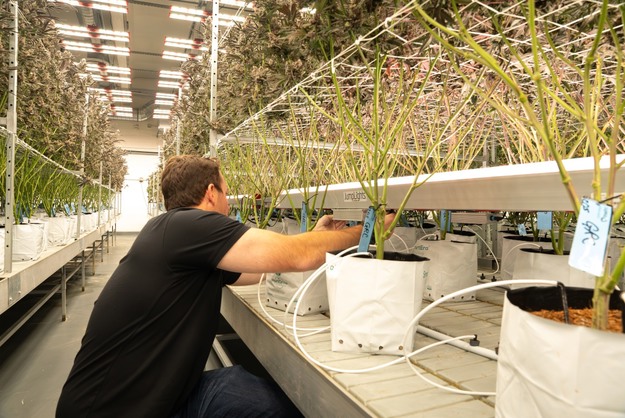
By 2020, the team began structured research with cultivators. What they found was predictable: plenty of DIY setups, lots of creativity, but no products truly designed for cannabis environments. "People were putting lights everywhere, under, sideways, around, but most of what they used came from other industries," Matteo says. "Those lights weren't meant for a CEA space. And when you put them under the canopy, very close to water and dirt, things can easily get out of hand. When you're harvesting, cleaning, spraying, it's easy to bump something or soak a connector. It was clear for us that an under-canopy system needed to be sturdy, simple, and safe."
 © JumpLights
A labor efficiency focused approach
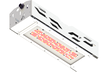
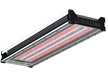
That became the design philosophy behind Catalyst Pro, the newly released under canopy fixture by Jump Lights. "We wanted fewer connections, because those are weak points," Matteo explains. Instead of daisy-chaining exposed connectors, Jump Lights integrated shielded cabling that runs along the fixture itself. "If you're spraying, water hits the shield first. The connectors are protected, covered, and secured."
The fixture's anodized aluminum body also doubles as a heat sink, helping dissipate heat from the diodes while keeping the unit lightweight. "The whole thing is built to survive daily grow room abuse," Matteo laughs.
 © JumpLights
But robustness wasn't the only concern. For growers already juggling high-density cultivation and labor costs, installing new tech needs to be straightforward and compatible with tried-and-tested SOPs. "In some setups, people are removing hundreds of under canopy lights at every harvest," Matteo explains. Growers usually have to remove the under-canopy fixtures when it's harvest time to make it easier for workers to pick all the flowers. But once that's done, the room still needs to be cleaned, and that's difficult if there are exposed electronics lying around. "It's like reinstalling a room every time," he says. "We made Catalyst Pro easy to install, move, and clean, so you don't have to do that, saving on labor."
Spectrum
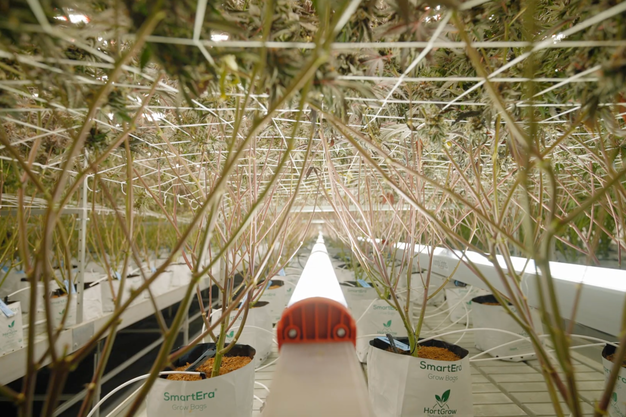
Once the more strictly labor-related design challenges were addressed, Matteo and JumpLights had to find the right spectrum for the Catalyst Pro. "As you move down the canopy, the first thing you lose is blue light," Matteo explains. "That's why lower flowers tend to be airy or loose, there's less blue reaching them."
The Catalyst Pro's spectrum addresses that directly, with two versions available: one at 34% red, the other at 52% red, both maintaining high blue content. "Blue light reduces intercellular space, helping make leaves and flowers denser," Matteo says. "In the mid and lower canopy, that's exactly what you need."
Notably, JumpLights avoids including far-red diodes in the under-canopy design. "Far-red elongates the plant, it does the opposite of what we want down there," Matteo says. "At high light intensities, white and blue light are much more effective."
The result is an under-canopy light that doesn't just boost brightness below, it complements what's happening above, almost like running two different ecosystems in one plant. "The top and bottom canopies are semi-independent," Matteo notes. "Top lights make plants stretch; under-canopy light helps compact and strengthen. They work in balance."
 © JumpLights
From C to B and A
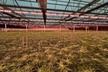
Early trials with Catalyst Pro surprised even Matteo. "Our first study came back showing a 60–70% yield increase," he admits. "I thought it was a mistake."
The reason wasn't raw biomass, it was quality. "You're turning C buds into B buds, Bs into As. The overall biomass might only go up 15–20%, but your sellable flower ratio goes way up," he explains. "Essentially, you're helping lower flowers cross the finish line."
Growers also found they could ease up on defoliation. "With more light under the canopy, you don't need to strip so many leaves," Matteo says. "It saves labor and preserves more of the plant's natural surface area for photosynthesis."
Indoors and greenhouses
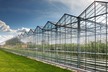
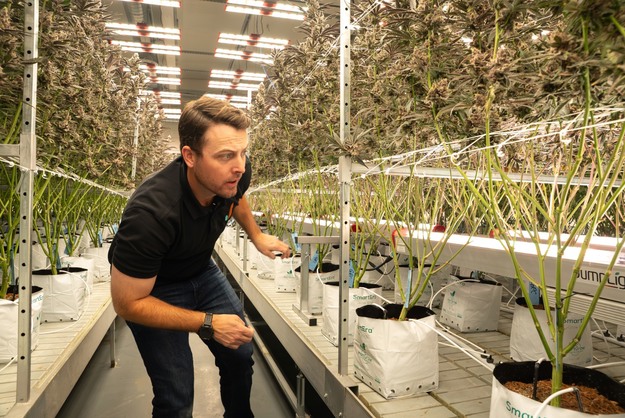
JumpLights has also developed a greenhouse version of the Catalyst Pro, designed for 480-volt infrastructure while minimizing human risk. "You're putting electronics into a humid, wet, people-filled environment," Matteo says. "We wanted to keep the high-voltage benefits but make it safer." Installation takes roughly a day. "Usually one drop per bench, standard 0–10V dimming," Matteo adds. And for growers using mobile benches, JumpLights is introducing the Catalyst Mobile, a version that moves with the tables. "We haven't seen anyone else do that in greenhouse cannabis yet," Matteo says.
 © JumpLights
Higher light intensity
Matteo is very much aware that adding light under the canopy in a landscape where most of the genetics are bred under low light conditions can lead to outstanding results like those from the first trial. "Growers spend years fine-tuning their genetics," Matteo says. "They know every response, every quirk. But those genetics evolved under low light. Now we can push intensity higher and help the plant show what it's really capable of, all the way down to the bottom branch."
For more information:
JumpLights
www.jumplights.com