

HVAC lines, rolling benches, the hum of fixtures overhead, these are all things anyone who has stepped into a cannabis facility has experienced. In Sacramento, that kind of space can be accessed with relative ease. Roughly 1.6 million square feet of cannabis cultivation sprawl across the city's warehouses and industrial parks. With such large numbers, it's not unusual for a facility to be put up for sale; after all, the cannabis business is not for the faint of heart, even if it can be a very profitable endeavor. One such site, operational since 2017, came on the market just as Tim Crowell, founder of Faven Lighting, was looking to bring the company's R&D efforts in-house.
Acquiring a commercial grow to run R&D
"You can't exactly test new lighting strategies in someone else's production room," he says. "If you screw up a harvest that's on you." In today's market, it's understandable that Tim didn't want to put grower partners in such a situation. "We needed a space where we could push tests without worrying about yield targets." That's when his eyes landed on that 2017 site. "The timing was wild," Tim says. "I was on the phone with a grower asking if he knew anyone selling a facility. He'd just gotten off the phone with someone looking to sell. Six weeks later, we closed the deal."
 © Faven Lighting
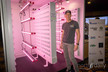
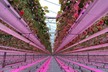
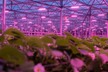
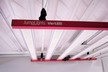
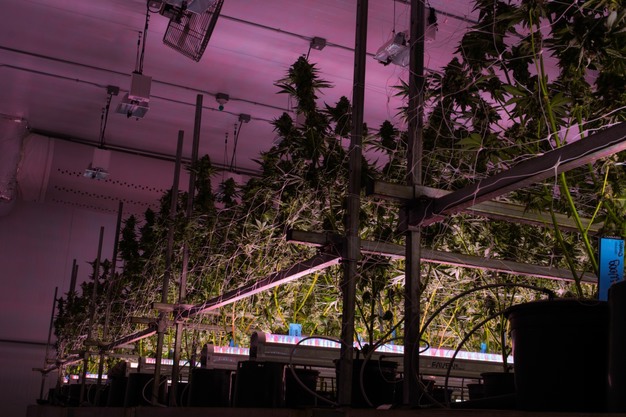
The result was a four-room R&D grow, each equipped differently to run all sorts of lighting trials. However, before they got to that point, the facility needed a bit of elbow's grease. "It's a bit of old tech, but that's part of the charm," Tim says. Faven refitted most of the infrastructure, top lights, irrigation, and benching, to suit its needs. One room, constrained by a low ceiling, now doubles as a vertical cultivation testbed. Each of the main rooms runs 28 fixtures: one HPS, one full-spectrum LED, one mixed-light, and one smaller test room. "We're updating it as we go, improving walkability, redoing the irrigation tanks, and eventually running fertilizer trials alongside lighting tests."
Far-red trials
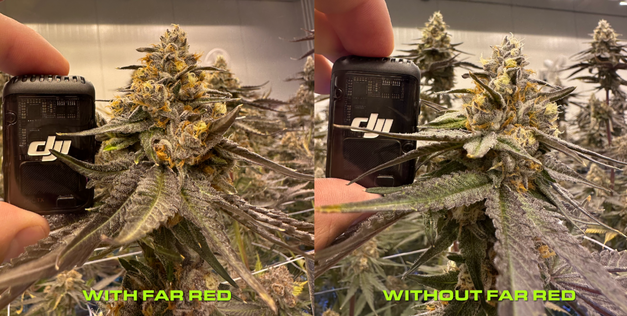
Right now, the focus is on far-red light. "Everyone talks about, but few actually understand," Tim points out. "Most of the science around far red is disconnected from what growers actually do. You'll see studies that say, 'we gave plants only far red, and they stretched and yielded less.' Well, sure, that's not how anyone grows. We want to bridge that gap between lab data and real-world cultivation."
 © Faven Lighting
In Faven's early trials, the team ran far red during the entire photoperiod and saw an 11% yield decrease, along with notably taller, stretchier plants. "That told us where the top limits were," Tim says. "Then we went the other direction, five minutes of far red after lights off, nothing during the day. That one gave us a faster ripening, better color, and a 6% yield increase. The plants seemed happier."
Understanding UV
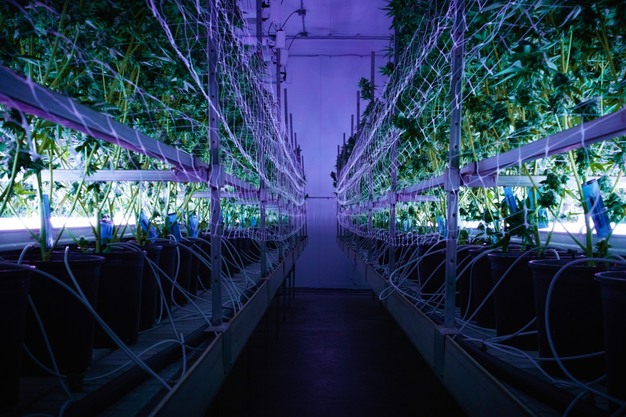
The facility's next wave of tests will add UV top lighting to the mix, a notoriously difficult wavelength to get consistent results from. Faven has set up a small batch of three fixtures equipped with independent UV channels. "Everyone says UV doesn't do much," Tim says. "We don't know that for sure. Maybe there's a way to use it that actually matters."
 © Faven Lighting
For Tim, this facility isn't just about proving product performance, it's about asking questions that don't have clear answers yet, and doing it in a context that mirrors real, commercial scale cultivation. "The goal isn't to make growers dependent on our lights," he says. "If you already have a fixture with a far-red channel, you can apply what we're learning. We're just trying to generate data that makes sense for the people actually growing."
For more information:
Faven Lighting
favenlighting.com