

Portugal has spent the past few years crafting a reputation as the European gateway for medical cannabis. Exports are rising, government and local media portraying the picture of a an extremely lively sector with fertile land, progressive laws, and a smooth regulatory environment.
But behind the glossy export figures, there is growing concern that the country's success story may be inflated by what one industry insider describes as "green washing."
According to a person familiar with the matter, most of the cannabis that Portugal "exports" is not grown in Portugal at all. Instead, large companies import low quality flower from overseas, process it locally, and then ship it back out with a Portugal flag stamped on the label. "Portugal has so far exported roughly 35 tonnes of medical cannabis flower," the source says. "Only around 2 tonnes were cultivated here. The rest came from elsewhere."
The concern is not the model of import and process itself, but the lack of transparency and the impact on local growers that actually cultivate plants in Portugal. "They grow it cheaply overseas for recreational markets," the person says. "Then it is processed in Portugal and sold in pharmacies across Europe at prices that are impossible for real cultivators to match. This is clear price dumping."
Portugal grown at a bargain price
According to the source, some pharmacies in Europe are being offered Portugal labeled medical flower for as little as 1.60 euros per gram. The insider argues that even the lowest cost producers overseas cannot achieve that price and still comply with European pharmaceutical standards. "The cheapest cost of production I have seen overseas was around 1.40 euros per gram," the source explains. "Processing in Portugal alone can cost around sixty cents. So how do they sell it at 1.60 euros?" According to them, the reason is simple. On one hand, these large companies need to show shareholders that money and product are moving. On the other hand, they use the availability of capital to dump the price, gain a larger share of the market, and squeeze out smaller companies, which ultimately end up being bought by those same large companies. At the same time, the issue is not only related to economics. Local producers say quality is also at stake.
Some sources say that a great number of pharmacies are shying away from product with the Portuguese flag on it, knowing that it is not actual product cultivated in Portugal. "They think Portugal equals low quality flower. That hurts the companies that actually cultivate here under strict European pharmaceutical practices," the person familiar with the matter says.
Small growers struggling to survive
Portugal has a large number of licensed cannabis operators, but few are actually growing at scale. According to the source, of all the issued cultivation licenses, only a handful are actually operational. "Some growers produce one to three kilos per harvest," the person says. "They have no strategy, no supply chain. That is just a facade to show they are somewhat operational, while in reality most of their products are imported and processed locally. These people entered the space without knowing how to run a medical cultivation project." The insider argues that companies rushing to import, relabel, and dump product on the market are not building a sustainable sector for Portugal.
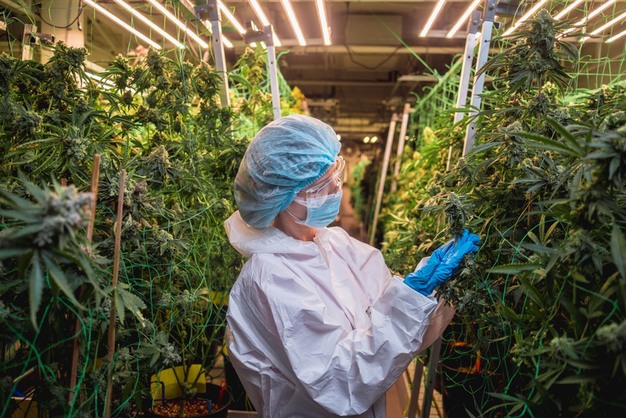 © Roman Zaiets | Dreamstime
"Next year I expect six to eight companies to go bankrupt," they say. "Everybody smiles at conferences, everybody talks innovation. Nobody talks cooperation."
Pressure on regulators and call for investigation
The person claims that regulators are being blamed for the situation, but insists that the responsibility lies with companies that lack proper due diligence and compliance. "Regulators apply the rules. They are not there to do due diligence on behalf of companies," they say. "Some companies had troubles because they had fake import documents provided by their overseas suppliers. They blame regulators for that, while the responsibility should fall on the operators in question not to have the right compliance people doing a good job."
The source says there are plans to file a complaint at the European Commission under Regulation 2017/1036, which covers import dumping into the European Union when it causes injury to a domestic industry. "We are gathering evidence," they say. "We want regulators to suspend import licenses where dumping is happening."
Meanwhile, international tracking systems are tightening. According to the source, the EU and the United Nations are implementing new digital track and trace requirements. "Everything will need to be logged. All legal documents, all import and export certificates," the insider says. "This should be ready within six months."
Crossroads
The promise of Portugal as Europe's cannabis gateway is not dead, but the path forward is becoming more complex. The sector needs scale, collaboration, and transparency if it hopes to avoid the boom and bust cycle seen in North America. "I have nothing against importing and processing," the source says. "What I find unacceptable is selling flower with the Portugal flag on it when it is not grown here."