

Curaleaf has filed a lawsuit against the Illinois Department of Agriculture seeking permission to grow cannabis in a hoop house instead of a fully indoor warehouse structure. If approved, it could open the door for other operators to request similar cultivation setups. This is according to reporting by Crain's Chicago Business.
Illinois requires cannabis to be grown inside enclosed locked facilities. According to Crain's, state regulators have interpreted that as a building with solid walls and a solid ceiling. Curaleaf argues that its proposed hoop house would meet the security requirements, stating in the lawsuit that the design would include perimeter fencing, locks, cameras, and security devices.
As reported by Crain's, other states including California, Colorado, Michigan, New Mexico, and Oregon allow outdoor cannabis cultivation. In Illinois, both medical and adult use cultivation have been restricted to indoor warehouses since program launch.
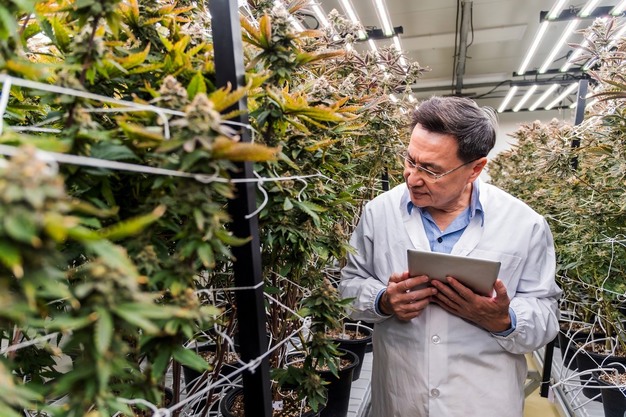 © Artitwpd | Dreamstime
Cost is a major factor driving interest in hoop house or greenhouse structures. According to Crain's, Scott Redman, president of the Illinois Independent Craft Growers Association, stated that building or leasing an indoor facility can require between five and ten million dollars. Redman noted that a hoop house or greenhouse could require significantly less capital, estimating costs around seven hundred fifty thousand dollars or lower.
Crain's reports that forty nine of the eighty seven licensed craft growers in Illinois have not launched operations. Redman attributed this largely to financing challenges tied to high buildout costs. He also told Crain's that early attempts by craft growers to use lower cost greenhouse structures were rejected by regulators due to the enclosed locked facility requirement.
Crain's notes that two companies, Green Thumb Industries and Natures Grace, previously received approval in 2018 to grow cannabis in secured outdoor screenhouses. When the state attempted to revoke those approvals in 2021, both companies challenged the move in court and retained the ability to use screenhouses.
Curaleaf referenced those cases in its lawsuit and argued that its hoop house proposal aligns with earlier interpretations of the regulation. According to Crain's, the Department of Agriculture responded that cannabis must be grown within solid walls and a solid ceiling.
The agency told Crain's it is reviewing its interpretation of the enclosed locked facility language and may pursue formal rulemaking. A spokesperson stated that the department is working with industry and lawmakers on regulatory updates.
Some craft growers may not benefit from a policy shift. According to Crain's, grower Reese Xavier said that many operators have already invested in indoor facilities and may not have space for outdoor cultivation.