
The bill approved by the United States Senate to reopen the federal government includes language that could effectively shut down the current hemp sector in the country. Buried in the 141-page funding package is a provision that would ban the unregulated sale of hemp-derived intoxicating products, including delta-8 THC, and would change the definition of hemp in a way that makes most existing products illegal.
The wording appeared only one day before the vote, after years of pressure from states and parts of the marijuana industry. Hemp operators have long argued that resistance to hemp has little to do with safety and much to do with market protection, noting that calls for restrictions are most organized in places where marijuana is already legal.
According to the US Hemp Roundtable, "If passed, this legislation would wipe out 95% of the industry, shuttering small businesses and American farms while costing states $1.5 billion in lost tax revenue."
Under the language now attached to the funding bill, any hemp-derived product intended for human or animal consumption would need to meet strict limits. It could not contain more than 0.3 percent total THC and no more than 0.4 milligrams of total THC in the entire package. The cannabinoids would need to be those that naturally occur in the plant. Compounds produced through chemical conversion or other manufacturing methods would be disallowed. In practice, this would remove the majority of intoxicating hemp products from gas stations, online shops, and corner stores across the country.
Supporters say the measure would close a loophole that has allowed intoxicating hemp products to spread without federal oversight. Opponents say it would smother the hemp economy while leaving only non-intoxicating CBD and industrial hemp uses in place.
The dispute came to a head in Kentucky, where the state's two senators found themselves on opposite sides. Sen. Rand Paul warned that the language would kill an entire industry and harm farmers and small businesses. He briefly held up the bill, sharing on X that the provision has nothing to do with reopening the government and that it would hurt Kentucky agriculture.
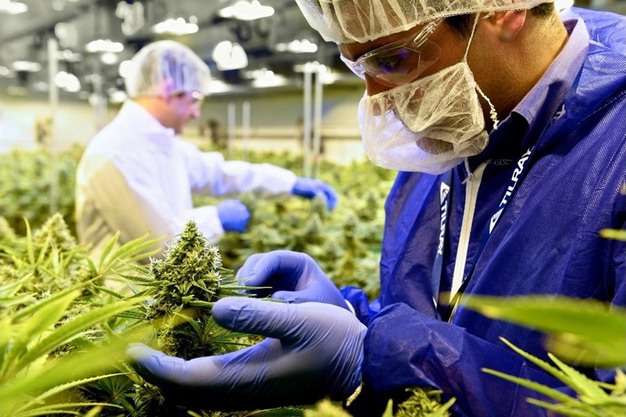
Industry voices are lining up behind that view. Tilray Brands stated, "As a leader in the hemp industry, Tilray Brands strongly supports smart, forward-looking regulation, not prohibitions that stifle innovation, threaten small businesses, and restrict consumer choice. The hemp language buried within the government funding bill is misguided, out of touch with consumer interests, and misplaced in legislation where it does not belong.
The company added that responsible operators already follow state rules and urged Congress to work with the sector instead of adopting restrictions that would eliminate an entire product category.
 © Tilray Brands
Others are bringing data to the table. "The data show that adults are using hemp beverages responsibly to relax, reduce alcohol consumption, and feel better without high levels of intoxication," said Kevin Provost, CEO of MoreBetter. Chief Operating Officer Tyler Dautrich added, "This is not a legalization debate, it is a data-driven public health issue.
"Our industry is being used as a pawn as leaders work to reopen the government. Recriminalizing hemp will force American farms and businesses to close and disrupt the wellbeing of countless Americans who depend on hemp," said Jonathan Miller, U.S. Hemp Roundtable General Counsel.
The hemp-derived beverage segment alone is estimated to represent $1 billion in annual sales, driven largely by small businesses and supporting farmers, processors, and retailers. A recent national poll shows that more than 70 percent of Americans want hemp products to remain legal and available.
The Senate passed the bill 60 to 40. The House still needs to vote. The stakes are clear. If the language remains unchanged, the government could reopen while a $28 billion hemp cannabinoid market disappears.