

What began as a mysterious problem in California cannabis, plants that looked healthy early on but later turned brittle, stunted, and disappointing at harvest, is now recognized as one of the industry's most pressing global threats. Hop latent viroid (HLVd), first confirmed as the cause of this "dudding" phenomenon in 2019, established itself rapidly on the U.S. West Coast. From there, it has ridden the wave of demand for California genetics, spreading internationally as cultivators in new markets imported prized clones and mother plants. Today, HLVd is no longer a regional issue; it is a global challenge for cannabis growers from North America to Europe and Asia.
HLVd's success as a pathogen lies in its invisibility and ease of transmission. The viroid often travels silently, carried in outwardly healthy clones or hidden in mother stock. Once inside a facility, it spreads readily through the facility on tools and equipment such as pruning shears, gloves, benches, and even drip lines. This combination of latency and mechanical transmission allows infections to remain undetected until the damage is irreversible. By the time symptoms like brittle stems, sparse trichomes, muted terpenes, and depressed cannabinoid output are obvious, yield and quality losses are already locked in.
 © CannVitroWell-rooted tissue culture plants
The scale of the problem is staggering. A large survey of California cannabis facilities involving over 200,000 tissue tests found that roughly 90% of operations had evidence of HLVd. Researchers estimate annual economic losses in the billions, reflecting reduced yields and diminished potency that can halve a crop's value. While figures differ across markets, the findings reveal just how deeply the viroid has penetrated cannabis production networks.
Canadian diagnostics from 2020–2022 showed HLVd in about a quarter of samples, while services in the Pacific Northwest report regular detections in both hemp and high-THC cannabis. Similar reports are now emerging across Europe and Asia, underscoring what trade press and scientific reviews describe as a "global plant health risk".
Containment depends on a two-pronged strategy: rigorous hygiene and sensitive testing. Disciplined cultivation practices related to hygiene can reduce opportunities for transmission, such as cleaning tools and surfaces between batches. Clones and plant material act as one of the largest vectors for transmission. Strategies such as continuous monitoring and testing, as well as the use of tissue culture for genetic banking, are both strategies used to mitigate Hlvd infection rates and preserve genetics.
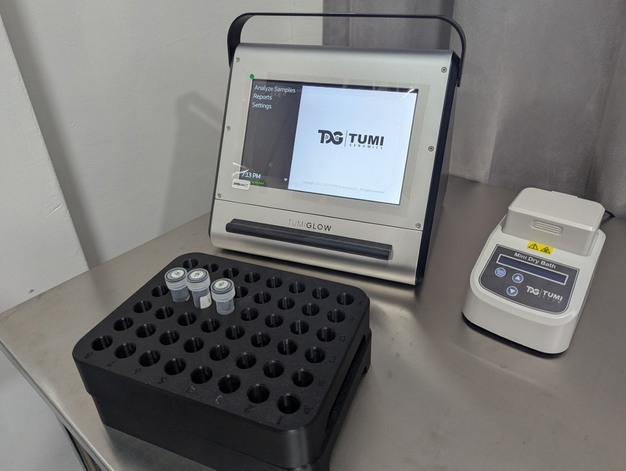 © CannVitroA Tumi machine in the CannVitro lab
Encouragingly, proactive solutions are emerging. One example is the partnership between Tumi Genomics and CannVitro in Thailand. CannVitro is a tissue culture and genetic banking lab located in Pathum Thani. Servicing clients across Thailand, the team at CannVitro is dedicated to helping growers preserve their genetics and build sustainability into their supply chains.
The CEO of CannVitro, Atiyyah Ferouz, has been involved in the Thai cannabis space for several years and is excited about the direction it's moving in. "The Thai cannabis industry is maturing and becoming established as a key player in the global marketplace. Cultivators are placing more importance on product consistency and the quality of their genetics. Buyers in Germany are already requesting that cultivators incorporate tissue culture into their cultivation strategy as a way to ensure product quality."
 © CannVitroAtiyyah Ferouz at the Asia International Hemp Forum
CannVitro has also adopted Tumi Genomics' TUMIGlow technology to provide advanced diagnostic testing services for cannabis growers in the Thai market. By enabling cultivators to detect HLVd early and reliably, this initiative strengthens Thailand's position as a growing cannabis hub and helps prevent the costly outbreaks that have plagued other regions.
"We are thrilled to bring TUMIGlow technology to Thailand through our partnership with CannVitro," said Melanie Nash, CEO of Tumi Genomics. "Our goal is to empower cultivators with the tools they need to protect their crops, reduce the risk of HLVd spread, and support the sustainable growth of Thailand's cannabis industry."
For more information:
CannVitro
cannvitro.com
AgCann Consultancy
[email protected]
agcannconsultants.com