

Hop Latent Viroid has become the unwanted roommate of modern cannabis cultivation. If a country has regulated cannabis cultivation, you can be sure HLVd too has joined the party. Infection rates in several regions are going up, which means some growers are no longer asking if HLVd will show up, but rather when.
Unfortunately, there is no silver bullet. A clean mother room, strict workflow rules, aggressive testing, and a general sense of discipline remain the heart of viroid control. "Yet an uncomfortable truth is now taking shape across the industry," Fazle Quazi, CEO and founder of Boulderlamp, says. "Even when cultivators do everything right on paper, plants still struggle. The missing piece is often environmental hygiene, a factor that rarely earns the same attention as fertigation plans or lighting recipes."
The invisible load the plant carries
Commercial cannabis spaces are busy ecosystems. Surfaces and air carry the familiar cast of characters consisting of mold spores, yeast, bacteria, dust, and the metabolic leftovers of all of the above. None of these organisms are benign. "Their presence forces the plant to maintain a constant state of low-level defense, and that defensive posture costs energy," he points out. "Energy that is no longer available for growth, secondary metabolite production, or for the cellular housekeeping that helps plants repress viroid replication."
When this microbial pressure rises, immune signaling becomes less efficient. Oxidative stress creeps upward, while viroid symptoms sharpen. That's also when secondary infections take hold. Even the classic dudding profile becomes more severe. "Many growers have seen this pattern first-hand but lacked a clear language to describe it. Plants under that kind of stress simply lose ground faster."
This has renewed interest in technologies that reduce microbial load without stressing the crop in the process. One of the more studied options comes from an unlikely place.
 © Boulderlamp
A familiar wavelength with an unexpected application
In hospitals and food processing facilities, 405 nanometer visible light is an old acquaintance. It sits in the violet blue corner of the spectrum and is known for its ability to suppress mold, yeast, and bacteria on surfaces and in air. "When microorganisms absorb light in this range, photosensitive molecules inside their cells generate reactive oxygen species. These molecules damage the cell structure and suppress microbial growth," Fazle explains.
Unlike ultraviolet, which will happily damage plant tissue and degrade cannabinoids, 405 nanometer light is part of the visible spectrum and does not bleach surfaces or trigger plant stress. "It can run during dark periods without tripping photoperiod alarms. And it has been validated in environments far more sensitive than a typical cultivation room." It is also important to state what it does not do. "It does not penetrate plant tissue, and it does not interact with RNA." When putting this against HLVd, the viroid remains entirely unimpressed by it. That's because the value of this wavelength lies elsewhere, according to Fazle.
Environmental stress reduction as an indirect viroid strategy
When microbial load decreases, the plant regains bandwidth. "It basically means that theres's less constant activation of the immune system. On top of that, there's lower background oxidative stress, as well as a cleaner apoplastic space for signaling. All in all, the plant has a stronger readiness for defensive responses." In other words, it is the horticultural equivalent of cleaning the stadium before asking the team to play a difficult match.
The indirect benefits ripple. "Plants facing lower microbial pressure tend to show greater tolerance to viroid related stress. Secondary infections have fewer opportunities to take root. Powdery mildew pressure drops. Botrytis becomes less opportunistic. Even nutrient stress expression appears less dramatic. For a pathogen as subtle and slow as HLVd, these margins are very important," Fazle remarks.
A grow light that also cleans the room
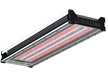
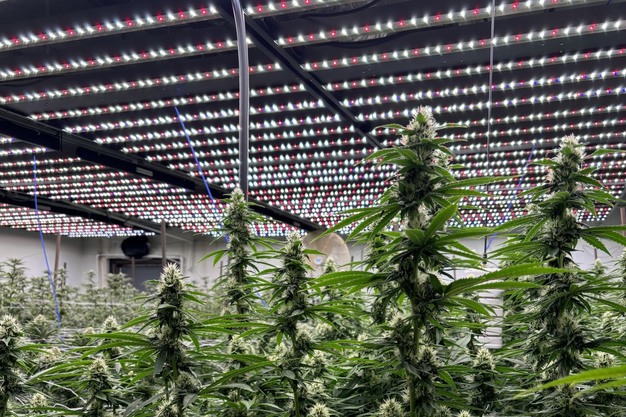
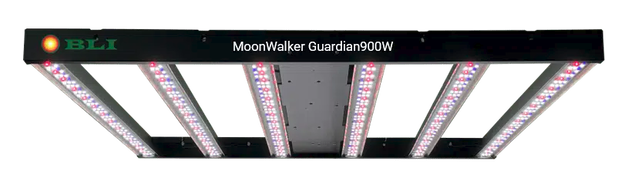
Fazle and the Boulderlamp team have spent the past several years developing lighting systems that combine full spectrum plant lighting with integrated antimicrobial visible light. The result is the Guardian900W, which layers a 405 nanometer antimicrobial mode on top of its standard horticultural output. "The Guardian has two spectra, one for cultivation, and one for antimicrobial activity. The latter can be used before and after work periods, during dark cycles, between plant rotations, or whenever the room needs a reset. There's no chemicals, no extra hardware, and no additional labor required with the Guardian."
According to Fazle, growers have experimented with the system in mother rooms, clone rooms, veg spaces, drying rooms, and anywhere the combination of plant sensitivity and microbial pressure creates a bottleneck. "The antimicrobial mode runs on scheduled pulses or on demand. Make no mistake, though: the goal is not sterilization. It is not possible and not particularly useful. The goal is a cleaner baseline that reduces microbial stress and gives plants a better chance at holding their ground against viroid related challenges."
 © Boulderlamp
Where it fits in the broader strategy
Fazle takes care to point out that the Guardian is a tool to help plants respond better to potential threat. "HLVd management still depends on disciplined workflow controls, tool sanitation, careful handling, air flow design, and a general culture of caution. But a room with lower microbial load is a room that asks less of the plant."
A broader trend in cultivation
If the cannabis industry is heading toward more biologically complex challenges rather than fewer, then tools that manage the environment itself will become increasingly relevant. And as always, the point is predictability. "Cleaner rooms produce more consistent crops, and consistent crops are better equipped to withstand whatever the next pathogen turns out to be."
For more information:
Boulderlamp
555 Aspen Ridge Dr., Lafayette, CO 80026
303-444-4852
boulderlamp.com