

Grodan and its partners have achieved average annual dry flower yields of 9.7 kg/m2 (1.98 lb/ft²) across 5.7 turns per year, with yields of above 10 kg/m2 (2.05 lb/ft²) being recorded in some treatment groups. These results from the company's ongoing research program at CRIC demonstrate the huge potential of precision crop steering and irrigation to boost growers' profitability and scalability.
Precision irrigation: EC, shot size and real-time data
Trial No. 5 in the research program evaluated precision irrigation effects on production while keeping the varieties and substrate constant: F1SeedTech autoflower hybrids Miss Beauty and Florence Fusion were grown in Grodan 3.2‑L Hugo blocks. Plants were split into two EC treatments (3.2 vs. 2.7 mS/cm) and irrigation volumes were increased in staged shot sizes (from 1% to 3% to 4.5%) over the six‑week flowering period to meet WC% setpoints. Grodan's GroSens Suite provided real‑time root‑zone data for adjustment and refreshment of EC according to plant needs.
Highest yielding trial so far
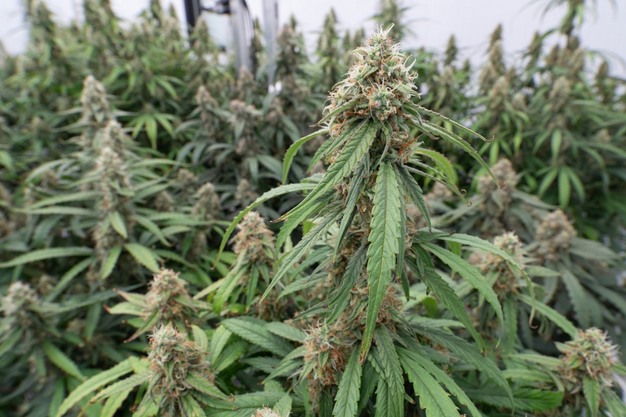
The trial proved to be Grodan's most successful autoflower trial so far, achieving annual dry flower yields above 10 kg/m2 (2.05 lb/ft²) in four treatment groups, and an average annual dry flower yield of 9.7 kg/m2 (1.98 lb/ft²) across all eight treatment groups, based on 5.7 crop turns.
"The flexibility and inherent steerability of the Hugo block and all our other growing media, including the uniformity in WC% over height of Grodan blocks, give growers so much control over the root zone conditions – especially in combination with real-time feedback from sensors," states Frank Janssen, R&D Project Management in Grodan's Applications & Development department.
"By optimizing the EC level to send specific vegetative or generative cues to the plants in the right phase of the growth cycle, it's possible to create the optimal situation for high yields," he adds.
Cost savings and sustainable use of resources
EC management not only increases yields but also improves crop steerability toward more balanced growth and flower production. This allows growers to fine-tune plant growth to match their production goals, such as maximizing bud density and quality. Additionally, a lower EC input may lead to a more controlled and balanced fertigate profile in the root zone while steering generatively, and therefore may require less drain over the course of the crop cycle.
A hurdle race
Control over the root zone is particularly important for cannabis growers, because with such a short and intensive crop cycle, conditions have to be spot-on every day. "In that sense, it's more like a hurdle race than a marathon. Missing just one hurdle can ruin your chances of winning. With the right infrastructure for climate and root-zone control, growers can replicate these results at scale in their own controlled environment agriculture (CEA) setting," comments Chad Rigby, Crop Consultant for Grodan in Canada.
 © Grodan BV
Great potential
Based on the results of this trial, the team is now keen to investigate the correlation between EC level and yield, looking for the sweet spot for water use efficiency. "Some cannabis growers push the EC really high – three or four times higher than we would recommend. This not only diminishes the yield, but also wastes fertilizer, which is neither a cost-conscious nor a sustainable approach," says Rigby
"We will keep using F1 hybrid autoflower seeds as a cost effective, premium-quality option and, with CRIC, we'll continue refining precision irrigation to help growers boost crop cycles, lower costs, and scale profitably," concludes Janssen.
For more information:
Grodan 101
grodan101.com
 F1 SeedTech
www.f1seedtech.com