

Many of the things that are standard in modern cannabis come from a time when curiosity about the plant could still lead to real trouble. With a market now dominated by hybrid genetics, the common belief is that tracing anything back to an original cultivar is almost impossible. Yet many of those early building blocks came from the first wave of cannabis exploration, when a handful of breeders drove across continents in search of unique, local varieties. Nevil Schoenmakers was one of them, and what he noticed on the side of a highway during a trip toward Turkey left a mark on the history of cannabis that has never faded.
On the way to Turkey
Dwight Diotte from D9 Canna Consulting still remembers those early years. A time when the modern industry was only an idea and the world of cannabis still lived in the shadows between one country and the next. Everyone in that circle was following clues more than maps, and all of it felt like a treasure hunt conducted with pocketknives and curiosity.
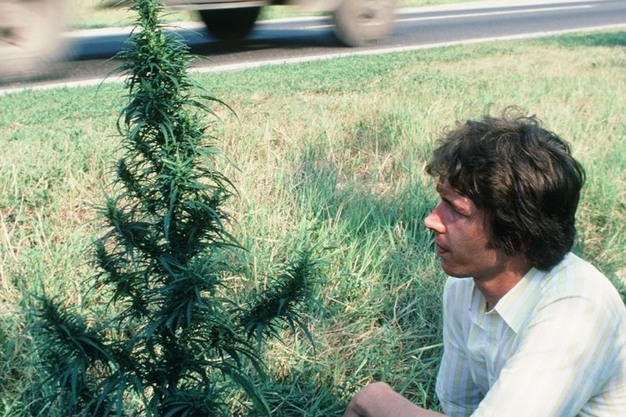
So, how did the cannabis ruderalis enter the cannabis world. The story begins with a road trip. Nevil was moving through eastern Europe on one of his seed finding journeys when he noticed something strange along a highway in Hungary. Plants, already well into flower, standing out against the heat of July. He stopped so suddenly that his car squealed. Then he ran across the road like someone who had just seen a myth walk past.
 © Dwight Diotte
He took a few branches, and dried them on the car heater. He soon realized what he found was something special. He pulled the break again, and turned around. Turkey could wait. Whatever he had just found demanded attention, "and maybe even saved him from a more dangerous detour," Dwight points out. The Cold War was still very real and borders in that region were not yet friendly to wandering plant hunters.
Cracking the seeds of something new
By the time Dwight saw Nevil the following year in the Netherlands, the mystery seeds were already on the table. They were tiny, dark, and impossible to germinate with the usual tricks. Dwight remembers cracking them gently between pebbles and soaking them the way Nevil guessed animals might do in the wild. "It felt less like horticulture and more like archaeology," Dwight recalls.
Once they sprouted, the surprise came quickly. These were not normal plants. They rushed from seed to flower with no regard for daylight and seemed determined to complete their cycle whether anyone encouraged them or not. The concept of autoflowering did not even exist yet. "Nevil simply watched the plants bloom at the fifth or seventh node and understood that something new was on the table."
This was the birth of modern ruderalis work, though at the time no one was thinking in neat categories. "We were just trying to understand what we had discovered."
Claiming ownership
Dwight drifted between Canada and Europe during those years and witnessed the whole thing unfold. He helped raise the funds for what would later become the famous Cannabis Castle, saw the early breeding work in action, and watched Nevil push ruderalis as far as he believed it could go before returning to his passion for long flowering hazes. "At one point in the mid-90s the Finola project emerged and its creators claimed credit for the autoflowering breakthrough, though the genetics traced back to the same region Nevil had explored, if not the exact same plants from Nevil himself," Dwight points out
Everyone involved in that era seemed to reinvent themselves every season. Seed companies shifted names. Breeders moved between projects. Some developed legendary cultivars. Others disappeared from public life completely. Through all of it, Nevil remained the figure who kept one foot in research mode and one in business reality. When the Dutch tightened regulations in the nineties, the landscape changed again, and a series of legal dramas followed him across continents. "Years later the dust settled and life moved on, but the seeds of his legacy were already planted."
Many of the haze lines that dominate shelves today can trace their roots back to Nevil, according to Dwight. "The same goes for the autoflowering category. Even after his attention shifted away from ruderalis, he still produced work that growers talk about in low, reverent tones."
Legacy
Dwight still grows ruderalis for fun. He says the plants teach him things. He says that even after forty years they still surprise him. "Nevil Schoenmakers always worked with what he found and let the plants tell him what they wanted to be. But the evidence is hard to ignore. When the first small black seeds from Hungary cracked open, the future industry cracked open with them. And even today, whenever an autoflower shows up on a legal shelf anywhere in the world, a tiny part of that moment on a roadside in eastern Europe is still alive."