


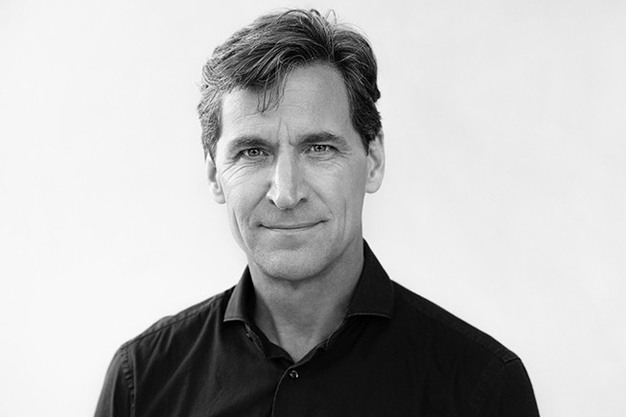
For all the uncertainty that usually surrounds cannabis forecasts, the German medical market has become unusually predictable. The import numbers keep climbing, Canada keeps filling the pipeline, and nobody in the supply chain shows any intention of slowing down. According to Arthur de Cordova, CEO of Ziel, the trajectory is already clear enough to put a number on it. Arthur was a Country Manager for AstraZeneca, and brings a big pharma perspective to cannabis, a market he has been working in for 10 years."Germany is heading toward 600 tons of annual imports, and it is heading there fast."
Recent quarterly data points in the same direction. Canada continues to function as the engine of Germany's medical cannabis supply. Then come Portugal and Denmark, followed by a long flat line of smaller contributors like Malta and North Macedonia. "Canada is a mammoth export market," Arthur says. "If it is shipping large volumes to Germany, it tells you something about where the opportunity is."
 © Ziel
Germany is moving faster than expected
Arthur points to what happened in 2024 and 2025. As Germany expanded its prescribing base through the CanG reforms, and as telemedicine opened the doors to a far larger set of legitimate patients, imports exceeded the prior annual export caps. Those caps have already been raised. "Some people ran the math," he says. "At this pace of growth, we need more capacity. It is the clearest sign the market has not reached equilibrium."
A comparison he likes to use is Michigan, a mature rec market with 8 million consumers. Michigan consumes around 145 tons of flowers and prerolls, which is roughly 45 percent of the entire market volume there. "Extrapolate Michigan's per capita consumption to Germany and you get a theoretical figure of 1,450 tons. Of course, Germany is medical, not rec. It will never reach Michigan's saturation. But if Germany reaches even 50 percent of that benchmark, the result is still enormous. Germany is tracking to 200 tons already," he says. "Once the market clears the first turn on the track, you see the line pointing straight to 600 tons within two years."
The only major risk factor would be a pullback in telemedicine. Poland tried that, the market shrank overnight, and then recovered as soon as telemedicine returned. "The genie is out of the bottle," Arthur adds. "Doctors are prescribing, patients are accessing care, and the system is not going back to the old restrictions. This is exactly how every US state evolved. Medical first, then wider adoption. The horses have left the barn."
The limits of a medical market will not stop the volume
There is still a ceiling to medical demand, though Arthur argues the ceiling is higher than many assume. As scientific studies expand and dosing standards improve, entrenched interests will push the sector toward accurate dosing and pharmaceutical formulations. "European pharma will not take the risk of putting out flower," he says. "But when the day comes for precise medicines based on clinical trials, all of that product still comes from flower. It gets distilled, isolated, or processed into targeted formulations."
This is where growers fear becoming irrelevant. Arthur is not convinced. The US multistate operators offer a cautionary parallel. Many of them invested heavily in states that are not considered cost effictive locations for cultivation. If Federal reform occurs, those assets become a liability. "So the question is, do the big MSOs really want Federal deregulation?" he asks. "Because they would have to write down a lot of facilities that should never have been built."
Germany, in contrast, remains an import driven market. It will stay that way. Only three domestic producers operate today, and nobody is rushing to build new sites in scale that addresses current or forecasted demand. Domestic production will struggle to reach even 3 percent of total demand. "Growing in Germany is expensive," Arthur says. "Imports will continue to dominate unless there is protective legislation. Cannabis is a fungible commodity. It will be grown where it can be grown predictably, at scale, and with consistent quality."
Which brings him back to Canada. The Canadian promise is simple: dependable supply. "If I am a pharmacy, I want 5 tons every cycle of the same product, with the same THC, the same terpene profile, and the same reliability. That is what Canada offers. That is why they remain central to the German market."
The economics behind processing will matter more as volumes rise
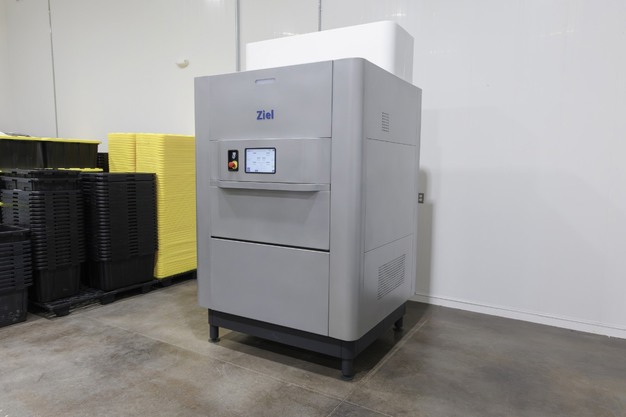
As volumes grow, processing becomes a chokepoint. Germany requires microbial reduction treatments for imported flower. Many cultivators rely on ionizing gamma facilities or x-ray systems, which carry operational costs that are difficult to scale. However, there are alternatives on the market. "You can buy x-ray machines for 350,000 euros each, and you would need five of them to match what a single Ziel unit can handle," he says. "Or you can pay 82 Swiss francs per kilogram to send product to a gamma center. Our equipment brings that down to less than 20 francs per kilogram over a five-year period. For Europe, with our volumes and our track record, the value proposition is strong. That is why we are seeing increased demand from Canada, Portugal, Denmark, Switzerland, and Czech Republic."
 © Ziel
One Danish customer who has been supplying 5 to 6 tons annually is now scaling toward 20 tons. Denmark cannot match Canada's excess capacity, Arthur notes, but growers across Europe and North America see the same trend. The German market is absorbing product faster than expected, processors are running close to their limits, and every indicator points upward. "Everything is lining up," he says. "The market is telling us where it is going."
The long view
Germany's medical framework may continue to evolve, but the fundamentals are locked in. "Before anything slows down, Germany will hit 600 tons," Arthur says. "Nobody is taking a breather before that number. Imports will keep rising, domestic production will remain minimal, and the market will keep rewarding predictable, scalable supply."
For more information:
Ziel
2269 Chestnut St., Suite 226
San Francisco, CA 94123
Tel.: +1 916 623 4886
ziel.com