


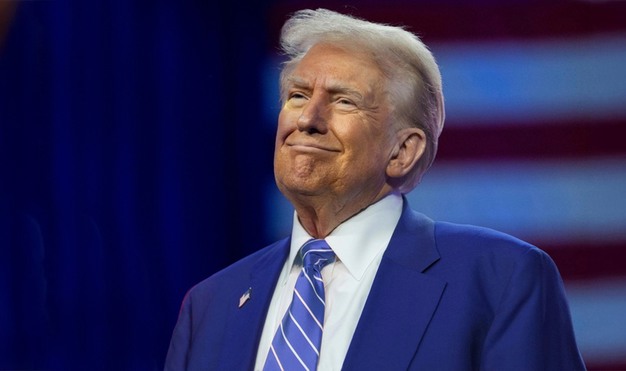
The White House made it official on December 18. President Donald Trump signed an executive order to reschedule cannabis from Schedule I to Schedule III under the Controlled Substances Act, closing a process that began with a Health and Human Services recommendation in 2023 and a Department of Justice proposed rule in May 2024.
With this move, the United States explicitly recognize the medical use of cannabis. According to the White House, more than 30,000 licensed healthcare practitioners across 43 jurisdictions already recommend medical cannabis to over six million registered patients.
The order also acknowledges the central contradiction that has defined federal cannabis policy for decades. While 40 states and Washington DC operate MMJ programs, cannabis has remained classified alongside substances deemed to have no accepted medical use. That classification, the Administration notes, has actively impeded research, discouraged physician guidance, and limited patient safety data, particularly for seniors and people managing chronic pain.
 © Muhammad Abdullah Javed | Dreamstime
Beyond cannabis itself, the executive order places unusual emphasis on hemp derived cannabinoids, especially full spectrum CBD products. The Administration instructs Congress and federal agencies to develop a clearer regulatory framework for hemp derived products, including THC per serving limits, labeling accuracy, and pathways for Medicare coverage. The order frames this as both a consumer safety issue and a research gap, pointing to widespread use of CBD by adults and seniors despite inconsistent federal oversight.
The immediate legal effect of rescheduling is narrow. Cannabis remains federally illegal and adult use is untouched. But for operators, investors, and regulators, this reclassification marks a historic moment.
The cannabis industry reacted accordingly
Across operators, service providers, and legal firms, one theme dominated the response: normalization. Executives repeatedly described rescheduling as the moment cannabis businesses begin to resemble any other regulated industry, particularly when it comes to taxation, research, and access to capital.
"This is the most consequential moment in the history of U.S. cannabis," said Cresco Labs CEO Charlie Bachtell. "The decision to move cannabis from Schedule I to Schedule III will be a cultural turning point, acknowledging what millions of Americans already know: cannabis is medicine and deserves responsible, common sense regulation."
 © Cresco Labs
The end of Section 280E was cited almost universally as the most immediate and tangible impact. Under Schedule I, cannabis companies have faced effective tax rates often exceeding 70 percent. Schedule III removes that penalty, allowing businesses to deduct ordinary operating expenses. "This monumental change will have a massive positive effect on thousands of state legal cannabis businesses," said Brian Vicente, Founding Partner at Vicente LLP. "Rescheduling releases cannabis businesses from the crippling tax burden they have been shackled with and allows these businesses to grow and prosper."
Public company executives echoed that view in more practical terms. Lower tax burdens mean improved cash flow, clearer forecasting, and the ability to reinvest in infrastructure, jobs, and expansion rather than surviving quarter to quarter. "For TerrAscend, it means clarity on 280E, lower cost of capital, and the ability to compete on a level playing field," said Executive Chairman Jason Wild. "With predictable cash flow, we can expand more aggressively and drive long term shareholder value."

Technology and compliance providers focused on standardization. Track and trace companies and point of sale platforms described rescheduling as the foundation for more coherent national frameworks around safety, traceability, and financial services. "Today's decision represents one of the most consequential shifts in policy for legal cannabis in decades," said Metrc CEO Michael Johnson, adding that while rescheduling is not federal legalization, it removes key roadblocks and sets the stage for more standardized regulatory frameworks.
Others emphasized access to financial services as the next pressure point. "One of the most immediate impacts of rescheduling is the end of the 280E tax penalty," said Dutchie CEO Tim Barash. "This change will also bring in large institutions and services across the business and banking world, allowing this major U.S. industry to have the same support as the rest of our economy."
Hemp companies reacted with equal intensity, though from a different angle. Several industry leaders welcomed the Administration's explicit support for full spectrum CBD access and research, calling it a lifeline amid increasingly restrictive congressional proposals. "This Executive Order is a direct rebuke to the hemp ban that was malignly attached to legislation reopening government," said Jasmine Johnson, CEO of GŪD Essence, praising the Administration's push to protect access to full spectrum CBD while cracking down on unsafe products.
Not all reactions were celebratory
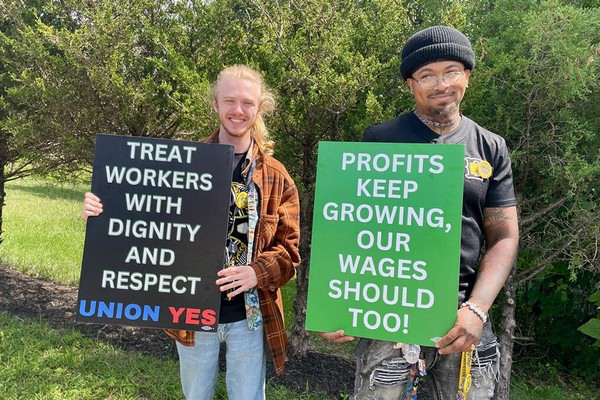
Labor groups warned that rescheduling alone risks reinforcing existing inequities. From their perspective, tax relief for operators without parallel protections for workers misses an opportunity to address safety standards, training, and the long term consequences of prohibition on families and communities. "The Administration's plan to reclassify cannabis amounts to a tax giveaway for cannabis business owners without any protections for the workers who power this industry," said UFCW International President Milton Jones, calling for federal decriminalization and stronger labor protections alongside reform.
There were also reminders that medical legitimacy brings scrutiny. Safety advocates emphasized the need for impairment standards in safety sensitive workplaces and on roadways. "Because cannabis impairs psychomotor skills and cognitive ability, no level of cannabis use is safe or acceptable for drivers or employees in safety sensitive positions," said Lorraine Martin, CEO of the National Safety Council.
Still, even the most cautious responses framed the moment as historic.