


Controlled Environment Agriculture is advancing at an unprecedented pace. From AI-driven crop management to precision nutrient delivery, innovation is reshaping how food is grown. But as technologies become more complex, so do the risks associated with protecting them. Richard Coller, director in Sterne Kessler's Mechanical & Design and Trial & Appellate Practice Groups, Bree Vculek, associate in the Biotechnology & Chemical Practice Group, and Jean Selep, associate in the Electronics Practice Group , explain how intellectual property missteps can stall commercialization, undermine investor confidence, and open the door to competitors.
"In CEA, innovation moves fast," says Bree Vculek. "But IP mistakes often happen quietly and early — and by the time they surface, the damage may be already done."
 © Sterne, Kessler, Goldstein & Fox PLLC
Bree Vculek
When innovation meets legal reality
One of the most common challenges facing CEA companies is patent eligibility, particularly for software-driven technologies. As automation and AI become central to modern growing systems, innovators frequently attempt to patent algorithms that control lighting, irrigation, or harvest timing. However, U.S. patent law places strict limits on software patents, especially following the Supreme Court's Alice Corp. v. CLS Bank decision.
"Software on its own is vulnerable," explains Jean Selep. "But when that software is clearly tied to physical outcomes — like improving yield, reducing energy use, or controlling hardware in a novel way — the chances of protection increase significantly."
Companies that succeed in this space focus on demonstrating how their technology solves a concrete technical problem, rather than presenting abstract logic. Detailed technical descriptions and a strong connection between software and physical systems are often decisive.
Another frequent pitfall is unintentional public disclosure. Founders eager to attract investors or partners may demo technology, launch websites, or present at conferences before filing any IP protection. While U.S. law allows a limited grace period after disclosure, many international markets do not.
"Founders are often surprised to learn they've already given up rights in key regions," says Richard Coller. "Once something is public, in many jurisdictions, you can't take it back."
Experienced CEA companies mitigate this risk by filing provisional patent applications early and using non-disclosure agreements for preliminary discussions. The assumption is simple: anything shared externally, without adequate protection, could later be relied upon in future IP disputes.
 © Sterne, Kessler, Goldstein & Fox PLLCRichard Coller
Trade secrets require active care
Not all innovation ought to be disclosed in a patent. Many CEA businesses rely heavily on trade secrets, including nutrient formulations, operational efficiencies, and crop data models. But trade secrets only remain protected if companies actively treat them as such.
"Courts don't protect secrets that aren't actually treated like secrets," Bree notes. "If access isn't controlled or confidentiality isn't documented, protection can disappear."
Successful operators implement confidentiality agreements across their workforce and supply chain, restrict access to sensitive information, and document internal protocols. These steps not only protect IP but also signal seriousness to investors and partners.
Collaboration adds another layer of complexity. Joint development between growers, engineers, startups, and research institutions is common in CEA, but unclear ownership can derail progress.
"IP disputes don't usually come from bad intentions," says Jean. "They come from assumptions that were never properly documented."
Clear agreements established before development begins help define ownership of pre-existing technologies and newly created innovations, as well as licensing and publication rights. Companies that handle this early tend to move faster later.
Lessons from the field
Some of the most successful CEA companies demonstrate how thoughtful IP strategy translates into real-world advantage. One hydroponics systems developer combined utility patents covering its electro-mechanical delivery platform with closely guarded trade secrets for nutrient formulations. This layered approach created both legal and practical barriers to imitation, enabling the company to secure major commercial partnerships.
Plant breeding offers another example. While years of breeding were required to develop a butterhead lettuce optimized for hydroponic production, it was patent protection that ultimately secured exclusivity. Protecting traits such as tipburn resistance and rapid growth, enabled the innovator to compete effectively in a crowded leafy greens market.
In the digital realm, an AI crop scheduling startup adopted a dual strategy. The company patented its control logic while keeping training data, sensor calibration models, and decision matrices confidential. "That balance is powerful," Richard explains. "It gives investors confidence while making replication extremely difficult."
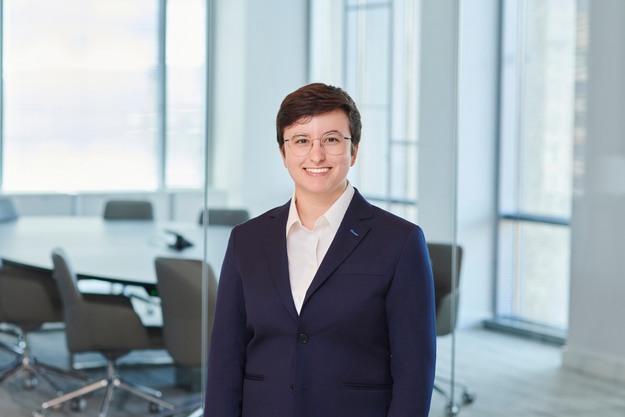 © Sterne, Kessler, Goldstein & Fox PLLCJean Selep
IP as a growth discipline
As competition in CEA intensifies, intellectual property is no longer optional. It's a core business function that influences valuation, partnerships, and scalability.
"The companies that lead this industry don't just invent," Bree says. "They plan for ownership from the start."
Thinking globally, protecting innovation early, and building layered portfolios that evolve with the business are hallmarks of CEA leaders. Those who treat IP as part of their operational strategy — rather than a legal afterthought — are best positioned to grow, collaborate, and shape the future of food production.
For more information:
Sterne, Kessler, Goldstein & Fox
1101 K Street NW, 10th Fl
Washington DC 20005
https://www.sternekessler.com/