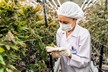


When Kearney Attard's dispensary was still on the drawing board, the focus was precision. Pharma grade standards, modular design, and a long-term vision built around compliance rather than hype. Today, the project has moved from theory to practice. "We are fully operational and open to members," says Kearney. "And we are doing very well."
The facility has already completed five to six harvests, and the feedback from members has been encouraging. At the same time, Kearney is clear that Malta's cannabis model is still finding its rhythm. "The European market is totally different from North America," he says. "I do not think Malta will freeze itself like Amsterdam did with classic strains. It is going to be more dynamic, with trends coming in."
Education before trends
What became apparent almost immediately after opening is the knowledge gap around genetics. According to Kearney, many members are still navigating cannabis through old categories rather than understanding what they are actually consuming. "In the first two months, we saw that people are not really looking at lineage," he explains. "They come for the name. It is still indica-sativa thinking, and I want to change that."
Education has therefore become one of the club's central missions. Menus will evolve, not just to introduce new genetics, but to help members understand terpene profiles, effects, and cultivation intent. "That is a big challenge for us, but also a responsibility," Kearney says. "If we want standards to improve, knowledge has to improve too."
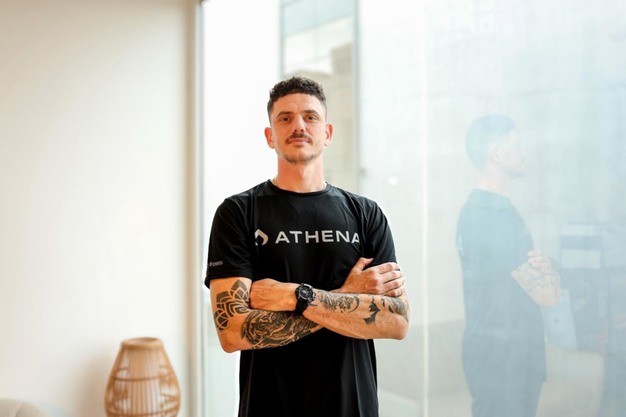 © Kearney Attard
Genetics, not flower, as an export model
While the company operates locally within Malta's non-profit framework, its ambitions stretch far beyond the island. The goal is to export the intellectual and operational backbone behind of the company. "We want to export the brand, the genetics, the seeds, and the concept of the operation."
That approach has already opened doors internationally. Kearney is working with partners across Europe, South Africa, and Panama. "With the network we are building, there are a lot of opportunities," he says. "Anything we develop in house and can offer to other growers, that is where the value is."
Building a genetics-driven brand
A major part of that value lies in genetics. Julien Lorry, owner of TH Seeds, has joined the operation full time, bringing deep experience in seed production and global sourcing. The team is also working closely with international breeders and running unreleased genetics from high profile collaborators. "We already harvested some of those," Kearney says. "Now we are building the brand around it."
Marketing remains tightly restricted, which forces the operation to grow through reputation rather than visibility. "We have to be extremely careful in what things we put out there in terms of marketing," he notes. "So, most of the heavy lifting will be done by the quality of our genetics."
A market still defining itself
Despite the limitations of Malta's framework, Kearney is optimistic about the direction the country is taking. "We are very lucky to have a proactive government and a strong cannabis authority," he says. "They are working with clubs and trying to regulate this properly."
He points to visible improvements across the island, from higher quality flower to more structured operating procedures among clubs. "I am happy to see colleagues pushing boundaries," he says. "The market is big enough for everyone who wants to be involved, whether that is working for a club or opening a small non-profit organization."
Still, the pace matters."This is not a commercial market," Kearney adds. "There are limitations, and moving forward has to happen at the right time and in the right way."
Perfecting the operation
For the company, the next phase is less about expansion and more about refinement. The goal is to align daily, monthly, and yearly targets in an industry where biology rarely follows spreadsheets. "Horticulture makes that very difficult," Kearney admits. "But that is exactly why standards are built."
Construction for the expanded area is set to begin in the coming weeks. With it comes a deeper commitment to genetics, solventless production, and operational discipline. "If we want this movement to last into the next phase of the industry," Kearney says, "quality and consistency have to come first."