


In an industry increasingly drawn to plug and play solutions, fertigation remains one of the last places where cannabis cultivation refuses to be simplified without consequences. On the one hand, standardized fertilizer blends promise ease. They flatten decisions, reduce labor, and lower the risk of operator error. However, that ease also flattens the outcomes. On the other hand, there's an approach that gives back agency to growers, but it would require quite the commitment. If one tackles complexity instead of avoiding it, they'll soon realize that custom fertigation programs deliver better results. It's crucial then being fully aware whether complexity can be an asset or when it becomes a liability.
That tension sits at the core of Florapro, the water-soluble nutrient line developed by General Hydroponics and built on decades of cultivation science.
"General Hydroponics was established in 1976, and shortly after, the Flora Series was launched as the first three-part liquid fertilizer designed for cannabis," says Chris Murphy Brand Manager at General Hydroponics. "Since then, there have been countless knockoffs, but nobody has really hit the mark GH did. The challenge today is translating that technology to large scale cultivation, where storage, concentration, logistics, and cost suddenly matter a lot more."
 © Hawthorne
Flexibility at scale
The answer was not to strip the system down to the lowest common denominator. Instead, Florapro took the underlying chemistry and converted it into a powder format that could be handled efficiently at scale, while preserving the flexibility that made the original system effective. According to Stephen Boone, Technical Services Manager/ Plant Nutrition & Commercial Solutions at General Hydroponics, one of the recurring mistakes in nutrient manufacturing is confusing simplicity with control. "We're all growing the same crop, but not every facility is designed to operate the same way," he says. "Even companies trying to replicate the same build run into regulatory constraints, infrastructure differences, and methodology changes. When you offer one fixed way to use a product, it might appeal to some operators, but it eliminates the ability to do something unique for a specific operation."
In practice, those differences show up everywhere, from irrigation design to lighting intensity to labor structure. A simplified nutrient program can hide those variables, but it cannot solve them. At best, it produces acceptable consistency. At worst, it forces growers to sacrifice plant-driven strategies to make the system behave. "Cultivation is about tradeoffs," Chris says. "Florapro was built for the plant first. That means it is not always the easiest path, but it delivers what the crop needs, when it needs it, to maximize output."
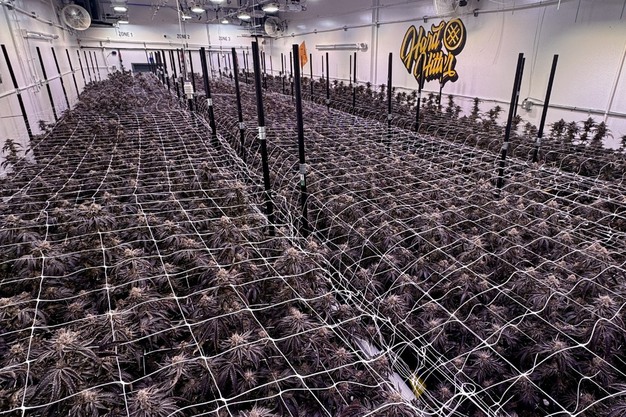 © Hawthorne
Becoming the chemist
Custom fertigation demands more from the operator. Powder nutrients shift responsibility onto the grower to validate batches, manage mixing consistency, and understand their system deeply. For some operations, that is a deal breaker. "When you opt for a powder formula, you become the chemist," Chris says. "Labor and consistency can be real challenges. If you do not fully understand what you are taking on, it can lead you down a path where you are not successful. That is why we spend time understanding goals and capabilities before recommending a direction."
 © HawthorneWhat makes Florapro viable in that space is not just the formulation, but the support structure behind it. Dr. Craig Yendrek, Research Principal for General Hydroponics R&D, points to the four core components of the line, which allow growers to actively manage nitrogen levels through veg and flower, while maintaining access to essential phosphorus and potassium during maturation. "That flexibility lets growers adjust key elements as the crop develops," he says. "You can increase nitrogen in veg, pull it back in flower, and still deliver what the plant needs to finish strong. It is about steering yield and quality, not choosing one or the other."
That balance between control and usability is where Florapro positions itself. "Everyone is being forced to become more efficient with spending," Stephen says. "At the same time, quality expectations have not gone down. We spend a lot of time in the field helping growers navigate that balancing act and find a solution that still hits yield and quality targets."
Unlike many nutrient suppliers, Florapro's technical service team operates without sales commissions. Their role is not to push a product, but to diagnose problems ranging from EC mismatches and light intensity to precipitation fallout and feed rate limitations."Your manufacturer should be a tool on your belt," Stephen says. "Not a voice on your monthly bill."
Predictability doesn't necessarily equal performance
The industry trend toward simplified nutrient programs is understandable. Compliance pressures, labor shortages, and margin compression all reward systems that behave predictably. But predictability is not the same as performance. "Our approach is providing growers with the tools to manage complexity, and if they are willing to do that, they will always outperform standardized approaches. Not because complexity is inherently better, but because it allows the plant to dictate decisions instead of the process. In cannabis cultivation, the easiest path rarely produces the best flower," Stephen concludes.
For more information:
General Hydroponics
1-888-808-4826
[email protected]
generalhydroponics.com