


There is a reason certain practices survive in cannabis cultivation long after everyone has quietly stopped believing in them. They work well enough, they are familiar, and most importantly, everybody else is doing them too. Acid-based line cleaners sit comfortably in that category. They sanitize, they reset the system, and they provide the psychological relief that comes from knowing nothing living survived the process. "Whether that is actually what you want is a different question," says Ian Smith from Key to Life. "Acids absolutely sanitize, but they also kill everything else. And we have found they do not actually eliminate fungal pathogens like pythium or fusarium. " In other words, even though everybody uses acid-based cleaning products, it doesn't mean that's a best practice. For Ian, enzymes are an alternative solution.
 © Key To Life
Cleanliness vs sterility
There's a contradiction at the heart of the use of acid-based cleaning products. "How has the industry come to equate cleanliness with sterility, even as it increasingly relies on biological inputs to push efficiency, yield, and consistency?" Ian asks. "That is why we developed ENDzyme Pods at Key to Life."
Key To Life did not enter the market as an enzyme brand. It started with compost tea brewers, moved into single strain bacillus products, and then expanded into broader microbial formulations, all built around the same principle. "Water soluble inputs delivered as cleanly and as efficiently as physically possible," he explains."No base nutrients, no lifestyle branding, just supplements designed to make existing systems behave better."
That approach is what eventually led to the development of ENDzyme Pods. "ENDzyme Pods isn't just a product, it's also a corrective measure for how enzymes have traditionally been used and priced in cannabis. Many enzyme products on the market are expensive enough that growers treat them like occasional additives, even though enzymes are most effective when used consistently." Others, more problematically, are aggressive enough to undermine the very biology growers are trying to preserve. "We saw enzyme products that would absolutely clean a system," Ian says, "but they were also killing biology outright, which basically defeats their purpose."
Cleaning and improving plant health
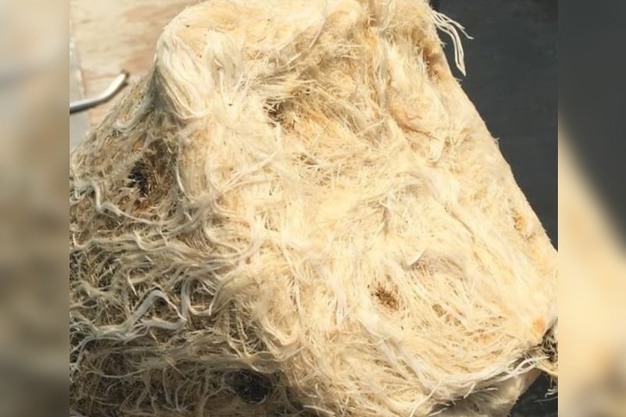
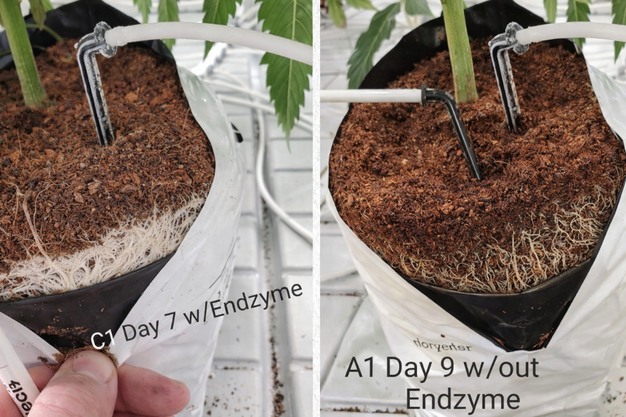
By selecting bacterial strains that naturally produce enzymes and remain active in solution, ENDzyme Pods function as both a cleaning agent and a biological support tool. "Used continuously at low rates, roughly 1 ounce per 500 gallons, they break down biofilm, maintain dissolved oxygen, and keep irrigation lines clean without wiping the slate bare," he explains. The cost implications alone are hard to ignore. "We ran a side-by-side comparison against standard acid-based cleaners, factoring in dilution rates and frequency of use, the biological approach came out 3 to 4 times less expensive over time. That is before accounting for what acids do not do, which is improving nutrient availability."
 © Key To Life
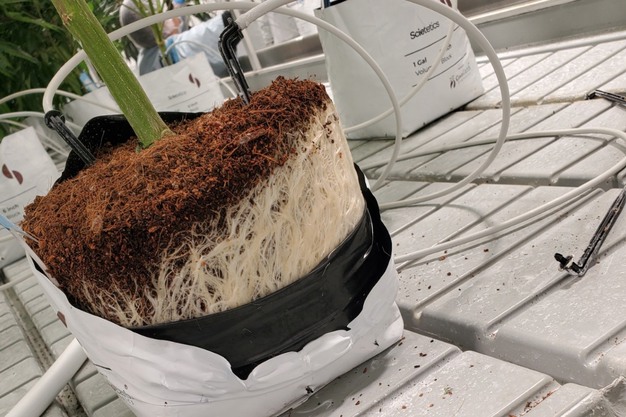
This is where the conversation shifts from maintenance to performance. Acid flushes sanitize, but they also halt biological processes that help plants access nutrition. On the other hand, enzymes do the literal opposite. "They break down organic matter, convert nutrients into more plant available forms, and inoculate the root zone in the process. In one case study spanning 4 harvests, a facility reduced nutrient inputs by 30% while still recording a 17.8% increase in total yield."
That outcome only makes sense if you accept a premise many growers still resist, which is that more input does not automatically translate into more output. "I often see facilities running EC levels of 3.0 or even 3.5, then layering biology on top and wondering why lockout follows. At that point there is simply too much nutrition in solution. The plant cannot absorb it all, biology or not." In other words, enzymes allow plants to access what is already there with less energy expenditure, redirecting metabolic resources toward growth rather than survival.
Outcompeting pathogens
The effect of these enzymes is not confined to the root zone. One of the more unexpected applications of ENDzyme Pods has been foliar use at higher concentrations, roughly 1 ounce per 2 gallons, where Ian says they have consistently eliminated powdery mildew and aspergillus, even late in flower. "Applied weekly, growers have also prevented botrytis without functioning as a fungicide in the regulatory sense."
Rather than poisoning pathogens, the bacteria outcompete them, binding free iron that fungi require to proliferate and redirecting it toward plant uptake instead. "The bacteria then self cannibalize after a short period, leaving no residue and no need for post harvest remediation," Ian points out.
When combined with micronutrient products like Green9, which delivers amino acids alongside elements like calcium, boron, sulfur, and zinc, the effects compounds. "These are non mobile nutrients, slow to reach the tissues where they are needed most. Enzymatic activity helps deliver them more efficiently, strengthening plant defenses and increasing secondary metabolite production as a result."
 © Key To Life
At the same time, Ian takes care to point out that ENDzyme Pods are not a 'get out of jail free card', and sanitation can thus be ignored. "In fact, I still recommend thorough resets during flip, including chlorine dioxide sanitation, filter changes, and proper dehumidifier cleaning, an area many facilities quietly neglect. Most disease pressure comes from environmental triggers. Temperature drops, humidity spikes, dirty equipment. Biology helps, but it works best when the system is already disciplined."
Cannabis is grown in rooms designed to eliminate uncertainty, yet the plant itself evolved in environments defined by microbial interaction. Trying to remove that reality entirely has always been a temporary solution at best. "Nature has never been sterile," Ian says. "We can imitate that for a while, but biology always finds its way back."
For more information:
Key To Life
[email protected]
keytolifesupply.com