

In the world of horticultural lighting, especially cannabis cultivation, efficacy is the efficiency with which electrical power is converted into usable light for the plant. But there's much more to it than just a number on a spec sheet. Efficacy touches energy costs, yield, and ultimately, profitability.
"Energy costs are rising around the world. Between increased grid demand from electric vehicles, data centers, AI infrastructure, and general electrification, growers will continue to feel the pressure of higher electricity bills," says Daniel Pilsworth from Fluence. "Lighting and HVAC together make up the lion's share of a cultivation facility's operating expenses. That's why every photon counts."
From efficiency gains to smarter system design
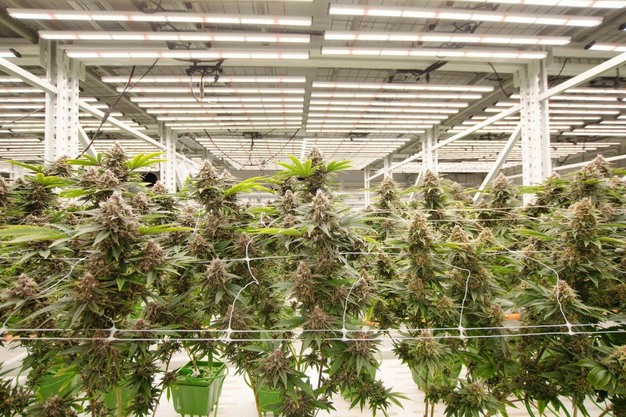
A decade ago, the industry made the leap from high-pressure sodium (HPS) fixtures to LEDs. LEDs offered major efficiency gains, reduced heat output, and improved environmental control. Growers could channel more power into productive light instead of waste heat, while easing the burden on HVAC systems. Over time, those early transitions delivered big saving, but the low-hanging fruit has already been picked. "The diode technology inside LEDs has become incredibly refined, and the annual efficiency gains we once saw, 2–3 % year over yea, have slowed to about 1% or less," Daniel continues. "The industry has reached a plateau in raw diode efficacy. That shift has changed the conversation. It's no longer just about how efficient a single diode can be, but how intelligently the entire system is designed to get the most out of every watt. The next leap forward in efficacy won't come from the component level. It will come from how we apply light."
 © Fluence Bioengineering
The relationship between spectrum and efficacy
Spectrum plays a major role in determining fixture efficacy. Red LEDs are inherently more efficient than white ones because they emit light directly, while white LEDs rely on phosphor coatings that absorb energy in the conversion process. A fixture with high red content might achieve 3.5 µmol/J or more, while a broad-white fixture could sit around 2.7 µmol/J. That said, a high-red environment isn't always the best choice. "Excessive red light can make it harder for staff to work in the room, and more importantly, it increases the risk of photobleaching, those "white-tipped" buds that reduce overall flower quality and market value. Photobleaching can be strain-dependent and influenced by other environmental factors. The goal is always balance."
Balancing efficiency and capital constraints
Cannabis remains a capital-constrained market. Because federal legalization still hasn't happened in the U.S., growers don't have access to the same low-cost financing that traditional agriculture enjoys. That makes every dollar of CapEx and OpEx count. "A more efficient fixture often carries a higher purchase price, so the right decision depends on your financial position, local energy rates, and available rebate programs. Some utilities directly tie incentive eligibility or payout value to fixture efficacy, meaning higher-efficiency luminaires can offset much of their initial cost. In some cases, rebates can reach $1,000 or more per fixture, turning high-performance lighting into a near break-even investment. Ultimately, there's no one-size-fits-all answer. Growers need to weigh upfront cost against long-term energy savings and potential incentive benefits. The right lighting partner should help you do that math honestly."
Where the next gains will come from
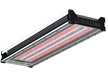
Since diode efficiency is plateauing, lighting manufacturers are innovating elsewhere, how to deliver the light, where to deliver it, and when. "At Fluence, our research program has focused on optimizing spectrum, intensity, and light placement to reduce energy use while enhancing yield and quality," Daniel remarks. "Dynamic, tunable lighting is one of the most promising tools. By adjusting spectral composition over the plant's growth cycle, growers can use more red when it's safe and pull back when the crop becomes sensitive to photobleaching. Our new RAPTR 2 top light embodies that flexibility. Its tunable T48 spectrum lets growers vary red content from 40 to 80 percent, achieving up to 3.5 µmol/J efficiency while maintaining precise environmental control. We pair this technology with horticultural support, our science team works directly with growers to design lighting schedules that deliver maximum energy savings and plant health."
Beyond the canopy: a "red sandwich" strategy
Another frontier of efficacy lies beneath the canopy. "Our research has shown that under-canopy lighting allows for much higher red content without the same risk of photobleaching seen from top-down light. By distributing photons both above and below the canopy, what we call our Red Sandwich Lighting Strategy, we can increase yield, uniformity, and quality while further improving energy efficiency. It's an elegant example of how plant science and engineering converge to push the limits of performance."
For more information:
Fluence
fluence-led.com