

Curing is one of those phases in cannabis production that almost everyone agrees is important, yet such importance hardly is translated into cannabis facilities. It's understandable that growers want to max out their canopy space first. After all, more flowers, more revenue. However, the irony is that by the time a plant reaches the curing room, most of the money has already been spent. The genetics are locked in, the lights have done their work, the rooms have been dialed, the harvest handled with care. And yet, this is often where quality is either validated or left behind.
Simon Knobel from Calyx Containers has spent a surprising amount of time thinking about that unraveling. The company began about 9 years ago, when Simon and his co-founder Alex were still in school and adult use cannabis was just becoming legal in Massachusetts. "Back then, cannabis packaging meant pill bottles, borrowed wholesale from the pharmaceutical world and repurposed without much thought," Simon explains. "Our initial instinct was not to make something revolutionary. It was simply to build something that actually made sense for cannabis."
As the company developed a range of packaging formats, the focus stayed firmly on quality at the point of sale. "Smell containment, ease of use, preservation on the shelf, that was the beat of our design process. What took longer to fully register was that degradation was not only happening after packaging. In many cases, it was already baked in during curing."
Simon and Calyx did extensive market research to understand what was going on with quality degradation. "We made a point of talking not just to operators, but to consumers." One story stuck. Simon recalls interviewing a customer who was on a ski trip with his family and trying to hide the fact that he even had cannabis with him. That awkwardness around smell, discretion, and handling became a design problem. It led to the sliding lid, the integrated gasket, the elimination of the twisting motion that was giving some users literal wrist pain. But it also opened a deeper line of inquiry.
As Calyx started speaking more seriously with growers, a recurring question emerged. Where exactly does quality start to slip? To answer that, the company partnered with the Cannabis Research Coalition and worked with Dr Allison Justice on curing-focused research. "What we found was not especially comforting for anyone relying on legacy methods," Simon says. "One of the biggest drivers of terpene preservation turned out to be water activity stability. When water activity drops below 0.55 aW, the stomata begin to collapse, then shrivel, then rupture. At that point, mono-terpenes escape."
Those mono-terpenes are responsible for most of the aroma people associate with quality cannabis. "They are also volatile by nature. Once they are gone, they are gone," Simon points out.
 © Calyx Containers
Legacy methods and alternatives
Traditional curing methods rely heavily on burping. Opening containers, exchanging air, manually regulating moisture. "This methodology works, but it also introduces oxygen. On top of that, it also subjects the plant material to mechanical stress. Both oxygen and mechanical stress accelerate degradation, thus hindering quality."
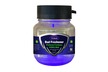
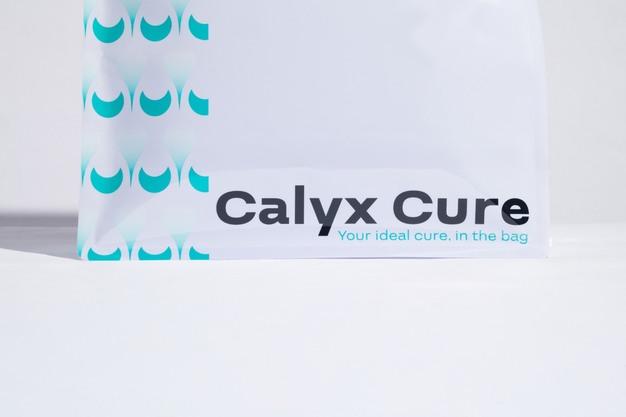
Calyx Cure was designed as an alternative to that ritual. "Instead of active intervention, Calyx Cure uses a passive atmospheric film with selective permeation properties. The layers are engineered so specific gases can move through the material while others are restricted. The biological processes of curing continue, but without opening the container, without introducing excess oxygen, and without handling the flower."
In controlled studies, Calyx observed a 33% improvement in monoterpene profile preservation compared to traditional approaches like turkey bags. "Practically speaking, that first hit of aroma you get when you open a jar, driven largely by mono-terpenes, is still intact."
What complicates the picture is that curing is not reversible. There is a persistent belief that if cannabis dries too much, there's no humidity packs or other interventions that can bring it back. "Over drying slows enzymatic reactions, alters curing pathways, and permanently shifts terpene composition. Once quality is lost at that stage, packaging cannot resurrect it," he remarks.
 © Calyx Containers
Curing and speed to market
This is why post-harvest processes can't just be the last item in a cannabis facility design. "Decisions are sometimes driven by speed or short-term cost savings. Cure a little less, move product faster, and assume packaging will handle the rest." Market dynamics do not help either. When a new market opens and shelves are empty, speed is rewarded and cutting corners may be the difference between hitting dispensaries now rather than later.
Calyx approaches this as a manufacturing and engineering problem rather than a branding exercise. Unlike much of the packaging sector, which operates largely as brokerage, Calyx runs its own factory in Utah. "That vertical integration allows us rapid iteration. New designs can be prototyped in 1 or 2 weeks."
That can be quite the advantage as quality preservation is quite the trending topic in the broader world of agriculture, not just cannabis. The industry often talks about aspiring to the standards of nutraceuticals, or food. Those industries have already solved supply chain complexity. They know how to produce in one region and deliver consistently to another. Cannabis, especially if it wants to move globally, will need similar discipline."
And just like in food packaging, in cannabis too sustainability is part of that equation. Calyx has explored compostable and hemp-based structures extensively. "Compostable materials struggle with terpene preservation and water activity control. If the package breathes too much, the plant pays the price."
Instead, Calyx approach to sustainability focuses on minimizing material use at the manufacturing level. "The molded-in gasket lid is a good example," Simon explains. "Traditional seals require cutting circular inserts from large sheets, generating massive waste. We designed molds where a small amount of polymer forms both the lid and the gasket in one shot, creating virtually zero waste and a fully recyclable component."
Curing, it turns out, is not a passive waiting period. "It is an active, fragile process," Simon says. "And like most fragile things in cannabis, it benefits from being engineered rather than inherited."
For more information:
Calyx Containers
1991 W Parkway Blvd. West Valley City, UT, 84119-2026
724-303-7481
[email protected]
calyxcontainers.com