

"The objective was to create a reliable drought-stress model that allows treatment effects to be detected consistently and reproduced across crops," said Gregor S. Vertrieb of B+H Solutions.
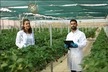
A recent study conducted by BexBioTec evaluated the effects of a multi-component nanofertilizer program developed by B+H Solutions GmbH on drought tolerance in tomato plants under controlled greenhouse conditions. "The trial used Solanum lycopersicum cv. MicroTom as a model species and was designed both to assess treatment performance under water stress and to establish a standardized experimental system transferable to other high-value greenhouse crops, including Cannabis sativa."
Experimental approach
MicroTom plants were cultivated in 2-L pots and treated weekly with a combination of four B+H nanofertilizers: AgroArgentum®, AgroCyprum®, AgroFerrum®, and AgroCalcium® applied according to a customized protocol. Control plants and untreated stressed plants received water only. After an initial establishment phase at 90% field capacity, one treated and one untreated group were exposed to a two-week drought period at 0% field capacity, followed by rehydration to 50% field capacity and a recovery phase.
Gregor emphasized that the design reflects stress scenarios relevant to greenhouse production. "Short-term but severe water limitations are realistic challenges in protected cultivation, and the protocol was chosen to reflect that," he explained.
Growth and physiological responses
Plant performance was monitored through weekly imaging, color segmentation, and biochemical analyses. Parameters included green leaf area, root area, chlorophyll content (SPAD), relative water content (RWC), proline accumulation, and reactive oxygen species (ROS) formation determined by luminescence.
During the drought phase, treated plants maintained a significantly larger green leaf area than untreated stressed plants. Notably, their green area exceeded even that of unstressed controls, indicating enhanced biomass stability under limited water availability. "Preserving photosynthetically active tissue during drought is a key indicator of stress tolerance," he noted.
Root growth declined under drought across all groups; however, treated plants exhibited a mean root area approximately 7% larger than untreated stressed plants. Although this difference was not statistically significant, it suggests a potential trend toward improved water uptake capacity.
Stress regulation and development
ROS measurements showed consistently lower oxidative activity in treated plants both before and during drought exposure. This indicates a more regulated stress response, with oxidative signaling maintained at functional levels rather than excessively activated. "The reduced ROS formation points to more efficient stress regulation rather than stress avoidance," Gregor explained.
Proline concentrations, a common biochemical marker for drought stress, were slightly elevated in treated plants at the end of the stress period, though overall levels remained low. Relative water content and SPAD values did not differ significantly between treatments, suggesting that the primary effects of the nanofertilizers were related to stress modulation rather than direct changes in plant water status or chlorophyll concentration.
Treated plants also flowered earlier than control plants. At harvest, total fruit numbers were comparable across treatments, but treated plants tended to produce more green and orange (immature) fruits, indicating accelerated generative development.
Implications for greenhouse systems
Overall, the combined nanofertilizer treatment positively influenced plant growth stability and physiological resilience under moderate drought stress. While some parameters showed variability due to methodological limitations, the consistency across multiple indicators supports the presence of a genuine biological effect.
"The results demonstrate that multi-component nanofertilizer strategies can enhance adaptive responses to water stress," he concludes. "The established test system provides a solid basis for future trials in other greenhouse crops, including Cannabis sativa, where drought resilience is becoming increasingly important."
The research was funded by the German Federal Ministry for Economic Affairs and Energy within the Central Innovation Program for SMEs (16KN0896XX). The findings are documented in the original report by BexBioTec (October 8, 2025).
For more information:
B + H Solutions GmbH
Gregor S. Vertrieb
[email protected]
www.bh-solutions.eu
BexBioTec GmbH 
www.bex-biotec.com