

The USDA's Animal and Plant Health Inspection Service (APHIS) recently issued regulatory status review responses for two new varieties of gene-edited hemp, determining they are not subject to federal regulation under 7 CFR part 340. Developed by researchers at the University of Wisconsin-Madison, these gene-edited plants were found to pose no increased plant pest risk compared to conventional hemp. This federal clearance marks a significant milestone in streamlining the path from the laboratory to commercial cultivation for precision-bred industrial crops.
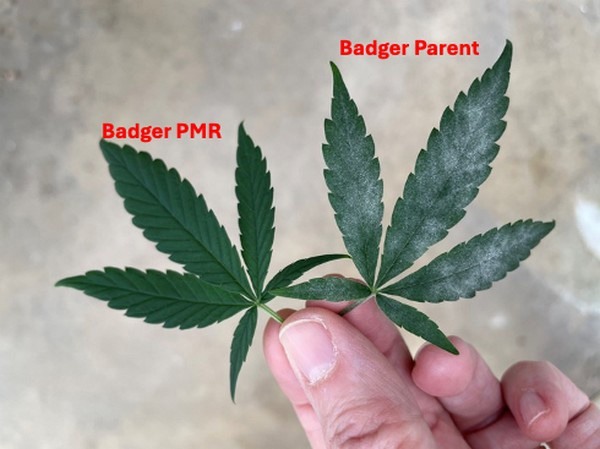 © University of Wisconsin-Madison Crop Innovation CenterGene-edited Badger PMR hemp variety
Badger PMR (powdery mildew resistant) has full resistance to powdery mildew, while Badger Zero (cannabinoid-free) is cannabinoid-free. The primary innovation involves the creation of hemp varieties that are genetically incapable of producing THC (tetrahydrocannabinol), the psychoactive compound found in cannabis. By using CRISPR gene editing technology to switch off the specific genes responsible for THC production, the UW-Madison team has solved a major hurdle for the industry. This genetic certainty prevents crops from "going hot"—a term used when THC levels unexpectedly exceed the legal limit of 0.3%—which previously forced farmers to destroy entire fields to comply with federal law.
Beyond the removal of THC, the researchers have also engineered varieties with increased concentrations of CBG (cannabigerol), a non-psychoactive cannabinoid valued for its potential therapeutic benefits. These advancements are expected to stabilize the hemp market by providing growers with reliable, high-value, legally compliant varieties. With the USDA's regulatory green light, these precision-bred hemp lines are now poised to revitalize the industry, offering a more secure and profitable future for farmers across the United States.
For more information:
The International Service for the Acquisition of Agri‐biotech Applications 
E-mail: [email protected]
isaaa.org/default.asp