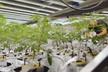


Hemp, an agricultural product once grown in huge quantities in the United States, fell out of favor because it's a close cousin of marijuana, until recently listed as a Schedule 1 substance. As marijuana legalization, first as a medicinal product and later as a recreational drug, took hold, opposition to the cultivation of hemp disappeared. Connecticut lifted its ban in 2018; since then, 119 licenses have been issued to farmers in the state who wanted to grow hemp. But more than half of those licenses have been allowed to lapse, and as few as 10 farmers are still growing hemp.
"The changes to the state laws and regulations have effectively shuttered the hemp industry in Connecticut at the same time that recreational cannabis became legalized," Jacob Honig, co-founder of a hemp farm in Harwinton, told Hearst Connecticut Media.
Sen. Cathy Osten, D-Sprague, told Hearst Connecticut Media, "We've not worked with the industry. We've worked against the industry, and we touted it as a brand new industry that was going to bring a lot of business. In less than 10 years, we have come up with every rule under the books to to stymie their growth."
It's easy to blame regulators for problems in the hemp industry, or any other enterprise. That may be the wrong target in this case, though.
Read more at CT Insider