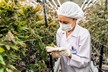


The recent news release by Ghana's Narcotics Control Commission (NACOC) on Wednesday, 11 February 2026, announcing the commencement of licensing for medicinal and industrial cannabis cultivation, has generated widespread public debate across the country.
While public scrutiny is healthy in any policy shift, much of the current discussion has been driven by misunderstanding, fear, and misinformation. It is therefore important to place the directive in its proper legal and public health context so that citizens can appreciate both its limits and its safeguards.
First and foremost, Ghana has not legalised adult-use cannabis. Under the Narcotics Control Commission Act, 2020 (Act 1019), and the Cultivation and Management of Cannabis Regulations, 2023 (L.I. 2475), licensing is strictly limited to medicinal, industrial, and research purposes.
Only cannabis varieties containing not more than 0.3% tetrahydrocannabinol (THC) are permitted. Recreational use remains illegal, and the possession, trafficking, sale, or cultivation of cannabis above the 0.3% THC threshold continues to constitute a criminal offence. Importantly, even the approved low‑THC variety is illegal without a valid NACOC license.
Read more at Peace FM