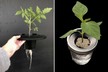


In shallow NFT systems, plant stability and media management remain practical challenges for many growers. For GroCup Hydroponics, these issues led to the development of a simplified alternative to traditional net pots and loose clay aggregate.
Rick Walker, Founder and CEO, began refining the concept after observing recurring problems in his own residential greenhouse. "In shallow NFT channels, traditional net pots and loose grow cubes can shift or tilt as plants become top-heavy, even when root systems are healthy," he explains. "This can require manual correction and occasionally leads to uneven plant positioning."
He also identified sanitation and handling concerns associated with expanded clay pellets. "The clay pebbles would fall out on the floor, and it was difficult to clean and sterilize them properly for the following season," he says.
 © GroCup Hydroponics
A direct replacement for net pots
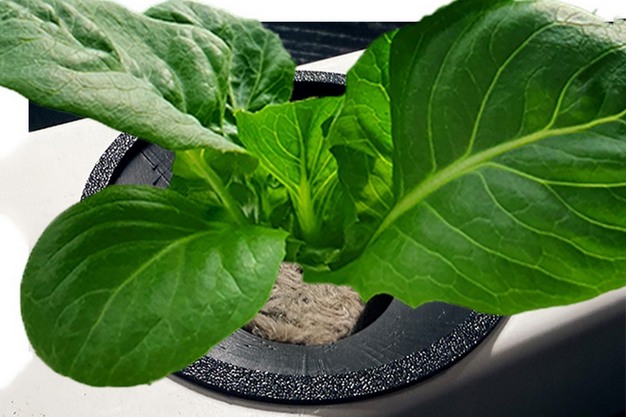
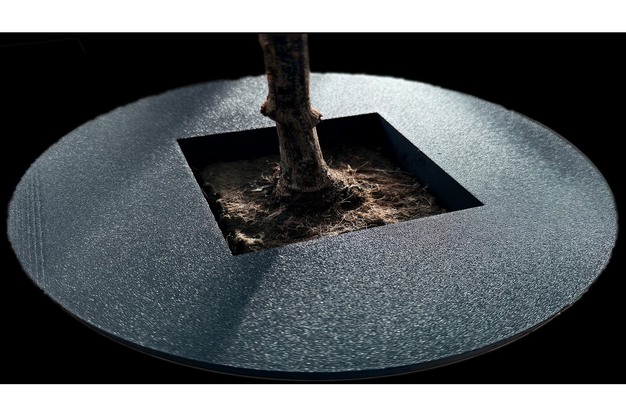
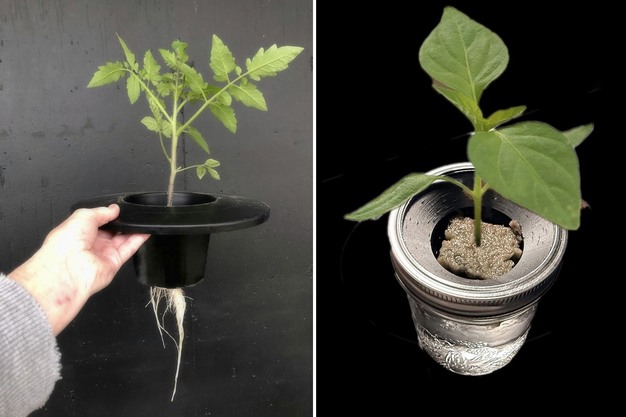
Rather than redesigning the NFT system itself, Rick focused on a component-level solution. The GroCup was developed as a funnel-shaped, flat-top support that holds standard propagation cubes securely in place.
"I designed and 3D printed the original GroCup as a simple mechanical support that tightly holds and stabilizes standard grow cubes without requiring changes to my existing system."
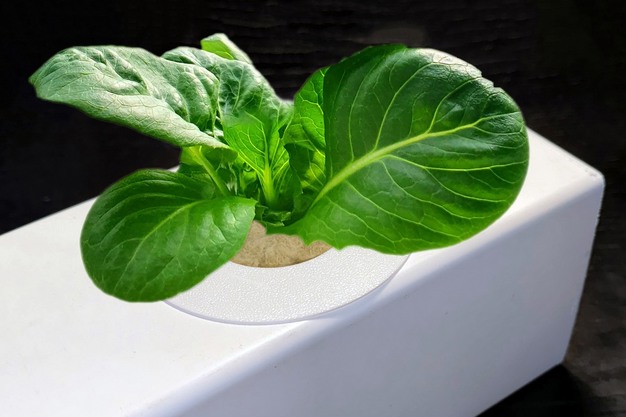
The unit fits directly into existing channel openings and is sized as a one-to-one replacement for standard net pots. It secures the cube while allowing unrestricted root growth into the nutrient film. "Because the design is open and low-profile, it does not interfere with nutrient flow," he notes.
Although developed primarily for NFT systems, the concept can be applied in other hydroponic setups where cube stability is important. Multiple nominal sizes are available, ranging from 2-inch formats up to models compatible with 12-inch Bato buckets. Depending on size, the GroCup accommodates nominal 1-inch and 4-inch cubes, as well as hexagonal media.
 © GroCup Hydroponics
Design priorities and field refinement
Key design considerations included plant stability, unrestricted downward root development, compatibility with standard cube dimensions, and geometry suitable for cost-efficient manufacturing.
Early prototypes were tested during a full growing season and adjusted to improve cube retention and ease of handling. Rick observed a notable difference in root behavior compared to mesh net pots. "The roots grew faster and straighter without getting entangled in the mesh present in net pots," he says. This reduced entanglement simplified crop removal at the end of the season.
 © GroCup Hydroponics
Operational observations
During the most recent growing season, the primary benefit observed was improved plant stability. "The main observed benefit was reduced need for repositioning cubes as plants matured."
Plant health, root development, and overall crop size remained consistent with conventional setups. "Root development and plant size and health were unaffected," Rick shares.
Handling efficiencies were also noted. "Handling during planting and maintenance became more consistent," Walker explains, adding that labor savings (particularly in larger operations) could be significant due to reduced media management and faster post-harvest cleanup.
Material usage is another consideration. The GroCup uses less plastic than many traditional net pots. "The GroCup is physically smaller than a net pot, so it uses less material and should be reduced in cost when at full manufacturing production."
 © GroCup Hydroponics
Market focus and next steps
The primary market includes indoor farming operations and commercial greenhouses using NFT-style systems, especially those currently relying on net pots and clay pellets. The product is also suitable for residential growers seeking improved media stability.
"A GroCup is specifically designed as a direct replacement for a net pot on a size-to-size basis," he emphasizes.
The company is currently focused on gathering additional grower feedback through pilot-scale production and evaluating manufacturing partnerships. Design and utility patents are pending in Canada and the United States.
"This is a very early-stage company that needs professional sales and marketing input in order to grow," Rick concludes.
For more information:
GroCup Hydroponics
Rick Walker, Founder and CEO
[email protected]
https://grocuphydroponics.com