

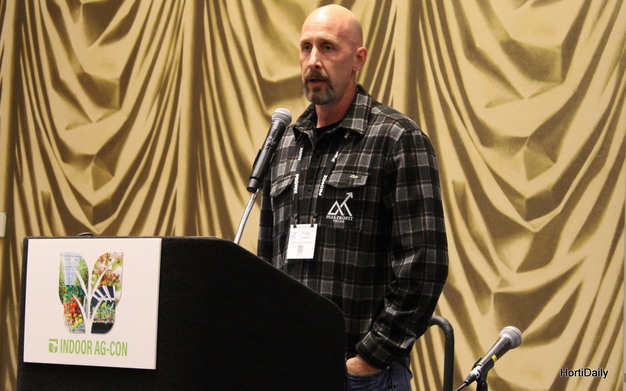
During the latest edition of Indoor Ag-Con, Tyson Cramer used his presentation to argue that many of the problems cannabis operators struggle with downstream can be traced back to a single, often under managed area of the facility: the mother room.
Drawing on his experience assessing and working inside some of the largest cultivation facilities worldwide, Tyson noticed a common theme. Across geographies and production models, he said that a significant share of operational failures could be mitigated, or avoided altogether, through stricter adherence to security, hygiene, and isolation protocols in mother rooms.
In other words, mother plant health directly determines the health of clones and vegetative plants, and any compromise at that stage propagates through the entire production cycle. Pathogen pressure, pest exposure, and cumulative stress in mother rooms amplify as plants move toward flower.
The importance of disciplined mother rooms
All of those elements contribute to compounding effects on genetic performance, Tyson pointed out. Even when issues appear manageable early on, the combined stressors introduced before flowering can limit expression of genetic potential and increase disease susceptibility later in the cycle. And as the old large scale cannabis lesson says, preventing those rather than reacting to issues is the primary objective of mother room management.
A substantial portion of the presentation focused on regeneration practices and what comes with them. According to Tyson, extended regeneration timelines, often 6 to 9 months or longer, increase the likelihood of somatic mutations. Over time, he has observed widespread genetic drift within facilities, including measurable differences in aroma, flavor, and yield originating from what were assumed to be genetically identical mother plants.
 © Eelkje Pulley | MMJDaily.com
In some cases, yield variation attributed to somatic mutation reached double digit percentages, with different expressions emerging from clones taken from the same genetic line. These observations, Tyson explained, have pushed tissue culture and regeneration strategies as essential components of genetic risk management.
He also remarked that returning genetics to a single cell origin, whether through tissue culture or seed-based revitalization, offers a way to reset accumulated mutations and restore consistency. As facilities scale, Tyson argued, the due diligence required around genetic stewardship exceeds anything seen in earlier phases of the industry.
Infrastructure
From an infrastructure standpoint, Tyson stressed the importance of isolation between mothers, clones, and vegetative rooms. He advocated for fully separated systems, including dedicated water sources and drain to waste setups for these stages, with any form of water recycling limited to flower rooms if used at all. The goal, as presented, is to prevent cross contamination long before plants reach high value production areas.
HVAC design was also highlighted as a critical control point. Positive pressure rooms, controlled airflow, and reduced reliance on internal fans were discussed as ways to limit pathogen movement within facilities. While these approaches require additional capital investment, Tyson described them more as preventative measures rather than flashy upgrades.
Operational discipline would be useless if people involved in it aren't taken into consideration. Personnel movement, team separation, and clear identification protocols were cited as overlooked vectors of contamination. Tyson raised questions around shared changing areas, cross team traffic, and basic hygiene controls, including the placement and enforcement of hand-washing stations.
As facilities grow larger and more complex, genetic protection and mother room discipline become increasingly crucial to operational success. According to Tyson, adopting new technologies isn't a solution in itself, as managing risks is more about enforcing systems, isolation, and behavior properly applied in a high risk production environment.
For more information:
Indoor Ag-Con
www.indoor.ag