


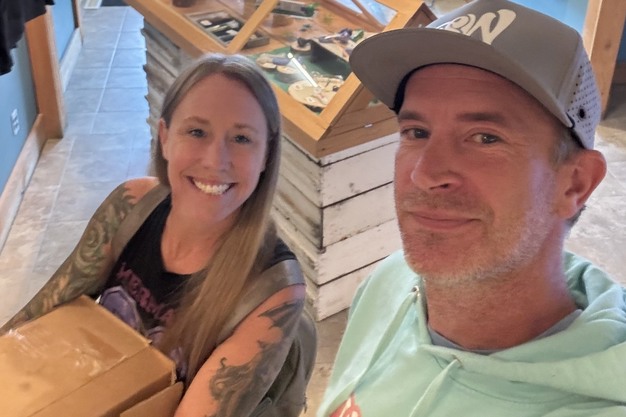
British Columbia has the highest per capita growers in all of Canada, with a cannabis culture that spans decades. There's a whole constellation of small, craft, local growers that have morphed their old ways into the new legal ones, and the quality old clients were used to can now be partially found in licensed retailers. Holly and Cam met because of, or perhaps thanks to, cannabis, and their union gave birth to Sassy Weed, a micro processor-cultivator based in BC.
 © Sassy Weed
A competitive market
Even though cannabis culture's roots run deep in BC, cannabis waters are populated by bigger fish, and it can get tough to swim past them. "A lot of great cannabis never makes it to market," says Cam, co-founder and head grower. "Paperwork, platform limits, and provincial bottlenecks stop it long before consumers ever see it. We work with friends who grow in a similar style and help them actually move product."
Holly is very much aware of this tension, as she spent years on the retail side before the inception of Sassy Weed. Prior to this, she used to be the general manager at a multi store cannabis retailer in BC, and she already saw everything that goes into a cannabis op, from licensing and compliance to the daily reality of a legal business. Before the leap into adult-use, both Holly and Cam cut their teeth in the medical cannabis system before widespread legalization. In that space, relationships were more personal and direct, they recount, and cannabis wasn't necessarily only about the product, but also about trust.
The transition into adult-use required a change of pace, not only from a regulatory standpoint, but also and especially cultural. "I've been dealing with customers for years now," Holly says. "It's interesting to see how these different customer pools interact with cannabis." What anyway hasn't changed is the customers' need for guidance, which is made it quite complicated due to regulations for marketing and advertising of cannabis.
 © Sassy Weed
Holly explains that, for instance, they can't make promotional material depicting people smoking. "I could use a pic of somebody holding a joint, or blowing smoke, but it can't be a pic of one in the process of smoking." And unlike the wellness industry where companies make the wildest claims about their dubious and shady supplements, cannabis companies can only speak from personal experience. "If a customer comes and asks something to help them sleep, I can't just tell them which of our varieties does that. For instance, I could tell that this variety seems to be promoting sleep, and I need to frame that as something that I've personally experienced."
The right terpene combination
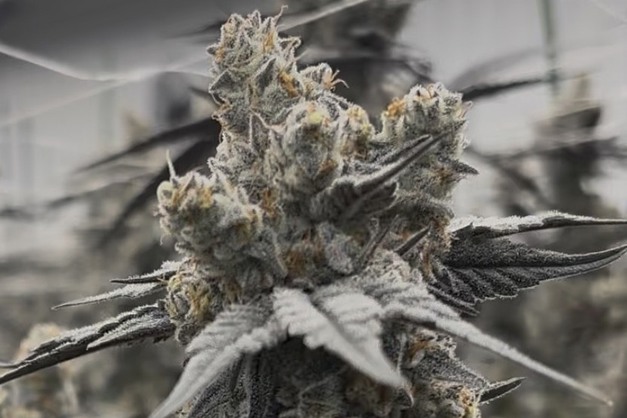
While annoying, limitations aren't necessarily a bad thing, as that pushes people to be creative, to have a meaningful impact with limited tools. Despite all of that, education still sits at the center of Sassy Weed's approach. Terpenes, rather than THC alone, are the lens through which Holly and Cam build their catalog. "It's not all about THC," Holly says. "Terpene profiles play a massive role. There's extensive research on how specific terpenes produce certain effects. Our job is to educate people on the right terpene combination for them." For instance, Holly points out that some may be allergic to some terpenes, just like one may be allergic to strawberries. "Cannabis is one of the only two plants capable of replicating terpenes that are found in other plants. If one gets migraines, heart palpitations and so on, it may very well be that they have consumed a terpene they are allergic to."
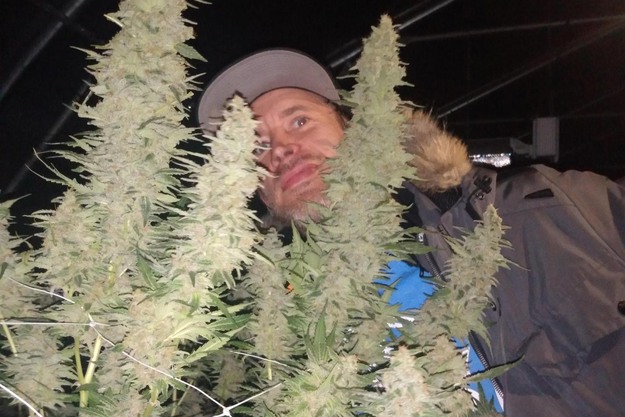
On the other side of the operation, Cam takes care of cultivation. He has been growing cannabis since his teens and began cultivating legally in 2010 under Canada's medical framework, often supplying patients directly. "The medical side is still in our heart," he says. Years spent studying cannabinoids, terpene expression, and the endocannabinoid system still inform how he grows today.
 © Sassy Weed
Sassy Weed operates entirely with living soil, using an organic, regenerative approach that prioritizes soil health. "I feed the soil," Cam says, "not the plant. The soil is never swapped out, only amended and improved over time, allowing the microbial ecosystem to mature. New rooms, he notes, are never at their best right away. It takes time for the biome to settle, but once it does, terpene expression follows."
That long view shows up in the flower itself. Several of Sassy Weed's SKUs lean into elevated levels of CBG, CBC, and CBD, aiming for what Holly describes as a functional entourage effect. "Certain profiles keep me clear and focused, without the anxiety," she says. "Once you understand which cannabinoids and terpenes are dominant, you can usually anticipate how a strain will feel."
A challenging tax regime
Getting that flower into consumers' hands, however, remains the hardest part. Despite provisions for direct delivery in British Columbia, most sales still move through the provincial warehouse system, adding cost at every step. Between excise duties, provincial markups, and layered sales taxes, cannabis often arrives on shelves carrying the weight of multiple margins. "We handle all the logistics ourselves," Cam says. "But the province still takes its cut. By the time a customer buys the product, it's tax on top of tax." Concentrates and vapes, he adds, are hit even harder.
To counter that, Sassy Weed focuses on direct relationships with retailers. "We've tried to give feedback to BC on how to improve their platform, as local growers are usually hidden and retailers can't find them. This results in products being mainly purchased from the big guys, which is very counterintuitive." In other words, Cam is pointing out how the way the platform has been designed doesn't really promote the local cannabis scene, translating into retailers placing orders with large cannabis companies which anyway are not BC based. "And that is if a grower even manages to get their product on the BC platform," Cam points out. That is why Sassy Weed operates with direct sales. "You may think that since we are taking away a middleman, taxes also are lowered. Yet, that's not the case."
 © Sassy Weed
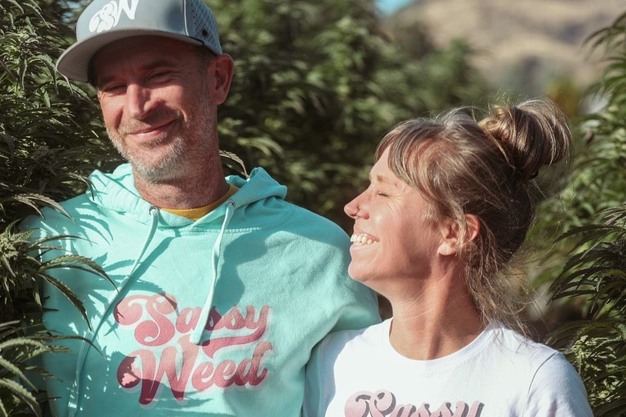
That is why Cam and Holly, since last summer, have visited hundreds of retail stores across British Columbia, meeting budtenders face to face. "Budtenders are the frontline," Holly says. "They're the ones educating consumers. If they know who we are and what we stand for, then they can tell our story to clients."
In many ways, it is an attempt to recreate something that existed long before legalization. A sense of connection, of knowing where cannabis comes from, and who grew it. The system may have changed, but for Sassy Weed, the goal has always stayed the same.
For more information:
Sassy Weed
(250)-602-0420
[email protected]
sassyweed.com