

With rampant price compression and a plethora of daily challenges, growers can't afford tech that slows them down. Track-and-trace systems were supposed to help, to keep licenses alive and regulators satisfied, but technology needs to mature along with the industry. "You used to build a system to tick a box," says BJ Fox from Metrc. "And it did its job. But operators aren't looking to just survive anymore. They want software that actually runs with their workflow, that surfaces insights instead of creating more work."
In other words, the industry has outgrown check-the-box compliance. Facilities now juggle complex production schedules, multi-state reporting, and inventory tracking at a much bigger scale than during the sector's timid first steps. BJ points out that the next phase will be characterized by turning compliance into something useful, into intelligence that operators can act on every day.
Usability
While track and trace systems have evolved over time, BJ says there's still some friction. "A lot of track-and-trace tools, including older versions of ours, were built regulation-first, UX-second. That's understandable given where the industry started, but it creates real friction. Operators shouldn't need to become software experts just to stay compliant."
As more iterations of these systems came online, the refreshed Metrc UI is an example of what BJ means, he says. "It's cleaner and faster, and tolls like the Metrc Industry Sandbox let licensees test scenarios, train staff, and explore workflows without regulatory risk. It's especially useful for new operators or teams onboarding staff. You get to see how the system behaves without consequence."
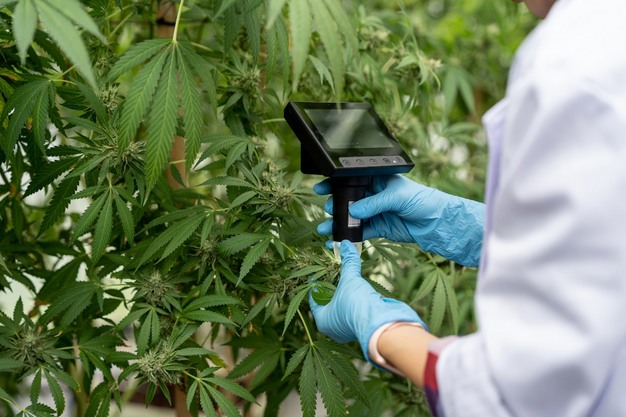 © Natee Meepian | Dreamstime
And while the user-facing improvements are tangible, BJ is equally focused on what happens behind the scenes. Product recalls, public health safeguards, and data accuracy are all non negotiable for regulators. "The thread running through every change," he says, "is listening to operators and delivering something they can actually use, day-to-day."
Scaling beyond a single state, he notes, brings a different set of challenges. Multi-state operators face patchwork rules, conflicting reporting requirements, and incompatible timelines. "You can't just copy-paste a workflow from one state to another," he says. "The tech has to abstract the complexity so operators can run a coherent business across jurisdictions, without rebuilding their processes every time."
That means APIs that integrate cleanly with ERP and point-of-sale systems, performance that doesn't degrade under volume, and a platform flexible enough to suit both a single-location craft grow and a large MSO. "That range is the real design challenge," BJ says, "and it's one we take seriously."
Stakes grow as operators expand
BJ argues that usability is the core of compliance, because systems that are hard to use invite mistakes, workarounds, and shortcuts. "A system that's difficult doesn't produce better compliance," he says. "It produces workarounds, confusion, and frustration." That is, the compliant path has to be the easiest path. "Every interface tweak, every workflow update, is a direct response to the people who actually use the system."
The stakes grow as operators expand. "Operators need modern APIs, clean ERP connections, point-of-sale integration, and consistent performance," he says. "The platform has to handle the full range of operators, from a single-location craft grow to a sprawling MSO, without adding complexity for the user. Growers need a system that works with them, not against them.
For more information:
Metrc
[email protected]
metrc.com