

In modern professional horticulture, across medicinal crops such as cannabis and high-performance vegetable production, root zone management is a cornerstone of consistent quality and yield. Stone wool substrates provide an exceptionally stable and steerable root environment, but this advantage is only fully utilized when decisions are supported by reliable, well-interpreted data. Root zone sensors deliver continuous insight into water content, EC, and temperature. Used correctly, they allow growers to anticipate plant needs rather than react to stress signals. Used incorrectly, they introduce noise, false confidence, and misguided steering. The difference lies in strategy, placement, and interpretation. Remember that sensors are just another tool and should not replace traditional methods of monitoring.
Why Root Zone Monitoring Becomes Essential at Scale
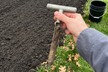
Every grower evaluates the root zone, consciously or not. In smaller facilities, this is often done visually and by feel: lifting blocks, assessing stone wool color, or observing plant posture. These methods are valuable, but they are subjective and difficult to standardize.
As operations grow and plant numbers increase, manual assessment quickly reaches its limits. Weighing slabs or blocks with scales adds objectivity, but only at discrete moments and with significant labor input. In larger facilities, the manpower required to monitor root conditions consistently across the crop is simply not available.
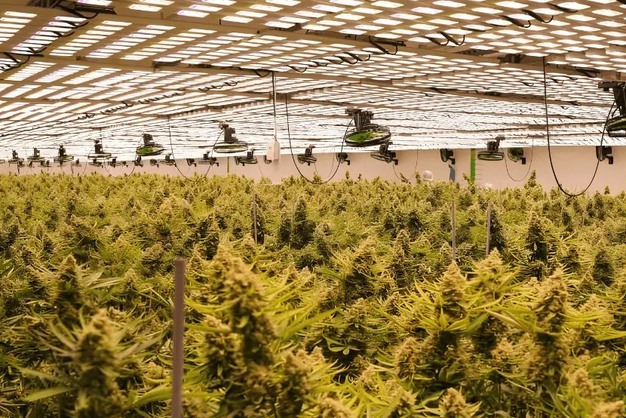
Root zone sensors address this reality. They provide continuous data streams that reveal trends, dynamics, and responses to irrigation and climate changes across time. In scaled cultivation, sensors are therefore not only a precision tool, but they are a practical necessity. Importantly, they do not replace experience; they formalize it, making intuition measurable and repeatable.
 © CULTIWOOL S.A.
Placement, Representativity & Sensor Care
A sensor does not measure the crop; it measures the exact micro-environment in which it is installed. Correct placement is therefore critical.
Sensors should be installed in the active root zone of a healthy, representative plant, at a depth where roots remain active throughout the cultivation cycle. They should never be placed directly next to a dripper, as this results in artificially high moisture readings that do not reflect average root conditions. This is also why consistent dripper placement is critical not only in relation to the block's performance but also when it comes to consistent sensor data.
The wider greenhouse context matters just as much. Sensors should not be placed in corners, along borders, near walkways, or in areas affected by shading, drafts, or uneven irrigation. Border plants and atypical zones experience conditions that differ from the majority of the crop and will result in data that is not representative of the compartment.
Once installed, sensors should remain in place for the duration of the cultivation cycle. Repeated removal and reinsertion disturb the stone wool structure, alter local water distribution, and compromise data consistency. If a sensor must be removed, it should never be reinserted into the same location. Previously used insertion points contain residual air pockets that can influence moisture and EC readings. In such cases, the sensor should be installed at a new, undisturbed location.
Consistency in placement is what allows growers to recognize trends, responses, and deviations with confidence.
How Many Sensors Are Enough?
A single sensor can never represent an entire greenhouse, and in most cases, not even a full compartment. Variations in light distribution, irrigation uniformity, airflow, and plant development inevitably create differences within the crop.
At the same time, sensor deployment must remain economically rational. The objective is not maximum sensor density, but reliable representativity. In practice, this means installing multiple sensors per compartment in areas with comparable cultivation conditions.
Rather than steering by individual readings, the most robust approach is to work with averaged data. Each sensor reflects conditions at its specific location; by combining their readings, growers create a stable reference that reduces the risk of overreacting to local variations and supports safer, more consistent decision-making. Again, a sensor is just one tool of many to take into account.
Interpreting Root Zone Data in Stone Wool
Stone wool enables precise control of the air-to-water ratio in the root zone. Sensors should therefore be used to observe dynamics rather than isolated values.
Meaningful interpretation focuses on dry-back behavior between irrigation events, rewetting speed, EC stability, and how these parameters respond to climate conditions. Sudden spikes or drops often indicate irrigation misalignment, uneven distribution, or placement effects rather than true plant demand.
Root zone data gains real value when cross-referenced with climate parameters such as temperature, humidity, and VPD, as well as with visual crop observations. Integrated platforms and multiple data sources, such as those enabled by solutions like SenseNL, help validate trends and clarify cause-and-effect relationships.
Choosing the Right Sensor for the Right Substrate
Not all root zone sensors are interchangeable. Sensor technology must be matched to the physical properties of the substrate to generate accurate and meaningful data. They must also be properly maintained and stored to ensure accuracy.
Different substrates, such as stone wool and cocopeat, have fundamentally different structures, water-holding characteristics, and EC dynamics. Sensors designed for cocopeat will not deliver reliable readings in stone wool, and vice versa.
Even within stone wool cultivation, sensor selection matters. Blocks and slabs differ in volume, water distribution, and root development patterns. Sensors designed for stone wool blocks are therefore not always suitable for slabs, and the reverse is equally true. Matching the sensor to both the substrate material and its form factor is essential for trustworthy root zone data.
Steering for Uniformity & Stability
In both medicinal and vegetable cultivation, success is defined by uniformity and repeatability. Properly installed and correctly interpreted root zone sensors help identify variability early, reduce differences between plants, and support stable generative or vegetative steering strategies.
Combined with high-quality stone wool substrates, sensors become a powerful ally in precision cultivation, enhancing consistency without replacing the grower's expertise.
From Data Points to Confident Decisions
Root zone sensors are not about collecting more numbers; they are about creating clarity. When sensors are placed strategically, deployed in sufficient numbers, and handled consistently, they transform stone wool cultivation into a predictable, steerable system.
By averaging data from multiple representative locations, growers reduce risk, avoid overcorrection, and steer with confidence. In professional horticulture, where uniformity, stability, and scale define success, reliable root zone data becomes a foundation rather than an experiment, cycle after cycle.
For more information:
Cultiwool
[email protected]
www.cultiwool-substrate.com