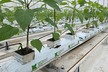


Cannabis cultivation relies heavily on control. Most production takes place either in fully enclosed indoor facilities, where plants grow entirely under artificial lighting—or in greenhouses that combine natural daylight with high-intensity supplemental lighting. These systems behave differently, but in both cases the root zone responds quickly to changes in crop activity and irrigation settings.
In indoor facilities, adjustments in light intensity or photoperiod are made by the grower and can immediately influence water uptake and root zone dynamics. In greenhouses, seasonal changes such as increasing natural light in early spring are often combined with supplemental lighting, making irrigation patterns more dynamic during this period.
In both cultivation systems, daily monitoring of drain and root zone parameters is essential for maintaining plant balance and predictable performance.
 © Cultilene
Daily monitoring
The substrate is where water, nutrients, and oxygen meet. Small deviations in EC or pH can have major consequences for uptake and growth—especially under high-intensity lighting where plants react quickly to environmental changes. By checking drain measurements and root zone parameters every day, you can:
· Detect trends early and adjust irrigation before problems arise.
· Prevent salt accumulation, especially during periods of lower drain (common in winter and early spring in greenhouses).
· Apply generative or vegetative steering on data.
What should you measure?
The Big Six: substrate-first, substrate parameters:
(These parameters describe the actual environment the roots live in. They are leading for decisions.)
• Water content (WC) The foundational parameter for understanding the balance between water and oxygen availability. WC shows how the root system is functioning and whether irrigation frequency and dosage align with plant demand.
• EC More meaningful than drain EC because it reflects what the roots actually "see." Monitoring EC in the cube or slab helps prevent salt build-up, supports balanced nutrient uptake, and reduces stress.
• pH Directly affects nutrient availability and root vitality. Trends in substrate pH are more important than drain pH alone and provide a clearer picture of long-term nutrient dynamics.
• Temperature A strong driver of root activity, water uptake, and nutrient absorption—crucial in artificial-light cannabis environments where metabolic activity is high.
• Oxygen Adequate oxygen levels are essential for active root metabolism. Poor oxygenation restricts uptake and increases the risk of root diseases such as Pythium.
• Microbiological life Beneficial microbes support nutrient availability, root resilience, and overall
substrate health. Monitoring biological activity helps understand substrate balance beyond physical and chemical parameters.
· Drain — supporting outcome, not a steering target
(Use drain to validate how the substrate responded, not as the goal itself.)
· Drain volume & EC/pH Drain results help you understand how irrigation translated through the substrate, but they are not primary steering targets. Good drain numbers do not guarantee correct root-zone conditions; they should be interpreted alongside the Big Six.
· Distribution over the day If you log drain, do it throughout the photoperiod, not just after the first flush, and always link it back to WC/EC/pH/temperature in the substrate.
Risks of not measuring
Failing to monitor or misinterpreting data can lead to:
· Salt build-up in the substrate, reducing root activity.
· Nutrient deficiencies or excesses, impacting terpene production, cannabinoid development, and biomass yield.
· Unpredictable crop performance, making steering ineffective.
In cannabis production, especially in warehouses with artificial lighting, plants often have higher metabolic rates.
Practical tips for data analysis
• Record all substrate related data on a daily base. WC, EC, pH and temperature should be logged alongside drain values. Analysing all data gives a complete picture of root zone behaviour.
• Visualize trends over time: dashboards make it easier to detect shifts in root zone conditions before they become problems.
• Compare substrate EC with dripper EC: Compare EC in the slab or cube with EC at the dripper to maintain a safe and consistent delta.
• Analyse patterns across the full day: don't rely on single moments; look at how the root zone and drain evolve from first irrigation to the end of the day.
Solutions for precision monitoring
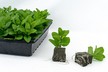
At Cultilene, we support cannabis growers in achieving highly controlled and predictable cultivation cycles. Our stone wool cubes and slabs with cross-fiber structure offer reliable and uniform drain behavior and uniform rooting throughout the cube, which is essential in intensive, high-light cannabis environments. Together with Growficient's sensors and datalogging platform, growers gain real-time insight into EC, water content, and temperature in the root zone.
This continuous data stream, combined with the Growficient dashboard, allows growers to read patterns, detect risks early, and adjust irrigation strategies with confidence. Cultilene's specialists help interpret this data and translate it into actionable irrigation and crop steering recommendations tailored specifically for cannabis production.
Extra attention in winter and early spring
Drain volumes are often lower during these periods, increasing the risk of salt accumulation. In artificially lit cannabis facilities, which often run at high light intensities year-round—this risk is even more pronounced. Extra monitoring and timely adjustments are crucial to maintaining root health and plant balance.
Daily monitoring of the root zone is essential for stable and predictable cannabis production. By focusing on substrate parameters such as water content, EC, pH and temperature—supported by irrigation and drain observations—you gain a reliable picture of how the plant is responding to irrigation and lighting conditions. Combining these measurements with expert interpretation allows you to prevent nutrient-related stress, maintain plant balance, and achieve consistent high-quality results in both indoor and greenhouse cannabis facilities.
For more information:
Saint-Gobain Cultilene
cultilene.com