

With energy prices remaining volatile, reducing energy consumption has returned to the top of the agenda for greenhouse growers in the Netherlands. Screen installations are one of the key tools growers are turning to, and that is reflected in the workload at Doek en Draad. "Many growers have already moved to second or even third screens, but there is also a lot of interest in renovation. Screens are simply being used much more intensively than in the past," says Colin van der Kaaij.
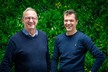
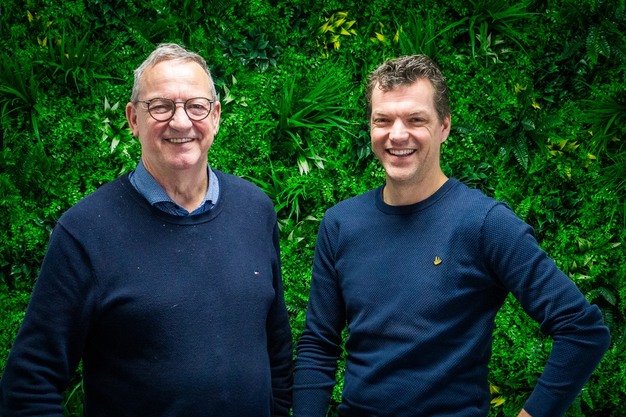 © Arlette Sijmonsma | MMJDaily.comCees and Colin van der Kaaij
As soon as the sun starts to shine
At Doek en Draad, quiet periods are not something the team is accustomed to, though February tends to be an exception. As Colin notes, pointing to his father: "Every year he says, 'Just wait, we'll be busy in August.' And every year that turns out to be true: as soon as the sun comes out, screens get all the attention."
Colin joined his father Cees van der Kaaij in the business a decade ago, followed by the acquisition of Screens4Seasons in 2021. Alongside screen installations, the company works with Holland Gaas to supply and install various netting systems for the horticultural sector, jointly advising growers on the options available. This has taken the business well beyond Cees's original vision of simply supplying materials, though the core philosophy remains unchanged: no frills, no fuss, just delivering what the customer needs, and doing it well.
The current climate in the horticultural sector is anything but straightforward. Unrest in the Middle East is affecting the industry in multiple ways, and Doek en Draad is feeling the impact. "On one hand, we see growers who are cautious about investing, and that is understandable," says Colin. "On the other hand, there are growers who want to push ahead: energy prices are rising again, and they want to retain as much energy as possible."
This is driving renewed interest in second and sometimes third screen installations, particularly in ornamental horticulture. "With energy-neutral cultivation high on the agenda and more solutions available for humidity management, screens are being used far more intensively. That is good for energy bills, but it also puts more strain on screen installations." As a result, screen renovation is increasingly in demand. "The advice is to replace a screen every seven years. Depending on the situation, growers naturally want to get as much life out of their screen as possible. At the same time, a renovation has a direct impact on insulation and energy consumption." He gestures outside. "On a cold but sunny day, the last thing you want is to be looking up at a dirty or damaged screen."
 © Doek en draad.nl B.V.
Cavity screen
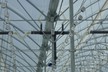
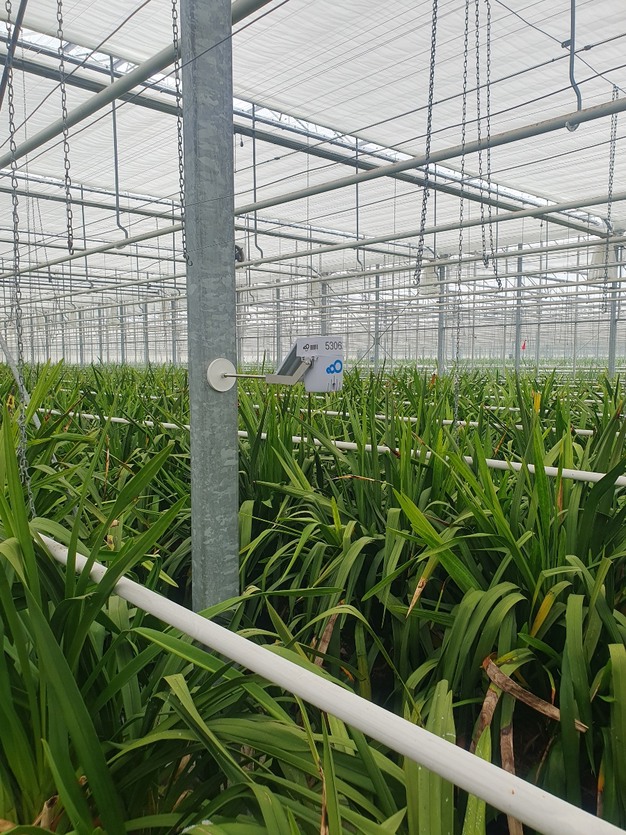
This context has also brought more attention to the cavity screen, an additional energy layer developed by Doek en Draad to enhance the insulating performance of a standard screen installation. Research published by Kas als Energiebron has confirmed that it provides significantly better insulation than a single screen. In collaboration with Sigrow, Doek en Draad is currently running a trial at HVS Orchids in cymbidium cultivation. "Cymbidiums tolerate humidity well; they perform better when transpiration is kept lower. That allows the screen to remain closed for longer, which is particularly interesting in an energy-intensive crop."
There are also subsidy opportunities: the cavity screen can be included under the EG subsidy scheme, and funding is available through SIGF for investments in insulation using a cavity screen or additional screen. This year, the SIGF scheme has also been opened to insect netting. In Belgium, subsidised insulation is also possible, though the company refers growers there to local advisors and accountants.
Cavity screens are also gaining traction beyond the Netherlands. One installation has been completed in Finland, and since a business contact relocated to Scandinavia, more enquiries have been coming from that region. "It is obviously even colder up there," Colin says. "Energy costs are high, but growers also get good prices for their products. That makes the payback period and energy savings from screen installations very attractive."
Experience and network
There is no shortage of work, then, even as Cees gradually steps back and spends more time in Spain. "He starts at eight o'clock now instead of seven," Colin says. "Or at least, that is the intention." Cees is candid about it: "When you enjoy the game, it is hard to say goodbye." And as far as Colin is concerned, there is no rush. "That level of experience and that network in the sector, you can only embrace it."
The company is also committed to passing that knowledge on to the next generation. "Finding good technical staff remains a challenge for us and for the sector as a whole." Internal training and knowledge transfer are therefore a priority, with new staff learning on the job alongside Cees and Ron Groenewald of Screens4Seasons. The approach has become more structured and technology-supported over time, but working purely behind a desk is not an option. "We have grown considerably in recent years, and the office is a fine place, but this is definitely not an office job. You have to learn the trade on the ground. Or more precisely: in the greenhouse."
For more information:
Doek en Draad 
Buijs Ballotstraat 6
2693 BE 's-Gravenzande
[email protected]
www.doekendraad.nl