


Canadian export dominance is intensifying, telemedicine platforms face mounting regulatory pressure across key patient markets, and emerging producers are recalibrating their ambitions. A new report from Prohibition Partners, the Global Medical Cannabis Market Review 2026, paints a picture of a global cannabis market with one country being able to singlehandedly meet all the demand, as this is mainly driven up my telemedicine platforms.
Canada
In 2025, Canadian annual export volumes reached over 275 tonnes, more than 2.5 times the 2024 figure of 107 tonnes. Canadian producers are outperforming other international players due to a quantitative and qualitative advantage rooted in the country's gigantic domestic legal market, which allows them to leverage economies of scale that producers in Portugal or Australia simply cannot match. Canada's 2024 cultivation volume plus start-of-year 2025 stock is approximately eight times the maximum cultivation estimates of the rest of the world combined. The report notes that this surplus has the capacity to meet the entire volume of global demand, a fact it describes as a source of concern for cultivators elsewhere.
The export economics are compelling. Price points are higher than domestic, tax burdens are lower, and June 2025 likely marked the first month in the history of the Canadian cannabis industry that export volumes exceeded the volume destroyed by Canadian producers. Canadian medical cannabis is often available for a lower price, and at a higher level of consistent quality, than competing international products, which the result of over two decades of production heritage and dense supplier networks active in the horti space for decades.
Europe
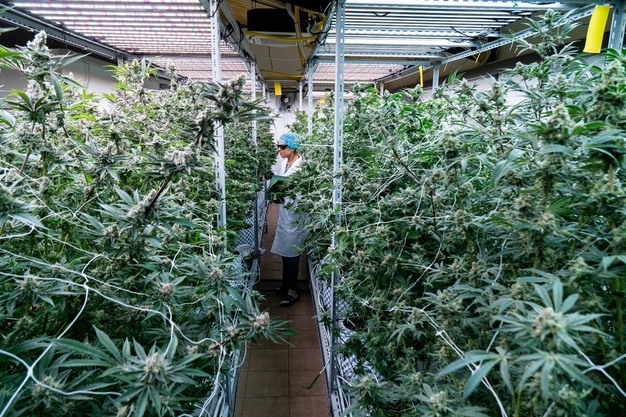
Among other exporters, Denmark is now the second-largest in Europe after Portugal, shipping both highly-processed products primarily to Germany. The main growers are Schroll Medical and Little Green Pharma; the main extract producers are Vertanical and Valcon Medical. North Macedonia's volumes have grown steadily, the Czech Republic made its first exports in 2024, and South Africa has found more traction in the Australian market than in Europe.
 © Olesia Chikova | Dreamstime
The telemedicine pull
Telemedicine is the other structural force shaping the global medical market, but also the one generating the most regulatory dramas. Its impact is particularly pronounced in Germany, the UK, Brazil, and Australia, where the majority of patients receive treatment through teleclinics. As these platforms grew, regulators started looking at them with increasing concern, fearing the little to no oversight would result in cannabis being prescribed for needs that aren't strictly medical. At the same time, the skyrocketing import driven medical cannabis market in Germany was largely consequence of telemedicine. This basically means that restrictions and bans could significantly affect the health, size, and growth of global medical cannabis markets, and the actions of a few bad actors can have a detrimental impact on patients and the industry's overall growth.
Poland can be seen as a case study on what happens when telemedicine gets restricted. When the government restricted virtual visits in November 2024, requiring initial consultations to be conducted in person, prescription numbers declined by 54% within two months. Patient numbers fell from a peak of over 137,000 in 2024 to roughly 93,000 by September 2025, and some pharmacies with full inventories were forced to offer flower for as low as €4 per gram against an average of €9 to €10 prior to the restrictions. At the same time, recovery has come faster than many expected, driven by hybrid clinics with mobile physicians serving rural areas.
Australia, the second-largest market outside North America with an estimated 700,000 to 900,000 patients, is navigating similar pressures. Critics have labelled vertically integrated teleclinics as 'script-mills,' and in May 2025 the Australian Health Practitioner Regulation Agency reported that eight practitioners had issued more than 10,000 scripts within a six-month period. Between 2022 and June 2024, the TGA issued 165 infringement notices for unlawful advertising, resulting in over AUS$2.3 million in penalties. A full regulatory review is underway, with reform options due by December 2025 and a second round of public consultations planned for early 2026.
France joins the fray
On the horizon, France is moving toward a permanent medical cannabis framework after submitting documents to the EU in March 2025, with standard prescribing under common law now expected no earlier than 2027. The country enrolled over 3,000 patients in its pilot and, with the second-largest population in the EU and a strong healthcare infrastructure, has the potential to become a significant market. Thailand, meanwhile, pivoted to a medical-only model in June 2025 after restricting adult-use sales, and is working to build an export infrastructure around its low operational costs, though workforce gaps and a lack of genetics infrastructure remain.
All in all, the global cannabis market is still growing and opportunities go hand in hand with regulations, nothing new for the industry. Equally unsurprisingly, Canada is the biggest cannabis exporter, very much a result of the cultivation expertise and infrastructure built over decades of horti knowledge and legacy culture. Growers outside of Canada should pay attention to that, because Canadian producers were built to support both a local rec market and an international medical market. No other country can rely on such an infrastructure. On the other hand, as leading import markets weigh telemedicine's benefits against clinical oversight concerns, others are watching closely and will soon confront the same decisions.