

The Dutch greenhouse sector is facing a new round of uncertainty. Political proposals are pushing up costs, while geopolitical tensions continue to drive energy prices higher. Against this backdrop, the annual LichtEvent in Bleiswijk raised a key question: does supplemental lighting in the Netherlands have a future?
The LichtEvent, now in its seventh edition, has for several years drawn growers and technology partners to Bleiswijk to keep abreast of the latest research findings. The most recent edition attracted more than 170 visitors. Over the years, the event's focus has shifted from a heavy emphasis on light spectrum to a broader interest in topics such as humidity management and heat distribution under LED lighting. With many research questions still open, the LichtEvent remains a relevant forum — and the organizers confirm it will return.
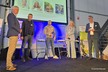
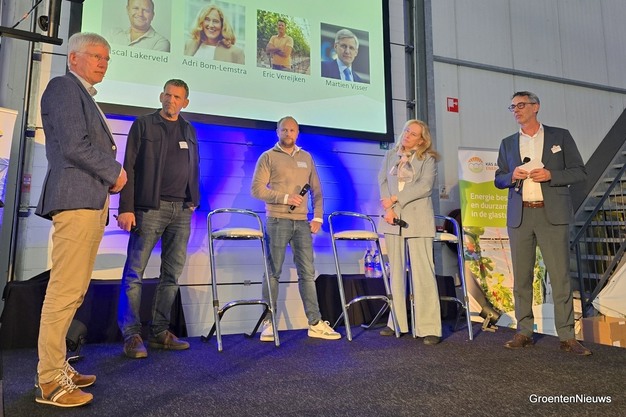 © Thijmen Tiersma | MMJDaily.comPanel discussion with Martien Visser (emeritus lecturer at Hanze University of Applied Sciences Groningen), Eric Vereijken (Vereijken Kwekerijen), Pascal Lakerveld (Samax) and Adri Bom-Lemstra (Glastuinbouw Nederland), chaired by Eric Poot (Delphy). View a photo impression of the afternoon here (link in Dutch)
Future of lit cultivation: Opportunities and rising costs
The closing panel discussion of the plenary programme put the question directly: does supplemental lighting in the Netherlands have a future?
Adri Bom-Lemstra of Glastuinbouw Nederland answered without hesitation: yes. Demand for greenhouse produce remains strong, and the sector's high-tech energy systems also serve a wider social function. Growers help stabilise the electricity grid, in part through the use of combined heat and power (CHP) installations.
Tomato grower Eric Vereijken was more cautious. He pointed to the high energy tax burden, which is set to increase further in the coming years. For tomato growers who want to continue using supplemental lighting, keeping production costs under control is essential. A further concern is CO₂ availability. "CO₂ is either unavailable or we are not permitted to use it," Vereijken said, referring to plans to store CO₂ beneath the North Sea seabed.
During the discussion, Eric Poot of Delphy put a series of questions to the panel, which also included energy specialists Martien Visser and Pascal Lakerveld of Samax.
Lakerveld noted that growers are moving away from fixed lighting volumes and increasingly focusing on what the plant can handle. In practice, this means fewer fixed lighting blocks and more lighting at moments when there is a surplus of electricity on the grid.
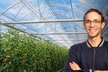
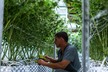
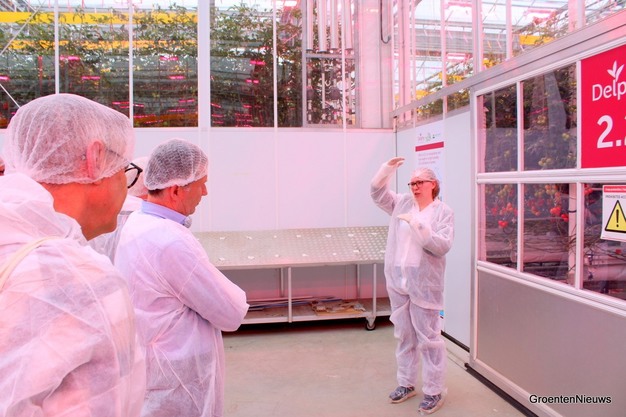 © Thijmen Tiersma | MMJDaily.comVisitors could take guided tours through the greenhouses of both Delphy and WUR, where extensive research is being conducted. Here, Brigit den Bakker, on behalf of Delphy, explains research focused, among other things, on problems with uneven coloring in tomato cultivation.
But how do you do that as effectively as possible: use energy smartly without losing sight of the plant's interests? Grower Eric asked that question. After that, it was time for workshops and tours, where there was also plenty of room to ask such questions. View a photo impression of the tours here (link in Dutch)