

The UK medical cannabis market has grown steadily over the past five years, though not always in the ways operators had hoped. New brands and imported products have driven much of the expansion, while domestic cultivation has moved at a slower pace. Alexander Mountain has watched this from the inside since before most people in the industry knew it existed. "I've been waiting for this since 2009," says the founder of cultivation consultancy Trichome Solutions.
Regulation, compliance, EU-GMP requirements, all of it has made getting a facility off the ground a multi-year exercise. "I've worked with, and seen first-hand, organisations take three, four, even five years to get up and running," Alexander says. "It's a tough market to enter in the UK, and that naturally slows overall maturation." The last six months, though, have brought a shift. "There are clear objectives and programs for businesses now. An almost militant approach to protocols. It's starting to feel like the rest of the EU and Canada."
 © Trichome Solutions
Capitalization and cultivation
Early investment in UK cannabis came largely from private equity, and the gap between capitalization and cultivation knowledge cost many operators dearly. Consultants were brought in to design and build facilities, but were rarely intended to stay and run them. The result was facilities that needed to be rebuilt almost as soon as they opened. "A lot of retrofitting, workflow changes, logistical expansion," Alexander says. "Which of course requires more capital. That delays profitability and, in some cases, leads to workforce burnout." The model he believes in is the owner-operator structure that has worked in the US, Canada, and markets like Thailand.
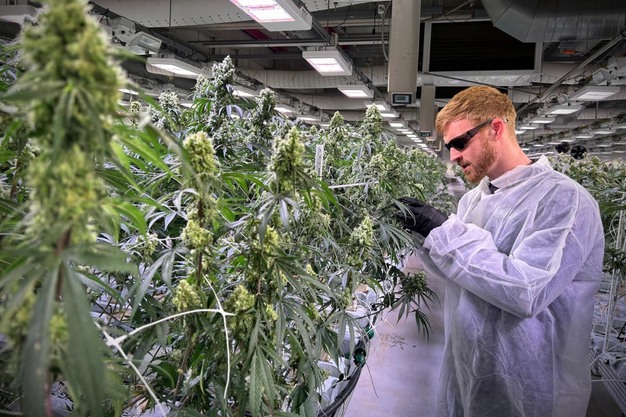
On the cultivation side, genetics selection and post-harvest are where Alexander spends most of his attention. The UK's seasonal swings make indoor parameters preferable where possible, though light-deprivation greenhouses have worked for some operators with the right supplemental lighting in place. Getting genetics right for the specific market drives early success and patient retention. Post-harvest, though, is the area he thinks the sector consistently underestimates. "I focus a lot on preserving the plant material and maintaining its chemical profile, particularly cannabinoids, terpenes, and volitile sulphurs " he says. "Even simple things, like having enough space to dry properly, seem like common sense. But unless you've actually done it, you don't always realize how critical those details are for final product quality."
Cannabis demand in the UK
Patient demand in the UK has been shaped by the legacy market, and licensed operators are working to close that gap. The dynamic here is different from other markets. In Germany and Canada, THC content tends to drive purchasing decisions. In the UK, Alexander is seeing more focus on flavor, aroma, and overall experience. "With the amount of choice coming in through imports, people are finding their strains and becoming more selective," he says. Closing that gap, in his view, runs through the prescribers as much as the cultivators. "Patient education and support has to come from the doctors. They have to be taught by the producers about their products. I think cultivators should invite the prescribers in more often."
Over the next three to five years, Alexander expects import reliance to ease as domestic supply chains develop, and for the market to stabilize. The operators that come out the other side, he argues, will be the ones who specialized. R&D, legacy genetics, premium indoor, and post-harvest optimization. "We're operating in a very international cannabis industry now," he says. "With comparisons only a plane ride away, there's no room for complacency. The operators who find their niche and really excel in it will be the ones who build a strong identity and remain competitive in the cannabis space."
For more information:
Trichome Solutions
[email protected]
trichomesolutions.com
Linkedin
Instagram