


One year after the launch of the national cannabis experiment, the regulated cannabis chain in the Netherlands appears to have found its footing. Where coffeeshops in ten municipalities initially struggled with shortages and uncertainty, supply has now stabilized. Is this the stepping stone toward national implementation, and can it push back the illegal market?
At the launch on April 7, 2025, only five of the ten designated growers were able to deliver. Hash availability was a particular problem, leading the government to temporarily allow coffeeshops to continue purchasing illegally. Since September 1, the closed chain applies to hash as well, with all ten growers now supplying.
According to licensed grower Rick Bakker of Hollandse Hoogtes, the sector has developed quickly. "The experiment started with some challenges, but by now all ten growers are delivering, which has made the range more diverse and allows coffeeshops to differentiate themselves again."
He notes that differences between growers are significant, driven in part by cultivation method, there are, he says, substantial gaps between high-end indoor cannabis and cheaper greenhouse products, as well as by experience. "Cannabis is a different thing from growing tomatoes and cucumbers," Bakker says.
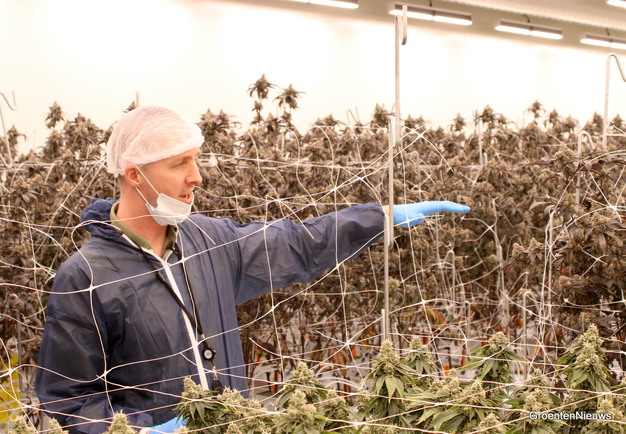 © Thijmen Tiersma | MMJDaily.com
Consumers are driven by both price and taste. Bakker says they particularly value consistent quality. "Coffeeshops buying from multiple illegal growers can't guarantee the flavor. With legal growers, they know exactly what they're getting."
Amsterdam-based coffeeshop chain Boerejongens is a strong advocate for the legalization of soft drugs. To participate in the cannabis experiment, it opened a branch in Almere. Manager Marcel, active in the sector for decades, sees clear advantages. "We know exactly what we're buying and we just get a proper invoice."
Customers needed time to adjust to the new rules at first, he says. Products are sold sealed and can only be opened at home. "Normally customers can point to what they want. Now we have a tasting tray to smell and look at, but that's not the product they take home."
Boerejongens would also like to buy legally in Amsterdam. "Yesterday rather than today." Yet the illegal market remains a serious competitor. Research shows that a gram of cannabis in coffeeshops cost an average of just over 11 euros before the experiment, while the illegal market sits around 7 euros.
Price and convenience remain key reasons for users to buy outside the coffeeshop. Illegal suppliers often operate delivery services and offer volume discounts, and are still rated as good quality by users. Those involved say this underlines that the experiment must not only work legally, but also compete economically.
At the same time, experts warn that regulation does not make cannabis harmless. "Cannabis remains a substance with risks, even when its quality is controlled," says Margriet van Laar, head of drug monitoring and policy at the Trimbos Institute. Cannabis use can lead to addiction, worsen mental health problems, and impair memory and academic performance.
Legalization could also send the wrong signal, she argues. "Government-regulated cultivation can create the impression that the dangers aren't that serious, and lower the threshold as a result." She advocates for sustained investment in information and prevention, particularly among young people.
Historian Arjan Nuijten of the University of Amsterdam is following the experiment and says he hears predominantly positive feedback from the field. "From municipalities and users, there is satisfaction." He points out that earlier controversial experiments, such as the heroin experiment, ultimately led to lasting policy.
The political wind is also favorable at the moment. D66 in particular has been a driving force behind the experiment for years, viewing regulation as a means to push back the illegal market. Opposition remains, especially from Christian parties such as ChristenUnie and the SGP. "The choice remains with politicians," Nuijten says, "but if the trial goes well, it becomes difficult to defend stopping the experiment on moral grounds."
Source: telegraaf.nl