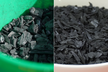


Coco coir is definitely not a new material. Growers across the cannabis, berry, and vegetable sectors have been running it for decades. The complaints, however, tend to be the same. They can all be summarized in one word: inconsistency. For operations managing hundreds or thousands of plants, that variability represents a serious yield problem.
Chris Vaos, Director of Product & Business Development at HortGrow Solutions, hears this every time a new account comes in. "Our focus has always been simple," he says. "Deliver a clean, consistent, technically reliable coco substrate that allows professional growers to execute precise fertigation strategies without variability at the root zone." What that looks like in practice, he says, is growers reporting the same cluster of outcomes regardless of where they are or what they are growing. "Uniform hydration, predictable dry backs, stable EC, immediate root establishment, and repeatable performance from batch to batch," Chris says. "These claims come from the growers running our substrate."
 © Hortgrow
Consistency as a production requirement
Dylan Acker of Nature Refined, a commercial operation in Adelanto, California, has run multiple coco substrates at scale. The decision to stay with HortGrow came down to one thing. "HortGrow's expandable coco has been the most consistent product I've used," Dylan says. "The consistency, hydration, and overall performance stay reliable from batch to batch, which is why it's my go to. It's also one of the most cost effective options out there, making it an easy choice for my operation."
Batch consistency is a production requirement for any commercial grower, regardless of the crop. When container volumes scale into the thousands, substrate variability becomes yield variability. HortGrow's expandable coco is manufactured and buffered to deliver uniform performance across pallets, a distinction Chris says is built into the company's processing from the sourcing stage forward. HortGrow owns and operates its own manufacturing facility in Tamil Nadu, India, giving it direct control over quality at every step.
The air-to-water balance to better support crop steering
Noah Preuss of Dark Horse in Richmond, Kentucky, says: "HortGrow Coco provides the ideal balance of holding capacity and aeration, unmatched consistency from bag to bag, and a clean substrate that lets roots thrive immediately."
Water holding capacity and air-filled porosity have to coexist in the right ratio. Too much moisture retention limits oxygen diffusion at the root zone. Too much porosity reduces buffering capacity and makes fertigation control harder to execute. HortGrow coco is engineered through a proprietary sieving process, fine particles removed, coarse chips calibrated back in at set ratios, to hold that balance consistently across the full production run. "If the coco is too fine, it holds too much water, and the plants grow too vegetative," Chris explains. "If it is too loose, it dries out too fast, and you end up irrigating more. We go through a proprietary process where we sieve and remove all the fine particles. Anything too small gets removed. Anything too large gets separated and added back at the right ratios."
Side-by-side trials
In Denver, a competitive cannabis market where operating margins are tight and growers have access to most of the major substrate brands, Rob Jany of Leiffa Brands and Lit Botanicals did not take the switch to HortGrow on faith. He ran the trial. "Done side by sides with different brands," Jany says. "All were swiftly eliminated and tested worse. There's no going back."
What the first flush tells you
Operational efficiency in coco is often decided during the first hydration event and the first irrigation cycle. A grower in Redding, California, who ran 54 HortGrow bags documented the results in detail. The first hydration runoff registered just 0.1 EC points above feed, considerably lower than the other two coco brands the grower had previously used. Dry back across all 54 containers was uniform.
"No issues with fungus gnats, just healthy white roots," the grower noted. "HortGrow bags have a liner that kept any coco from draining out into my trays or drains."
Low initial runoff EC indicates that the buffering and rinsing have been completed correctly before the bag reaches the grower. Uniform dry back across a full run of containers confirms consistent bulk density and fiber structure throughout the batch. Clean substrate reduces pest pressure from day one.
Switching from peat and what it changes at the root zone
Nelson Pagan, head grower at a licensed medical cannabis operation in Puerto Rico, made the transition from peat moss to HortGrow 1.7-gallon coco bags and documented the shift in both plant performance and data visibility. "Since we switched the substrate from peat moss to HortGrow 1.7-gallon coco, we have seen an increase in both yield and overall plant health," Pagan says. "This is because the change in substrate has allowed us to gain more control over our fertigation strategy, better manage drybacks, and have a clearer understanding of what is happening at the root zone level. It is truly a very clean and consistent product."
Substrate selection determines how precisely a grower can read volumetric water content, pore space oxygenation, and EC trends at the root zone. A clean, uniform coco platform allows for data-driven steering rather than reactive irrigation, the difference between managing a crop and chasing it.
Pagan also flagged something that distribution partners echo: grower support. "What I like the most is the grower support and the amount of information they provide to help us achieve our goals."

Technical support as part of the product
Kevin Carlin of Hydrorebels.com in Oregon distributes coco to commercial accounts across the state. His team tested the major brands before committing. "There's plenty of coco options to pick from. Hydro Rebels has tested them all. There is a reason why we only distribute HortGrow. It is by far the highest quality coco and most consistent performance, backed by top tier technical support."
Technical support and agronomic guidance are built into how HortGrow operates. Chris and the team work directly with growers on substrate EC interpretation, calcium-to-magnesium ratios, dry back percentage management, and aligning fertigation strategy with crop steering objectives. The company also operates a dedicated technical support channel and a comprehensive resource library for growers moving into coco for the first time or troubleshooting mid-crop.
HortGrow's product range includes expandable grow bags, grow cubes, grow slabs, bulk coco coir, and coco blends, all OMRI-listed for organic use and sourced from HortBio Technologies in Tamil Nadu, India, processed with a final reverse osmosis rinse before shipment.
The common thread Across California, Kentucky, Colorado, Oregon, and Puerto Rico, the feedback from commercial growers running HortGrow coco returns to the same set of outcomes. "Our 3.5-liter containers are sometimes getting roots coming out of the bottom in four days," Chris says. "After the first transplant, growers have to wait for roots to take hold before they can start crop steering. The short transplanting time is an important benefit for many operations."
For more information:
HortGrow Solutions
www.hortgrow.com