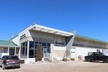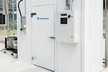

The floating tarpaulins used in Dutch water silos are sufficient for now. However, there's a growing demand for steel roofs for these silos. Bas van der Elst of Hendic, says, "Steel is solid. It can take a beating. Then storms aren't a problem." Wind and hurricanes are often risk factors for water storage. Steel seems to be the solution.
 © Hendic
A steel roof has the added advantage that the water's entirely sealed off. With a floating tarpaulin, anything can still fall into it. Covering the silo is a better idea. "Safety first," says Bas. Covering a water silo also prevents algae growth and evaporation.
"South America is an important market for us. Unfortunately, hurricanes occur there regularly. Our silos are extremely wind-resistant." Hendic has seen an increasing demand for its steel roofs.
The model's average roof diameter in Mexico is 9,60 meters. The covers are designed for various water silo brands. The silos don't need extra reinforcement either. The solid steel center post carries most of the roof's weight. In most cases, it can simply be placed on the silo's liner, using a base plate.
For more information:
Hendic
Bas van der Elst
Tel: + 31 (0) 610 705 739
Email: [email protected]
Website: www.hendic.nl