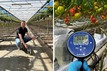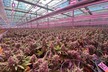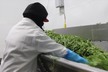


Some argued that only 2% of NA cannabis cultivators grow in deep water culture (DWC). Although this is based on an informal estimate, it may not be that far from the truth considering how difficult and complex DWC is.
David Loos, a cannabis cultivator with Vireo in Minnesota, spends his days maintaining mother plants, taking clones, and managing the veg cycle for the company's medical grow. Although his current setup runs on coco and salt-based fertilizers in greenhouses with supplemental lighting, he's worked extensively with deep water culture in the past and describes it as "a whole new level" of precision growing. But if you thought DWC was already difficult, wait until you hear about recirculating deep water culture.
 © David Loos
From deep water to recirculating systems
"Deep water culture is where a nutrient solution is constalty running through the roots, instead of having a medium that stores nutrients," David explains. In other words, roots dangle directly in aerated, oxygen-rich water, absorbing nutrients without the buffering effect of a substrate. Variants include nutrient film technique (NFT) and flood tables, but all hinge on one factor, which is consistent, highly controlled nutrient delivery.
Where DWC systems deliver a steady flow of fresh solution, recirculating deep water culture (RDWC) takes it a step further. "In recirculating DWC, rather than start with a clean slate, you start with the solution that's just passed through the roots," David says. "You don't have to add as much new solution, you dilute and rebalance it in real time."
That's definitely easily said than done. The level of control and automation that such a set up would require is substantial. As nutrient concentrations (measured in parts per million, or PPM) shift with each pass through the root zone, inline sensors and injectors must adjust the feed instantly to maintain target levels. "If you start with 100 PPM nitrogen and the solution comes back depleted, your system has to re-inject nutrients to bring it back to 100 before it recirculates," David says.
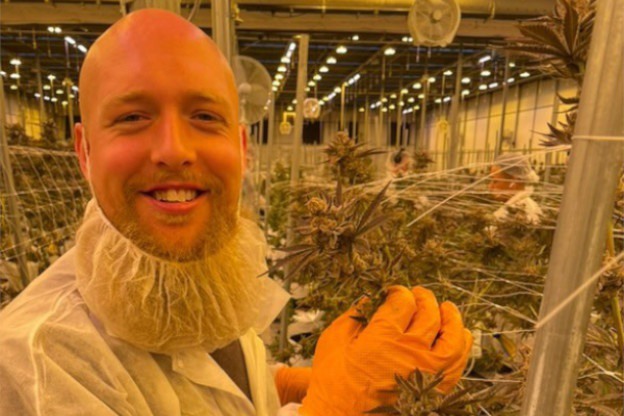 © David Loos
Higher precision, higher risk
RDWC's main appeal is efficiency and its main challenge is control. Because all plants share the same reservoir, contamination can spread rapidly. "If one plant gets infected, the whole crop is at risk," David warns. "Which anyway is the case for any mode of cultivation that recirculates water."
The system's sensitivity also demands constant oversight. Traditional soil growers might check their plants every few days, hydroponic growers check daily. "With DWC, it's a couple of times a day," he says. "You need your sensors, your pH, your filtration, everything needs to be locked in."
Since water is an even more critical element in this type of cultivation, cleanliness acquires a whole new meaning here. "RDWC setups typically include two filtration stages, one at the water source and one at the reservoir, along with reverse osmosis systems to ensure purity."
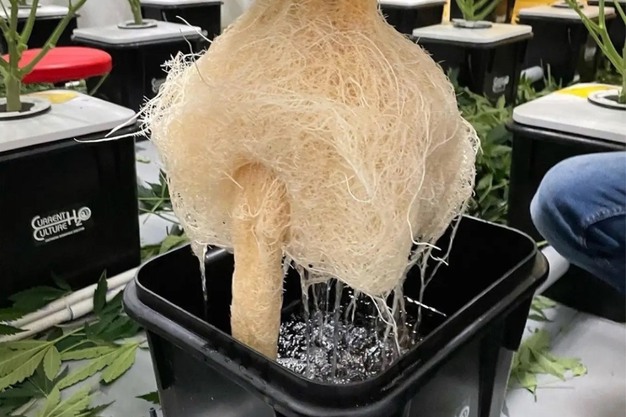 © David Loos
Quality
It may be demanding, but the quality DWC delivers may justify the effort. "I'd say generally speaking, you get more yield in DWC than in regular hydro," David notes. "It creates a very healthy root system, and plants grow faster and more vigorously."
The tradeoff, he says, lies in terpene expression. "Personally, the best terpene profile comes from soil-based grows, especially living soil that incorporates microbes and fungi. But DWC grows produce faster and more vigorous plants, with slightly higher yields. It's a quality versus quantity thing."
The sustainability equation RDWC may not yet be mainstream in cannabis cultivation, but David believes it will gain ground as the industry pushes toward sustainable practices. "Recirculating systems use much less water," he says. "As more people value sustainability and understand the environmental side, more growers will start using it, even if just a little."
In regions like New Mexico, where water scarcity is a major constraint, growers are already looking to RDWC as a way to maintain hydroponic precision without excessive consumption. Still, David doesn't expect the method to dominate the industry. "It won't ever be the main way of growing," he says. "But for craft cannabis and sustainability-focused facilities, it's going to catch on."
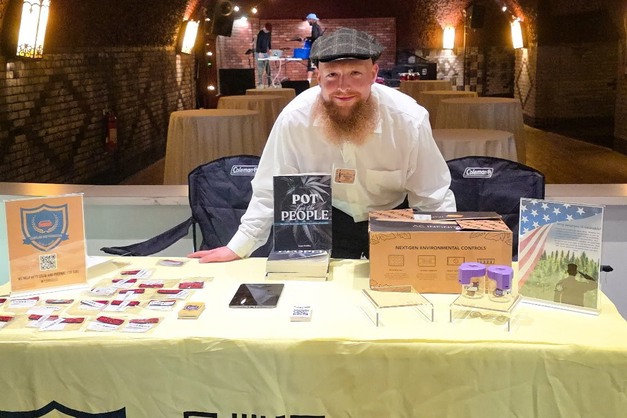
 For more information:
Frontline Bud Foundation
[email protected]
frontlinebudfoundation.org