
In its Cultivation for Compounds (CfC) consortium article series, Cultivators spoke to Juliette Pijnakker, Senior Researcher at Biobest. The conversation focused on discussing the company's recent advancements within the CfC project.
Cultivation for Compounds is a four-year research and advocacy program focused on sustainable cannabis cultivation. Biobest, a global leader in biological control solutions, serves as the CfC consortium's crop protection partner, monitoring and testing beneficials for cannabis and safeguarding experimental crops weekly.
Revisiting Biobest's IPM strategy
In her 2023 interview, Juliette explained that Biobest was actively testing integrated pest management (IPM) strategies, methods combining multiple techniques to control pests, with a specific focus on the biological control of powdery mildew. "Powdery mildew can be a huge problem for cannabis cultivation, so this is our first goal," she stated.
Two years on, meaningful progress is being made. While pests can often be controlled using natural enemies, fungal diseases, especially powdery mildew and Botrytis, are more challenging. Preventative practices such as optimal air circulation and climate stability remain difficult to maintain in real-world cultivation.
Recognising the complexity of this challenge, Biobest continues to dedicate time and research by developing reliable, long-term, and innovative solutions specifically designed for cannabis. This is achieved by not relying on "copy-paste" methods from other crops, according to Juliette.
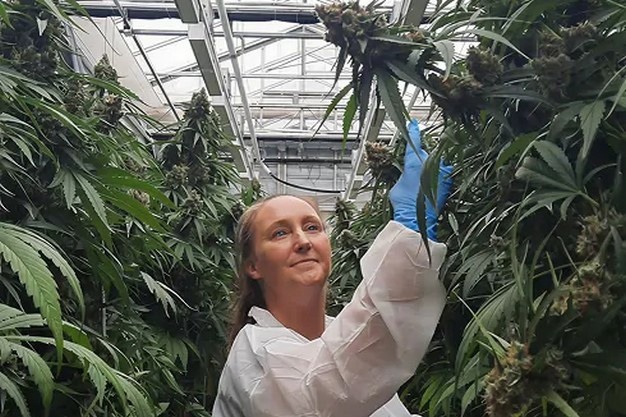 © BiobestFigure 1: Juliette Pijnakker examining the presence of botrytis in cannabis.
Pest and disease trends
Biobest recently observed Echinothrips americanus in the trial at the research station, where it appears in two crop cycles. The pest is luckily not yet widespread in grower operations. But its appearance could lead to potential future problems. Biobest is investigating the establishment of Franklinothrips vespiformis, which has shown promising results as a possible control against Thrips parvispinus and Frankliniella occidentalis.
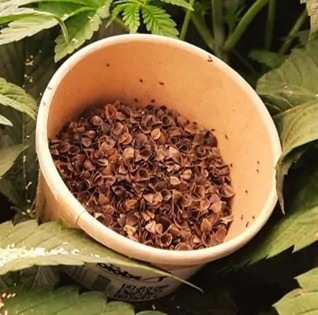
However, F. vespiformis has proven difficult to establish in cannabis because of the plant's dense trichomes (tinyhair-like structures) and sticky surface. Juliette emphasised the importance of releasing beneficials such as Orius laevigatus and Pronematus ubiquitus early (before the first flowers appear) as a preventative strategy (figure 2).
Scouting and biological control remain central to Biobest's IPM strategy. "We do weekly scouting and releases," Juliette said. Regular monitoring tracks pests and beneficials, allowing for the timely release of natural enemies, such as Aphidis ervi against aphids and Phytoseiulus persimilis against spider mites.
 © Biobest
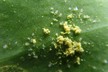
Figure 2: Orius laevigatus release strategy in young cannabis crops
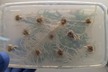
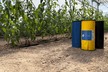
Releases are carefully tailored to the crop stage, particularly during early flowering when carrier materials such as sawdust cannot be used (Figure 3, left). These limitations have driven the development of innovative release strategies. One such method is the use of bioboxes (Figure 3, right), small containers attached to the crop stem that enable beneficial insects to emerge gradually and disperse naturally once flowering begins.
Juliette emphasised that we must consider the timing of defoliation (removing leaves from the crop). This process is useful for eliminating pests such as whiteflies and thrips, but can also impact established
biological control agents like P. ubiquitus. Reintroductions of these predators are often necessary after defoliation to maintain adequate populations. Coordinating IPM with cultural practices is essential for effective pest and disease management.
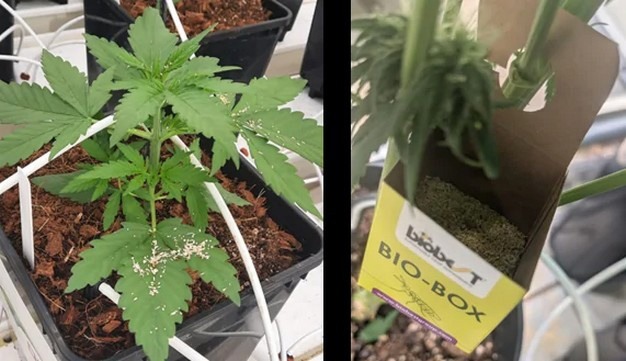 © BiobestFigure 3: Carrier (sawdust) left on crop after release of beneficials (Left), Biobox attached to stem (Right)
Trials with Pronematus ubiquitus
To help combat powdery mildew, Biobest has been testing the predatory mite P. ubiquitus. This tiny, experimental mite can feed on both russet mites and the fungus responsible for powdery mildew. Research led by Juliette Pijnakker (2021–2022) has shown the efficacy of P. ubiquitus, when established early with pollen supplementation. These findings are detailed in the publication Dual protection: A tydeoid mite effectively controls both a problem pest and a key pathogen in tomato.
This resulted in the use of P. ubiquitus in the CfC trials. The mite can navigate cannabis trichomes, which is essential for cannabis use. Juliette explained: "Releasing P. ubiquitus helps reduce powdery mildew. However, the mite builds its population slowly and works best as a preventative measure rather than a quick fix. This is not a simple 'release and forget' solution. Clear guidelines are essential!"
She added that timing is crucial: the mite must be introduced early, and de-leafing should be carefully managed to avoid removing too much of its habitat. To support population establishment, Biobest provides commercially distributed Typha pollen (Nutrimiteä) as a supplementary food source.
Notably, P. ubiquitus is effective against powdery mildew and small mites. It can be used alongside other beneficials, such as Orius laevigatus for thrips and Phytoseiulus persimilis against spider mites. However, it is not compatible with all phytoseiid mites or sulphur-based treatments, which restricts its use in certain situations and programs.
"P. ubiquitus is not yet commercially available," Juliette said. "This strategy must still prove itself on a larger scale and be tailored specifically to cannabis. What works in other crops does not necessarily apply here."
Nevertheless, initial findings are encouraging. Juliette states: "P. ubiquitus shows strong potential as a preventative biocontrol agent in our cage trials at CfC. The next step is to evaluate its effectiveness at the grower level, which could make it a key part of sustainable cannabis IPM."
The value of collaboration
Biobest's involvement in the CfC consortium is vital for trial success. Due to limited cannabis research opportunities in the Netherlands, CfC grants Biobest access to experimental crops. This enables thorough trials in a pre-commercial environment. Further providing the opportunity to test and refine strategies across multiple rapid crop cycles annually.
According to Juliette, "Joining the CfC consortium has benefited Biobest tremendously. It gives us access to crops we could not otherwise work with, and the open exchange of knowledge with partners speeds up innovation across the board."
Conclusion
Biobest's work within the CfC project highlights both the complexity and potential of developing sustainable, biologically driven cannabis crop protection. Pest control is increasingly reliable, while managing fungal diseases requires a more preventative, long-term strategy.
The trials with P. ubiquitus represent a major step forward. They demonstrate that, with appropriate conditions and care, new biocontrol agents can be effectively adapted to cannabis. However, they also highlight the importance of crop-specific research, careful integration, and patience.
Biobest's ability to test, adapt, and collaborate through the CfC project has propelled the development of sulphur-free, biologically based IPM strategies. These advancements not only address the complexities of cannabis cultivation but also set a new benchmark for sustainability in the industry. As research continues, Biobest stands at the forefront of innovative, long-term crop protection solutions, driving the cannabis sector towards a more sustainable future.
Source: Cultivators