
To keep plants in the "happy zone" of growth, managing the interplay between temperature, humidity, and plant activity is just as critical as dialing in the right nutrient recipe or photoperiod. "Cannabis grows like a weed, but we grow it like a medicine," says Justin van der Putten from DryGair. "That means laboratory-like conditions, and what's easy to handle in a greenhouse can become a real challenge in a sealed room."
The HVAC safety net
Many cannabis growers tend to oversize their HVAC systems, treating cooling capacity as a form of insurance. The logic behind that is more capacity means more stability. "Yet that approach often overlooks the fact that cooling and dehumidification don't always go hand in hand," Justin points out. "HVAC systems condense water as a byproduct of cooling, but not necessarily at the times when plants need humidity removal the most."
 © DryGair
This becomes especially critical in the early morning hours. As lights come on, leaf temperatures rise more slowly than the surrounding air, creating a condensation risk on the buds. "That's when you get necrotic tissue and an open door for fungal diseases," Justin explains. Dew point management, in other words, is a disease-prevention tool.
VPD and the "danger zone"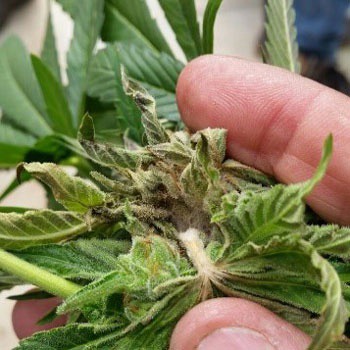 © DryGair
Most growers follow VPD charts to keep plants balanced between water uptake and transpiration. Miss that window, however, and the crop quickly slips into what Justin calls the danger zone. "The key is not starting the day with wet plants," Justin points out. "If you can avoid hitting dew point in the morning, you don't have to run your environment so dry."
The greenhouse advantage
Compared to indoor cultivation, greenhouses benefit from a natural buffer: the massive volume of air above the canopy. This makes it easier to homogenize the climate and gives growers more leeway. In tightly sealed indoor environments, every hotspot or cold corner can throw off the balance. "Knowing more doesn't always help," Justin notes. "In CEA you see every fluctuation, and that can scare growers into overcorrecting."
Dehumidification as a design starting point
Where growers sometimes go wrong, Justin points out, is treating dehumidification as an afterthought. "When sizing HVAC, many will factor in dehumidification as something the system provides after the fact. But it should be the other way around. First determine how much moisture you need to remove, then look at your cooling capacity."
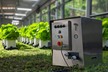
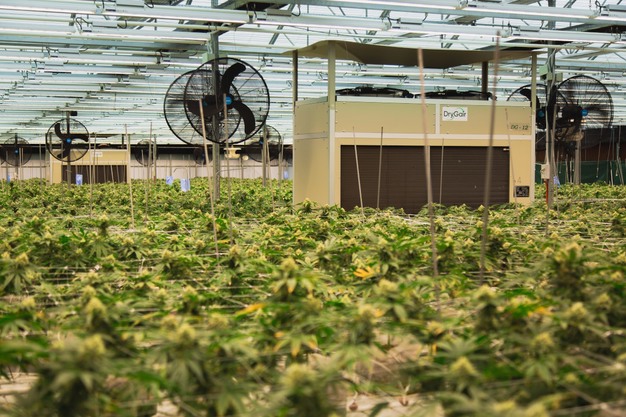
That's why specialized dehumidification solutions are gaining ground in cannabis. For example, DryGair units are designed to pull humidity even at lower nighttime temperatures, when conventional HVAC isn't operating as effectively. The principle is to remove humidity when the plant isn't transpiring, keep the dew point away from the buds, and let the crop transition smoothly into the day without risk of wet flowers.
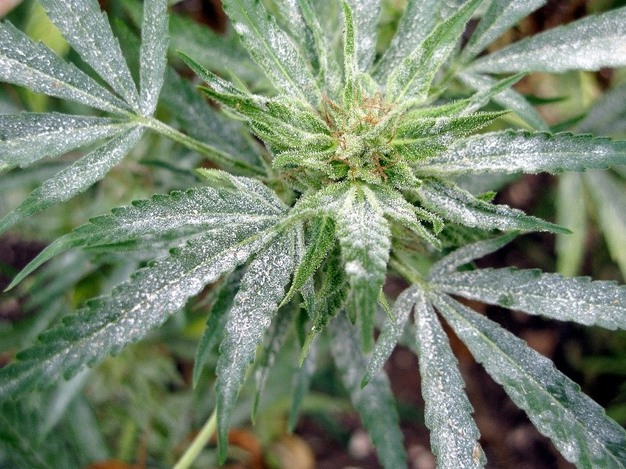 © DryGair
"HVAC load is not just about cooling, it's about managing water, both in the plant and in the air," Justin remarks. "By starting with humidity needs and working backward to temperature, growers can avoid overcapacity, reduce risks of disease, and ultimately keep cannabis in that elusive happy zone."
For more information:
DryGair
www.drygair.com